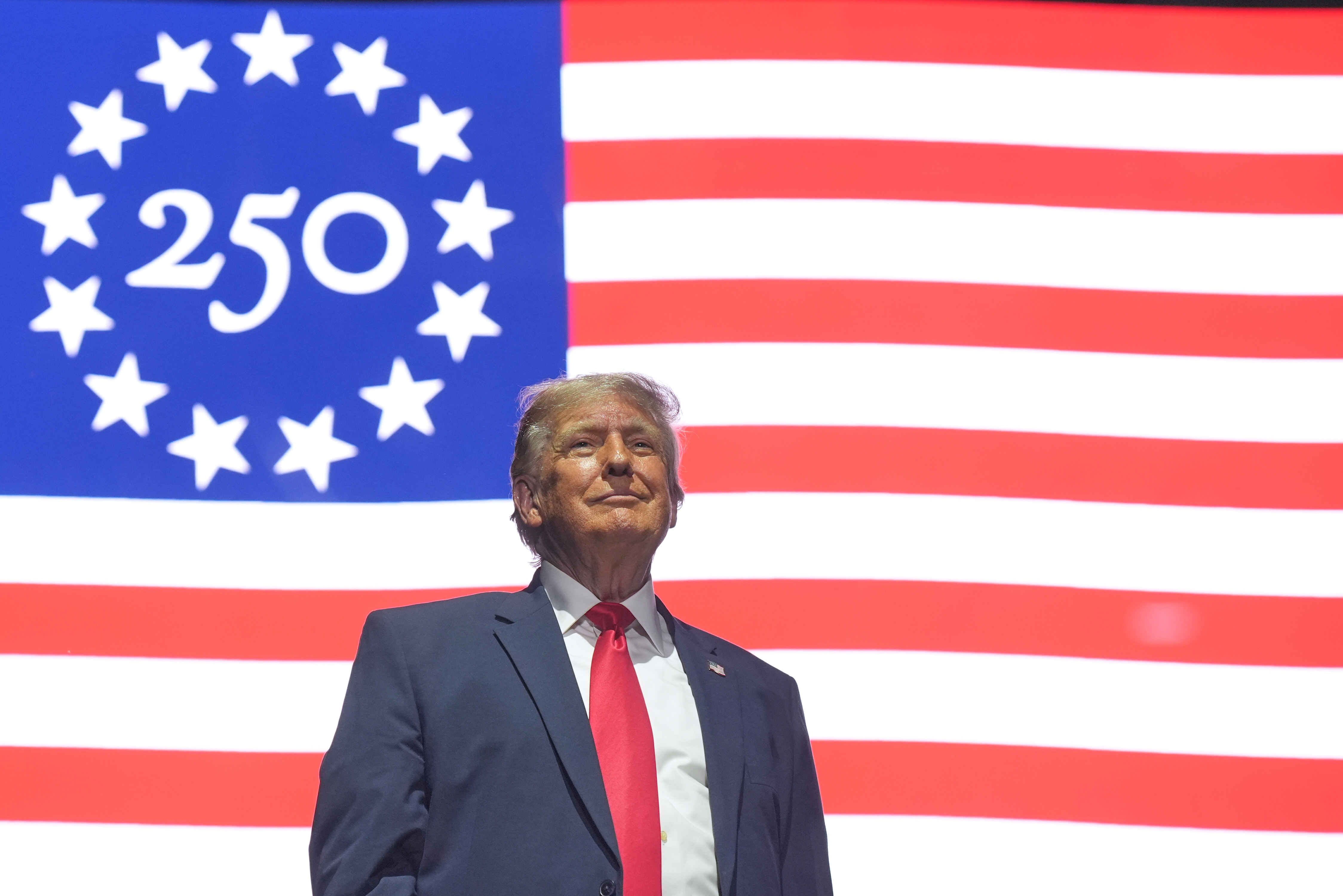

This year, Independence Day on July 4 coincides with the 250th anniversary of our break with Great Britain and the start of the long and costly American Revolution.
The anniversary provides a special incentive both for public celebration and serious private reflection.
The historic benchmark anniversary date is being marked by extensive public ceremonies, as with previous especially significant anniversaries of our declaration of separation from colonial status. This year, the official celebration body established by our government is titled the Semiquincentennial Commission (definitely a mouthful), created by the United States Congress in 2016 through Public Law 114-196.
The mission for the commission is to work with the nonprofit America250 to initiate, organize and coordinate extensive public events.
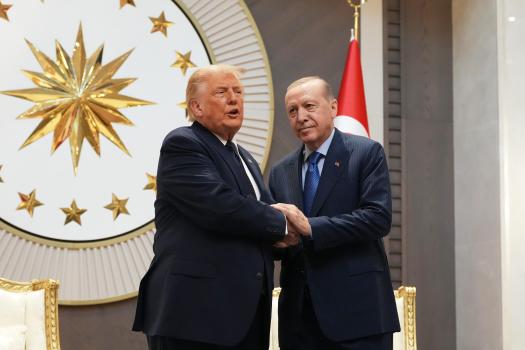
This year, however, there is a complication. Characteristically, President Donald Trump decided to put together a separate body titled Freedom 250 to focus attention on himself, along with our nation.
Congress appropriated $150 million a decade ago to support formally authorized public ceremonies and events.
Trump, with associates, put together Freedom 250 as a public-private partnership, spending additional millions separately. On June 24, the kickoff event of their 16-day Great American State Fair on the National Mall featured a speech by Trump, an Air Force flyover, and music by the U.S. Marine Band and military choirs.
Given this situation, a look back at the American Bicentennial celebrations of 1976 provides helpful context. President Gerald R. Ford, along with First Lady Betty Ford, participated in an active, well-coordinated series of unifying events in Philadelphia and Valley Forge, Pennsylvania, in New York City and on the USS Forrestal in the adjoining harbor, at Thomas Jefferson’s home in Monticello, Virginia, and elsewhere.
Throughout, the emphasis was on national unity, sustained commitment to achieving equality, recognition of marginalized groups, importance of national defense, and other defining elements of our nation.
President Ford was an excellent leader to perform this role. He was honest, bipartisan, effective and respected over many years in Congress. President Richard Nixon selected him as vice president as the Watergate Crisis consumed his administration and his own resignation loomed – a final positive public service.
The bicentennial celebrations unfolded on a recognized national foundation. The Declaration of Independence, formally proclaimed by the Continental Congress in Philadelphia on July 4, 1776, made the break with Great Britain explicit. The document was a collective enterprise but defined overall by Jefferson.
Our Revolution was a hard struggle that lasted until the Treaty of Paris in 1783. The war required endurance along with discipline. Civilians suffered severely, as reflected in the large Loyalist migration to Canada.
Specific American war goals were limited to independence from Great Britain. We retained the rule of law, adding representative government.
But more generally, America’s revolutionaries embraced the concept of the natural rights of individuals. Achieving the associated equality has included a Civil War that cost 600,000 lives and continues.
The Articles of Confederation, our initial governing document ratified in 1781, was a weak framework combining the original 13 colonies of Great Britain, now declared sovereign states. The Constitution of the United States was ratified in 1788.
Also in July 1776, the classic “The Wealth of Nations” by Adam Smith was published in Great Britain. In fascinating fashion, Smith describes and insightfully analyzes the rapidly evolving Industrial Revolution.
The American Revolution went hand-in-hand with the technological revolution that transformed human political and social as well as economic life, and continues to unfold.
Arthur I. Cyr is author of “After the Cold War – American Foreign Policy, Europe and Asia” (Macmillan and NYU Press). Contact acyr@carthage.edu