
The La Grange Village Board unanimously voted to provide relief for property owners experiencing emergency repairs to their water service lines.
According to the ordinance, the village will pick up the cost of emergency repairs to the service line from the water main to a home’s buffalo box, or “B-box.”
The water main is typically in the street, while the buffalo box is located midway between the water main and the water meter attached to the house, serving as a shut-off valve for repairs.
Public Works Director Timothy O’Brien said at the board’s May 11 meeting the move is related to state-mandated replacement of lead service lines that begins in earnest in November 2027.
The deadline for replacement of all lead service lines was mandated to be 10 years by the federal Environmental Protection Agency, superseding Illinois law. The federal mandate is that the work begin in November 2027 with a completion rate of 10% per year.
But the law allows for municipalities with higher percentages of lead service lines — over 39% — to defer replacement, and with La Grange’s percentage being 67%, the plans are for full replacement over 17 years.
The village has identified 3,438 lead service lines and is working to identify the material of 130 more. The cost of the total project is estimated to be $68.5 million to replace the 3,438 lines; or $4 million annually beginning in 2027. But those numbers are at current prices for construction and materials.
The village had applied for a loan from a state fund that would have 0% interest on a 30-year term. But officials learned last month that the application had been denied, and now the village must have a payment policy in place to “inform project design and execution.”
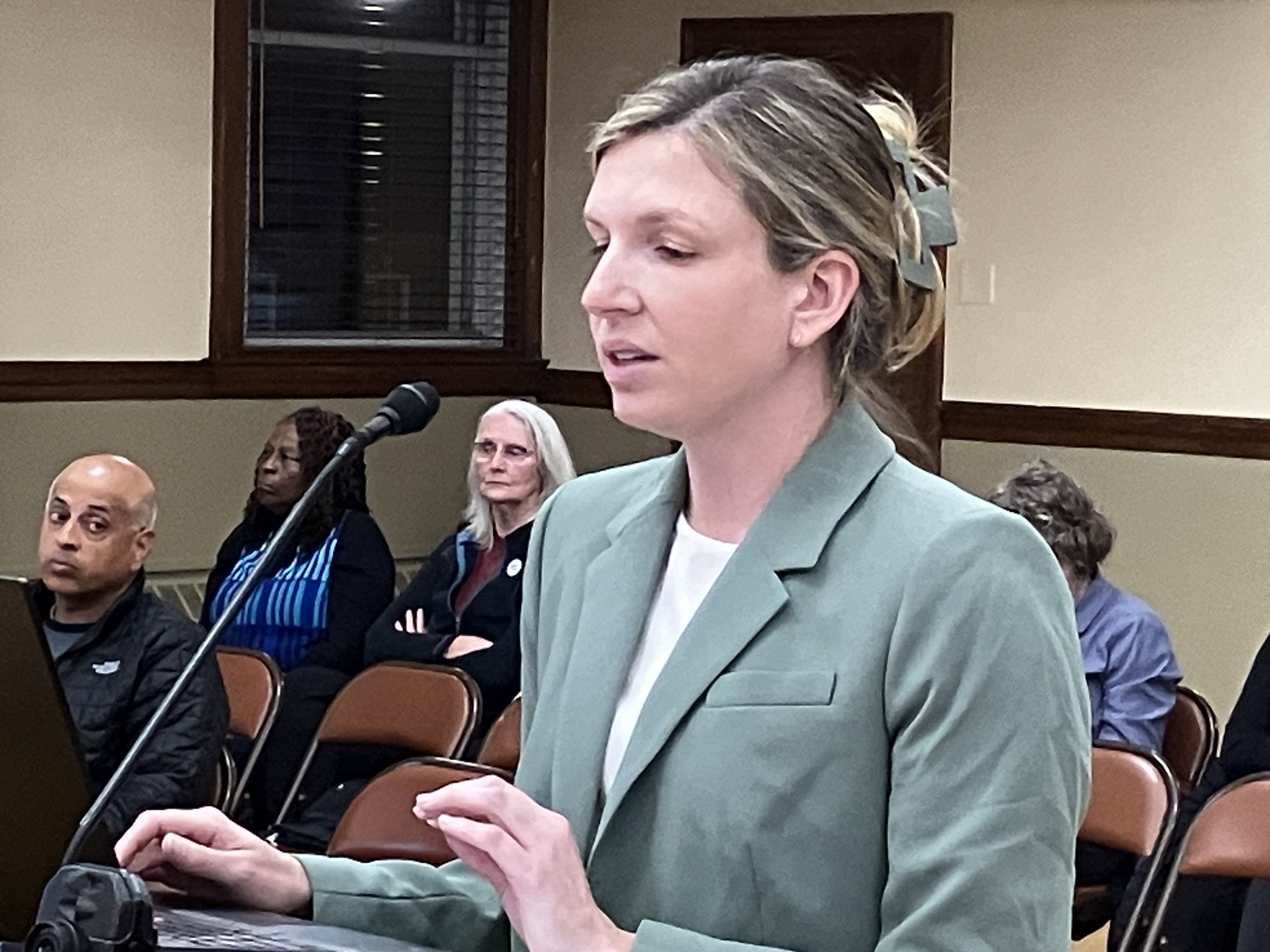
Kaitlin Wright, with consultant Baxter and Woodman, presented an overview on the project.
“What I’d want to emphasize here is that both state and federal regulations require communities to develop a water service line material inventory, develop a lead service line replacement plan, complete a variety of different public education and notification requirements, complete new sampling or changes in sampling water procedures, as well as what we will focus on the remainder of this evening, which is the full lead service line replacements,” Wright told the board.
The three options presented to pay for the project are a resident cost share program, with the property owner responsible for the line from the buffalo box to the water meter; a water rate increase to fund the full replacement; or a village-funded replacement with residential repayment over time.
She listed the pros and cons of each approach, noting that while the first option reduced the financial impact on the village, possibly reducing water rate increase, it “could also see lower participation rates.” Wright also said the burden could possibly fall disproportionately on lower income communities living in older homes.
Wright said the second option would see a higher rate of participation, although she pointed out that property owners could still decline to participate. And she also noted that there would be a detailed process formulating water rate increases, saying “there are affordability concerns with a water rate increase.”
As for the third option — resident repayment over time — the benefit would be in reducing the upfront cost to homeowners.
“The burden of asking a homeowner to pay $6,000, $8,000, $10,000 upfront or almost immediately is a very heavy ask for a lot of residents,” Wright said.
But she also stressed that the repayment over time option came with a heavy administrative responsibility, saying “this effectively creates the village acting as a bank.”
Wright stressed that any of the three options “can be changed, based on what the village feels appropriate.”
Responding to an email inquiry, village manager Jack Knight said that at this stage of the policy discussion, the plan is for the village to pay for the portion of the service line between the water main and the buffalo box.
Further discussions of financing options, in further detail, will take place later this summer, with a final decision coming sometime after that.
The next La Grange Village Board meeting will be 7:30 p.m. June 8 at the La Grange Village Hall, 53 N. La Grange Road.
Hank Beckman is a freelance reporter for Pioneer Press.