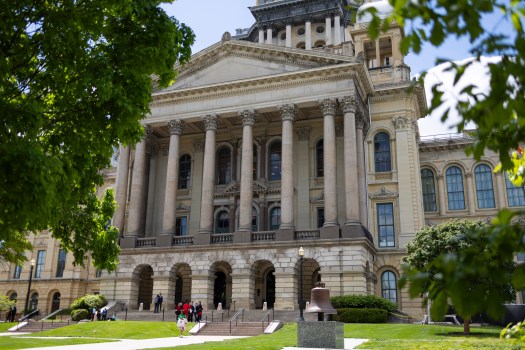
Illinois is moving toward a significant shift in higher education. Legislation advancing in Springfield would authorize community colleges to offer bachelor’s degrees in high-demand applied fields such as healthcare, information technology and advanced manufacturing. Backed by Gov. JB Pritzker, the proposal responds to a growing disconnect between the credentials employers increasingly require and the pathways many residents can realistically access.
The need is urgent. Illinois employers are struggling to fill positions in healthcare, technology and skilled manufacturing sectors where bachelor’s-level preparation is becoming more common. At the same time, fewer than 1 in 6 Illinois community college students ultimately earn a bachelor’s degree. For many students, the traditional transfer pathway to a four-year university remains difficult to complete due to rising costs, credit-transfer challenges, work obligations and family responsibilities.
The proposed legislation offers a different approach. Rather than expecting students to leave their communities, relocate or take on significant debt, it would allow them to complete four-year degrees at the institutions where many already begin their higher education journey.
For working adults, first-generation students and place-bound residents, this matters. Community colleges already serve as the primary access point to higher education for thousands of Illinoisans. Expanding bachelor’s degree opportunities through these institutions would not replace universities. It would expand educational capacity in parts of the state where affordable and flexible pathways remain limited.
More than 24 states have already implemented bachelor’s degree programs at community colleges. The results have been encouraging, with improved degree attainment, expanded access for underserved populations, and stronger alignment between graduates and regional workforce needs. States such as Florida, Washington and California have used these programs to address workforce shortages in applied and technical fields that traditional higher education pipelines have struggled to fill at a sufficient scale.
The affordability argument is equally compelling. Community college tuition remains substantially lower than tuition at many public and private universities. In California, the total tuition cost for a community college bachelor’s degree is often less than half the cost of comparable university programs. In Arizona, many community college bachelor’s programs cost between one-quarter and one-half as much as similar university degrees.
Those differences matter at a time when student debt continues to shape life decisions for many families. Students graduating from four-year institutions carry an average debt load of roughly $29,000. For some Illinois residents, especially adult learners balancing work and caregiving responsibilities, the prospect of taking on that level of debt places a bachelor’s degree out of reach before classes even begin.
Employer demand is also changing faster than many educational systems can adapt. Research from the Georgetown University Center on Education and the Workforce projects that nearly 72% of jobs will require some form of postsecondary education. At the same time, employers increasingly expect bachelor ’s-level credentials for positions that previously required only associate degrees. Analysts often refer to this as credential inflation, but for workers, it creates a straightforward reality: The educational bar continues to rise.
Community college bachelor’s degree programs are designed with that labor market reality in mind. Unlike traditional academic models developed largely independent of regional workforce needs, these programs are typically built in collaboration with employers and aligned with high-demand industries. They focus on applied learning, workforce preparation and regional economic priorities.
Illinois has one of the largest and most diverse economies in the nation, driven by healthcare, logistics, finance, manufacturing and technology. Sustaining that economic position will require a larger pipeline of residents with advanced technical, analytical and professional skills.
The demand already exists among students. A recent survey found that 75% of Illinois community college students said they would be much more likely to pursue a bachelor’s degree if their local college offered one. Even more telling, 40% of students who previously had not considered earning a bachelor’s degree said they would reconsider if the degree were available through their community college.
Those numbers reflect something larger than convenience. They reflect geography, affordability and the realities of modern life. Many students cannot simply leave jobs, families or communities to attend a university several hours away. Higher education policy often assumes mobility. Many working adults do not have that luxury.
Without stronger bachelor’s degree pathways, Illinois risks limiting both individual opportunity and long-term economic competitiveness. Advanced manufacturing increasingly depends on workers skilled in automation, robotics and data analysis. Healthcare systems need professionals prepared for increasingly complex clinical and operational environments. Technology employers continue to seek workers with both technical expertise and applied problem-solving skills.
The legislation before Springfield will not solve every workforce challenge facing Illinois. But it offers a practical response to a real and growing problem. It expands opportunity without abandoning affordability. It strengthens workforce development without duplicating existing university missions. Most importantly, it creates new pathways for students who have historically faced the greatest barriers to completing four-year degrees.
For many Illinois residents, the question is not whether they can earn a bachelor’s degree. It is a matter of whether the state is willing to make that pathway realistically accessible.
Muddassir Siddiqi is president of the College of DuPage.
Submit a letter, of no more than 400 words, to the editor here or email letters@chicagotribune.com.