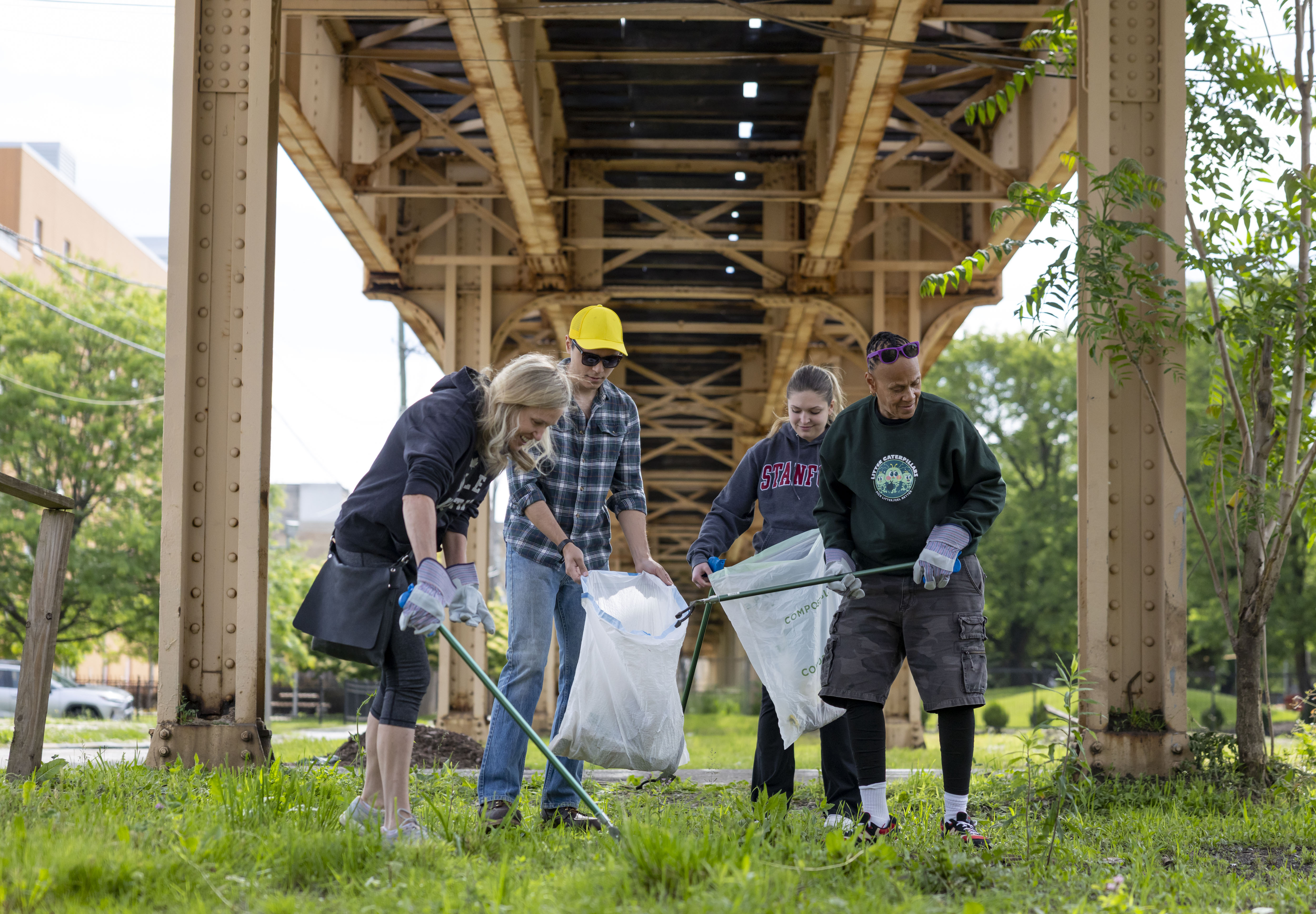

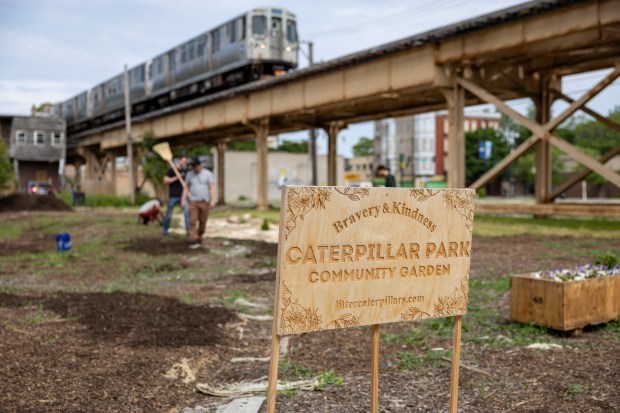

When David Bippes recently brought his parents to see a small plot of land tucked between a raised railway track and a row of homes in Englewood, he was hoping to show them his latest community project.
Bippes, an Eagle Scout whose passion for community gardens began with a high school service project in Missouri, now helps lead Litter Caterpillars, a Chicago volunteer cleanup organization. Last year, he and three other group leaders purchased the formerly vacant lot through a citywide land auction, hoping to transform it into a neighborhood green space.
“It’s like extending a childhood project,” Bippes said.
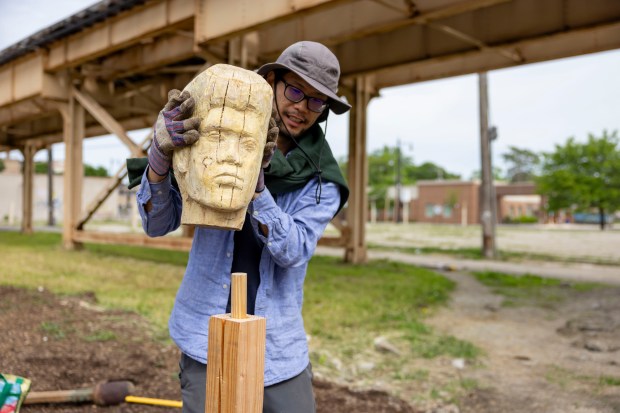
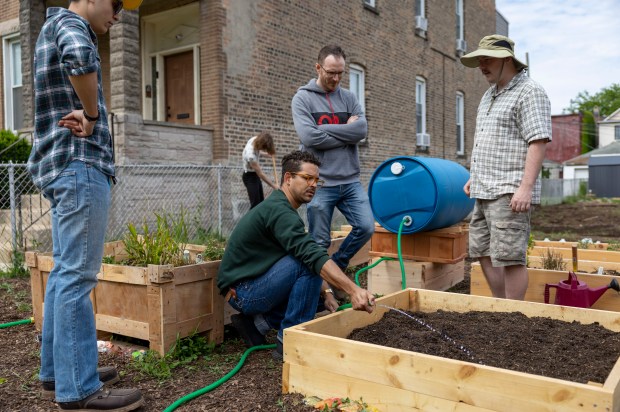
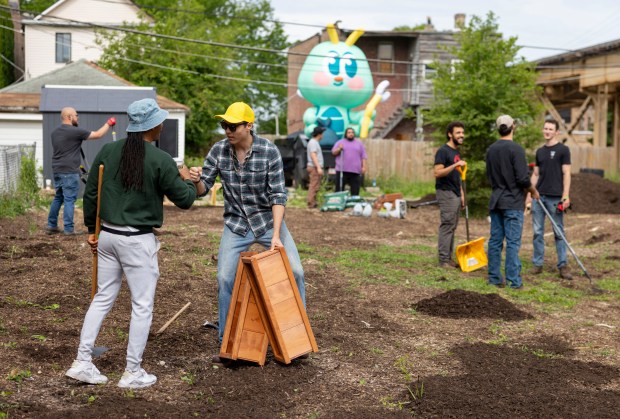
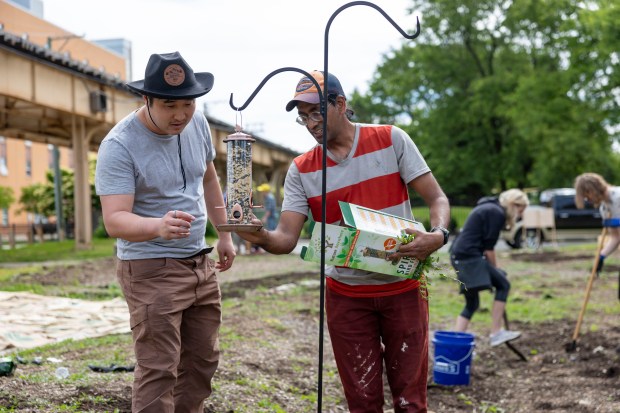
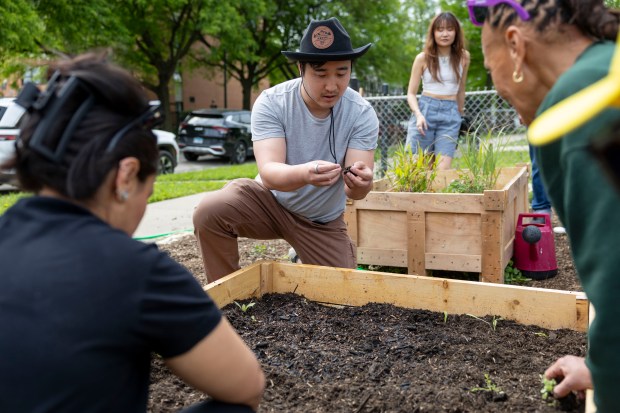
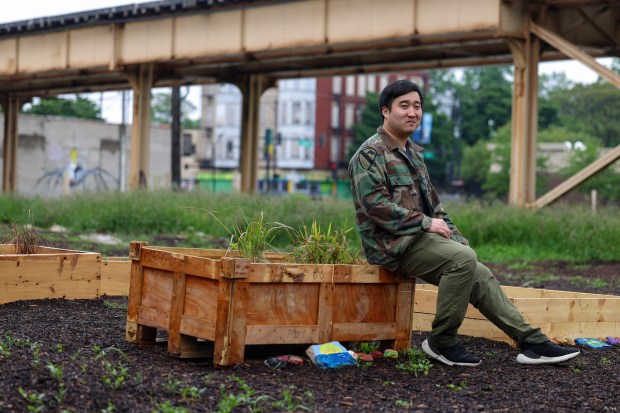
The group converted the 6,000-square-foot lot into a small park with mulch, raised garden beds for tomatoes and native Illinois plants, including prairie grasses and yellow coneflowers, and celebrated the opening April 12.
But when Bippes arrived with his parents a week later, they found 3- and 5-foot-high piles of landscaping debris dumped across the property. One mound blocked the sidewalk bordering the park.
“We’re trying to reduce litter, not increase litter,” he said.
Co-founders Bippes and Kevin Tao said they don’t know who left the debris or when it was dumped, but the incidents have complicated efforts to build trust and encourage community investment — something both say is critical to the park’s long-term survival.
Since the park’s opening, the group has struggled with repeated illegal dumping at the site, its co-founders said. The dumping has also posed an additional challenge for the owners, who don’t live in the neighborhood, as they work to integrate the privately owned green space into the Englewood community.
The project began after the group leaders acquired two adjacent lots at 6316 and 6318 S. Sangamon St. for $10,000 through a massive citywide land auction in April 2025, organized by investment company Hilco. The auction included more than 800 vacant parcels on Chicago’s South and West sides. The group estimates it has spent another $10,000 to date on improvements, including plants, mulch and landscaping.
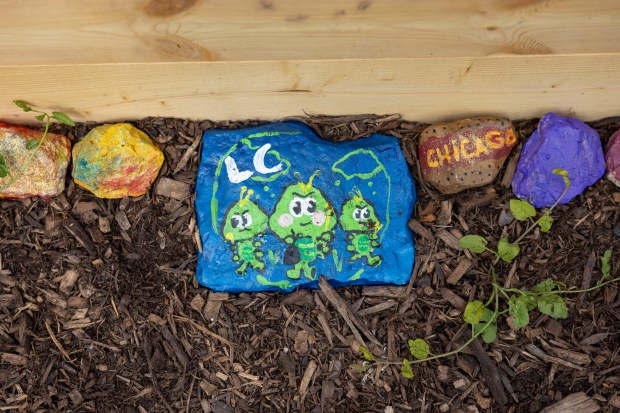
The plot was named Caterpillar Park, reflecting the group’s broader mission of transforming spaces in Chicago.
“(It’s) the concept of continual renewal,” Bippes said. “Caterpillars turn into butterflies, but there’s a period of time where they have not yet, and there’s the pre-work before the amazing thing comes out in the future.”

The land purchase and park improvements were funded by Bippes, Tao and two other co-founders. Over the past five years, organizers said the group has conducted litter cleanups with over 100 volunteers across neighborhoods on the city’s South and West sides. Purchasing vacant land, they said, felt like an opportunity to create something more permanent.
“I’m always looking for ways to make Chicago a better place to be for everyone,” Bippes said. “In a place like Englewood, seeing the level of disinvestment that’s happened over the years, it makes me want to rally other people and say, ‘What can we do for this community?’”
As the son of Chinese immigrants whose family once purchased his childhood Palatine home through an auction, Tao said he was drawn to the idea of using vacant land to create a healing space in Englewood.
“When I was at rock bottom, I was just blaming everyone around me and just being in this bad environment,” Tao said. “So we believe that it’s possible to change people’s mindsets by changing our environment.”
Bippes described the effort as a “duct-taped-together project.”
“We’ve been figuring out how to build a park for the first time,” Bippes said. “None of us really know what we’re doing, so we’re just trying to network with as many people as possible.”
All four work full-time jobs outside the project. Bippes works in consulting, while Tao helps run his family’s business, NeuEve, which focuses on women’s reproductive health products.

The distance between the organizers and the neighborhood has also created challenges. Bippes, who lives in Edgewater, said it takes him about an hour to reach the park.
Some urban farming groups and residents have questions about how this park will be sustained long-term with owners who aren’t close by or connected with the community.
Tao said the Litter Caterpillars go to Caterpillar Park every other Sunday, splitting weekends between litter cleanup efforts in North Side neighborhoods and maintaining the Englewood park.
Dulce Morales is the co-founder of Cedillo’s Fresh Produce, an Englewood urban farm and community garden that provides 90% of its produce to Englewood and surrounding neighborhoods. She said she’s been running the group for over 10 years and lives just eight minutes away from the community garden.
“As a grower, as a person that is running two spaces, if I neglect one space for one week, and if it’s raining, we might get a lot of weeds,” Morales said. “I think space does need a lot of attention.”
Tao used to be a frequent volunteer and donor at Cedillo’s community garden, Morales said.
He turned to Morales for advice on how to gain community support for Caterpillar Park. He and Bippes hope it can eventually become a community garden where neighbors grow their own food but said that goal depends on stronger local involvement.

“The idea of making it a community garden from the outset is a little daunting, because all the people who are involved live so far away, so even if we planted okra and squash and tomatoes, we’d have to commute out there every single day to check on things and water them,” Bippes said. “For there to be a community garden, we need that part of the park to be run by people who live in the neighborhood.”
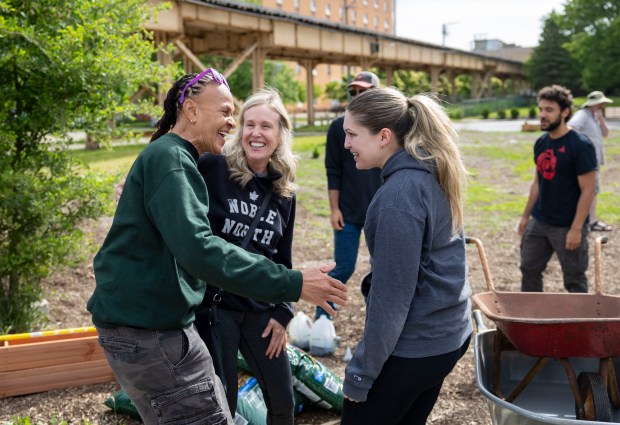
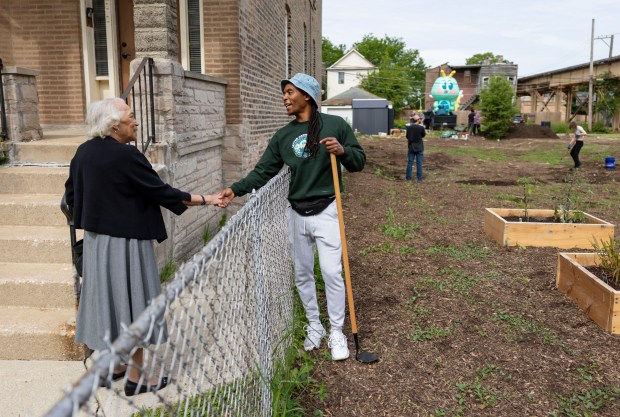
To build those connections, organizers have begun knocking on doors and distributing flyers to nearby residents.
Tao said the illegal dumping has complicated first impressions and building trust in the community. Some neighbors thought the debris was connected to the group, he said.
Not having an established presence on the property makes the risk of misuse or break-ins more likely, Morales said.
“It’s important to make sure that (the community garden) doesn’t look abandoned at any point, because it could affect the neighborhood more than it could benefit it if it looks abandoned,” she said.
Cedillo’s community garden at 325 W. 70th Place has had to deal with fly dumping, or the illegal disposal of waste on property, as well as break-ins over the years, Morales said, with as many as five incidents in one year.
But she said developing community support has made the difference.
“They put out a good word for everybody else,” she said. “We used to have a lot of break-ins. Thankfully, the break-ins have diminished from one to two a year. … We’re grateful that people know that we’re there for the betterment of the community.”
For Caterpillar Park, Bippes said he’s hoping to solve the illegal dumping issue quickly.
“We feel a lot of pressure to fix this problem, because now when the neighbors come over and maybe they haven’t talked to us yet, they (might) see these piles preventing them from walking,” Bippes said. “That’s the fault of the Litter Caterpillars, and we’d like that not to be our association, of course.”
He submitted multiple 311 requests and contacted the city’s Department of Streets and Sanitation for help removing the debris and preventing future dumping. After weeks without the removal of the dump piles, Tao began posting about the issue on social media in hopes of drawing attention to the situation and pressuring the city to respond.
Last month, the Department of Streets and Sanitation removed one of the largest debris piles following the group’s complaints.
“The City of Chicago aggressively prosecutes illegal dumpers, and DSS is working with City Council to increase enforcement and fines for fly dumping to discourage the practice,” a department spokesperson said.
Ald. Stephanie Coleman, 16th, did not respond to multiple requests for comment regarding the new park and the ongoing issues with illegal dumping in Englewood.
Former Englewood resident Roosevelt Gordon, who previously rented nearby on South Sangamon Street before moving four blocks east to Woodlawn because of rising rent costs, said he supports the project as long as it benefits existing residents.
He said he would love for the park to be used as a community garden where children can learn farming and horticulture in Englewood.
“I just hope it has the intention of serving the community, and not coming in and changing it to something totally different,” Gordon said. “That’s what happens with mostly everything.”
Organizers say they remain committed to the park despite the dumping setbacks.
“It’s almost like a mystery,” Bippes said of the dumping. “If I could have what I want, I would love to have a conversation with the people who did the dumping and see what their world is like, see what they’re struggling with and see if the mission of Caterpillar Park isn’t something they would maybe also want to be part of.”