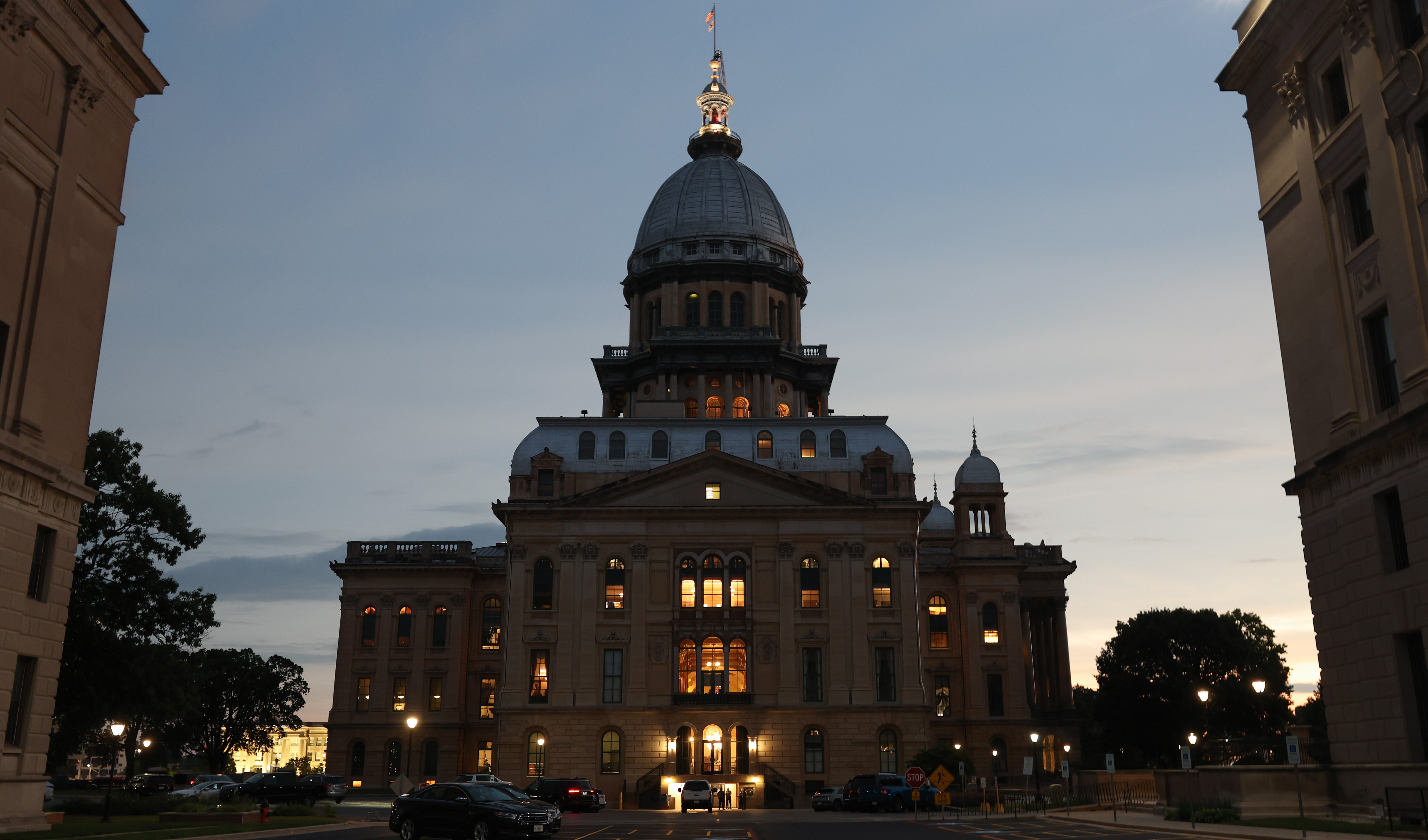

There are two ways to look at the spring legislative session just concluded in Springfield.
One is through the lens of disappointment. Urgent issues were left unaddressed, famously including the needs of the Chicago Bears, but also a looming and worsening energy supply-demand imbalance, a lack of action to spur desperately needed new housing, and the need to make life more affordable for cash-strapped Illinoisans.
The more positive take is that the legislature left town without doing any major policy damage.
There were no crushing new taxes on individuals and corporations. Rebuffed — for now — were progressive lawmakers who pressed for a constitutional amendment to tax millionaires and thus send more affluent Illinoisans packing for warmer and tax-friendlier climes.
Gov. JB Pritzker’s “maintenance” budget was largely endorsed by lawmakers, who actually improved parts of it. For example, local governments across the state got to share fully in the benefit of naturally rising income tax revenues, obtaining another $60 million for their budgets ($12 million for Chicago alone). To balance the state’s ledger, Pritzker had proposed to keep the municipal share of state income tax receipts flat, which only would have exacerbated the property tax albatross holding back growth in so many local communities.
Our view is that, while we appreciated that the budget was approved with minimal drama, the impression left by the past few months is of a state gently adrift. Precious little leadership was in evidence, as Democrats in the supermajority had the luxury, if you can call it that, of squabbling among themselves — and in the end agreeing to disagree — over how to address many key issues confronting the state. Republicans, as usual, were mainly bystanders, although we were pleased to see Peoria Rep. Ryan Spain, a Republican House budgeteer, praise Democrats for being “more open than past years about the annual spending plan.”
For Pritzker, his final spring session before asking the voters for a third term was underwhelming. The governor’s top two priorities were to make a deal to keep the Bears in Illinois and to pass a series of ambitious measures to provide for more housing throughout the state.
The outcome for the Bears in Illinois is, charitably and barely, still a work in progress. The housing package stalled over objections from local governments over having much of their zoning authority superseded by the state.
In neither case did Pritzker play much of a leadership role, or at least not one that the public could easily see. His strategy seemed to be to lay out the broad parameters of what he wanted and then hope that lawmakers would follow suit. With the Bears, state lawmakers representing Chicago and Mayor Brandon Johnson effectively killed the plan to keep the team from moving to a suburb. In the case of the housing bills, something like the reverse happened: suburban officeholders effectively killed the initiative to protect their powers and to reassure their residents that unsuitable developments wouldn’t be constructed in quiet residential neighborhoods without recourse to local officials.
Nor did anyone make the case (that we heard anyway) that all of us in Illinois are in this together.

Additionally, there was no action on the looming electricity supply crunch, made acute by numerous proposals to build power-hungry data centers but exacerbated, too, by past clean-energy provisions that are incentivizing the removal of critical power-generating sources from northern Illinois. This page called for simple fixes to Pritzker’s landmark 2021 Climate & Equitable Jobs Act to ensure the lights stay on and to keep electric bills from soaring higher than they already have, and Springfield Democrats did nothing.
That’s not to say there weren’t accomplishments beyond passage of the budget that fully funded the state’s pension obligations and contributed $350 million more to public schools across Illinois, as has been state policy now for years.
As we discuss in greater length in a separate editorial today, lawmakers easily cleared Pritzker’s call to ban cellphones in public-school classrooms. There were important measures passed to regulate the use of artificial intelligence in various ways. The General Assembly finally cleared a licensing process for hemp makers after several years of inaction that allowed the sale of highly intoxicating THC-infused products in convenience stores, gas stations and numerous other retail outlets.
In terms of affordability, the watchword that Pritzker, House Speaker Emanuel “Chris” Welch and Senate President Don Harmon all said from the outset would be their guiding light during the session, the steps that were taken were modest at best. Lawmakers paused a scheduled automatic increase in the gas tax that will save drivers 1.3 cents per gallon. Please keep the volume down on your whoops of joy.
And those losing or seeing sharply reduced SNAP benefits under GOP policies enacted in Washington, D.C., will get a one-time payment of $400 each to help compensate for the loss — at a cost of $70 million to state taxpayers. For those in such circumstances, that truly can be a real difference-maker.
A handful of narrow tax increases — including a digital ad levy and tax on social media platforms, both of which could well be scotched by the courts — helped cover the cost of this maintenance budget. But by Democratic Party standards in Springfield, this was not a tax-heavy budget.
We think most people will remember the 2026 spring session by what didn’t happen. Given the heightened interest in the Bears, voters who ordinarily would tune out the annual doings in the state capital got a lesson in how Springfield operates — or doesn’t — under complete Democratic Party control.
Did they like what they saw?
Submit a letter, of no more than 400 words, to the editor here or email letters@chicagotribune.com.