
Helping people find affordable housing and motivating others to join the effort is a passion for Emma Yarger.
An education and outreach specialist for Connections for the Homeless, Yarger realizes there is a thin line between living paycheck to paycheck and becoming homeless. One of her goals is to help people become more secure in their living situation.

“Some people are one paycheck away from being homeless,” Yarger said, “All it takes is an illness or some other kind of emergency and they’re right there.”
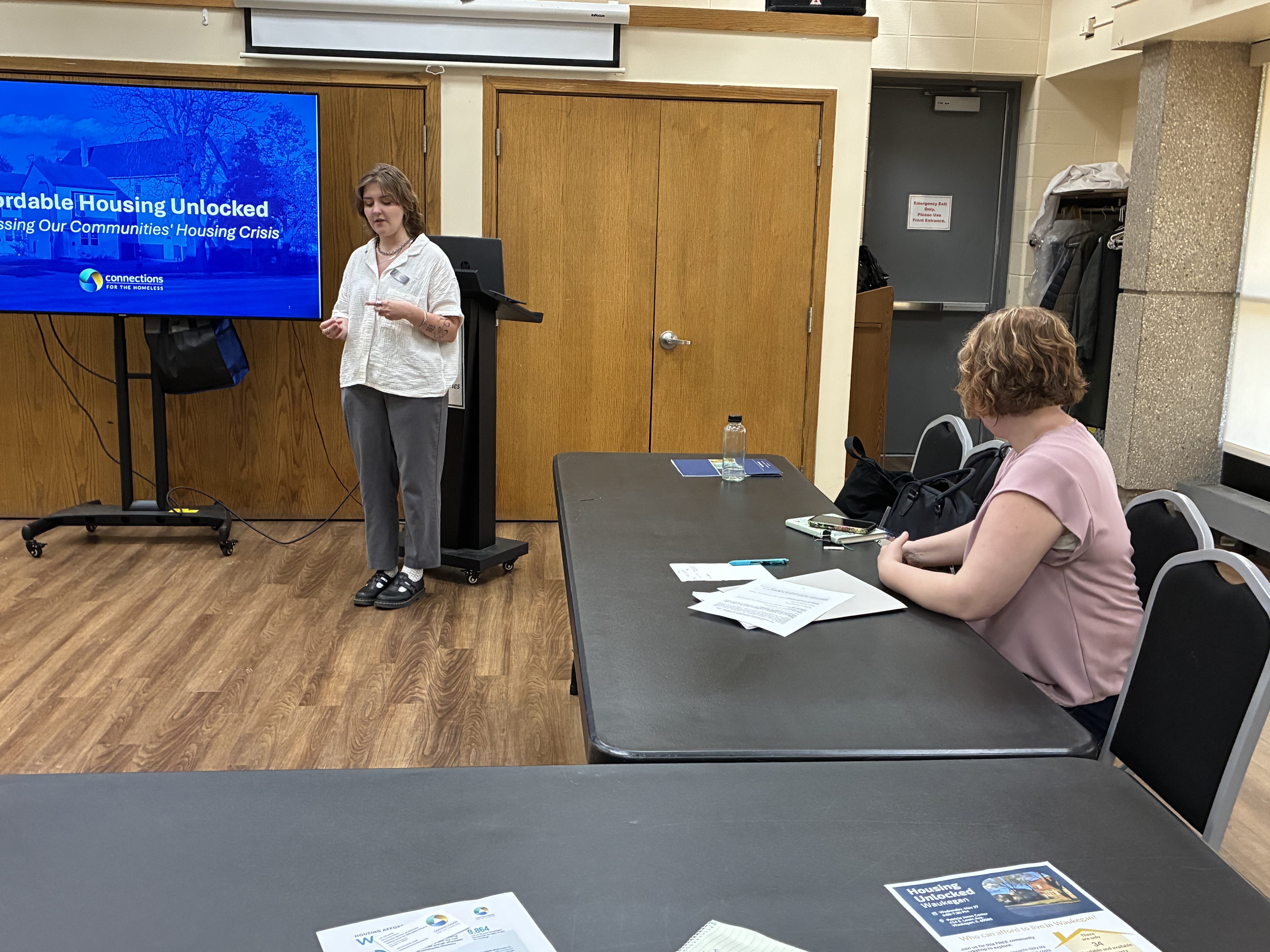
Yarger conducted a roundtable discussion and workshop on affordable housing on May 27 at the Patricia Jones Center in Waukegan, explaining the meaning of affordable housing and how to advocate for more available units.
Assuring an individual or family has affordable housing means they should spend no more than 30% of their income on rent and utilities. For a homeowner, Yarger said 30% includes mortgage payments and property taxes as well as water, gas, and electricity.
For a person earning the $15 per hour minimum wage in Illinois, Yarger said they would need to work 70 hours a week for a modest apartment in places like Waukegan, North Chicago or Zion. With the cost of housing increasing faster than wages, the situation becomes harder.
“Housing costs are spiraling, and income isn’t keeping up,” Yarger said. “Wages and housing costs are not working in tandem. We have 34 affordable housing units for every 100 low-income households—$56,000 a year is low income.”
Based on the 30% guideline, a person earning $10,000 a year can afford $250 a month in rent. Yarger said the only way to find a place to live for $250 monthly is subsidized housing. Places like the Waukegan and Lake County housing authorities can help with those.
A family making $50,000 a year — considered low income by some standards for a family — can pay $1,250 to rent an apartment, and someone with a $100,000 annual salary can pay $2,500. Yarger said in many places it would be small. A one-bedroom averages $1,180 a month.
“That’s twice the average Social Security payment,” Yarger said, explaining that a retired senior living on Social Security cannot afford the average one-bedroom apartment. A person averaging 65,000 a year can afford $1,600 to $1,700 a month.”
With its own housing authority providing subsidized housing, Yarger said people living in Waukegan are in a better position than those who dwell elsewhere in Lake County. The Lake County Housing Authority is active in some parts of the county.
“Waukegan has it better most,” Yarger said. “There are municipalities passing laws to create more affordable housing.”
Liz Nelson, the associate director of advocacy for Connections for the Homeless, said places like Highland Park and Lake Forest are making provisions for affordable units. There are some already there
“This is where municipalities and not-for-profits merge together,” Nelson said. “Developers (of high-priced units) put money into a trust to be used for affordable housing.”
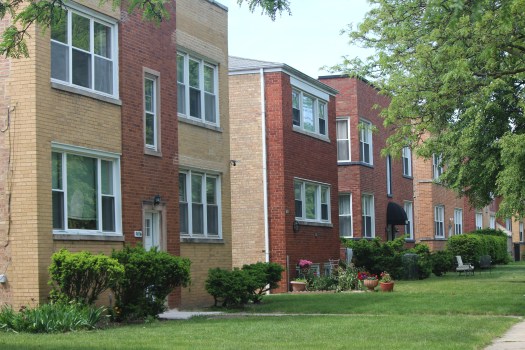
Yarger said some municipalities are requiring developers of market-priced apartments to set aside some for people in search of affordable housing in a community. From the outside, they all look alike but there are differences in the interior.
“They’ll be the apartments with ceramic countertops, not the marble ones,” Yarger said. “Nothing is noticeable on the outside.”
An advocate herself, Yarger said she encourages people who support affordable housing — and keeping people out of shelters — to organize. They can lobby their local governments to create ordinances making affordable housing easier to obtain.
“We need to organize grassroots campaigns,” Nelson said.
Though there are places like Waukegan Township which offer emergency funds to help people avoid eviction, Yarger said there are not-for-profit organizations like Connections for the Homeless, PADS Lake County and Community Partners for Affordable Housing which offer solutions.