
President Donald Trump is proud of America, and he wants you to be proud too. He chides the head of the Smithsonian Institution for his 250th anniversary exhibits because they don’t say we’re special enough, and he issues a directive to “Celebrate American Exceptionalism.”
Fifty years ago, when my father, Daniel Boorstin, was librarian of Congress during our nation’s 200th anniversary, he was derided for saying we were too special. His bestselling three-volume epic “The Americans” won the Pulitzer Prize. He appeared on television and in Esquire, Time, Reader’s Digest and Woman’s World; wrote children’s history and school texts; and counseled our leaders. But the naysayers called him “the Fourth of July fireworks historian.” Trump’s kind of guy, you’d think. Quite the opposite.
The problem for Trump is that what he sees as our great weakness is exactly what my father said makes us special.
Trump sees us as a model for the world. Daniel said that “nothing could be more un-American than to urge other countries to imitate America.” Because they can’t.
What makes the United States special is how we were formed by the infusion of people eager to find common ground.
“In Western Europe, with insignificant exceptions,” Daniel writes, “men found themselves wherever they were in the nineteenth century because they were born there. The act of choice, of consciously choosing their particular community, had been made, if ever, only by remote ancestors — the contemporaries of Beowulf, William the Conqueror, Siegfried, or Aeneas. On the other hand, because we were an immigrant nation, everybody here, except the Indians and the Negroes and those others who had been forcibly transported, was here because he or a recent ancestor (a father, a grandfather, or great-grandfather) had chosen this place.
“The sense of community was inevitably more vivid and more personal because, for so many in the community, living here had been an act of choice.”
In America, community came first. “The voluntary collaborative activities of members of the community were there first, and it was government that came into the interstices,” my father writes. “Seldom have people been more anxious than Americans have been to share their common purposes. We are desperately earnest to make our community include as much as possible of our daily life. … We seldom require people to subscribe to explicit beliefs; but we still expect people to act and feel as if they believed the same thing.”
Before he was librarian of Congress, Daniel headed what is now called the Smithsonian Museum of American History. He laid the groundwork for its bicentennial exhibit “A Nation of Nations.”
“In a nation with a tradition of charity,” he said, “of harboring and warming the persecuted, the oppressed and the misunderstood, our stock of charity seems to have become large enough for everyone except our nation itself. We have become obsessed by the limits of our achievement and have almost forgotten its extent. …
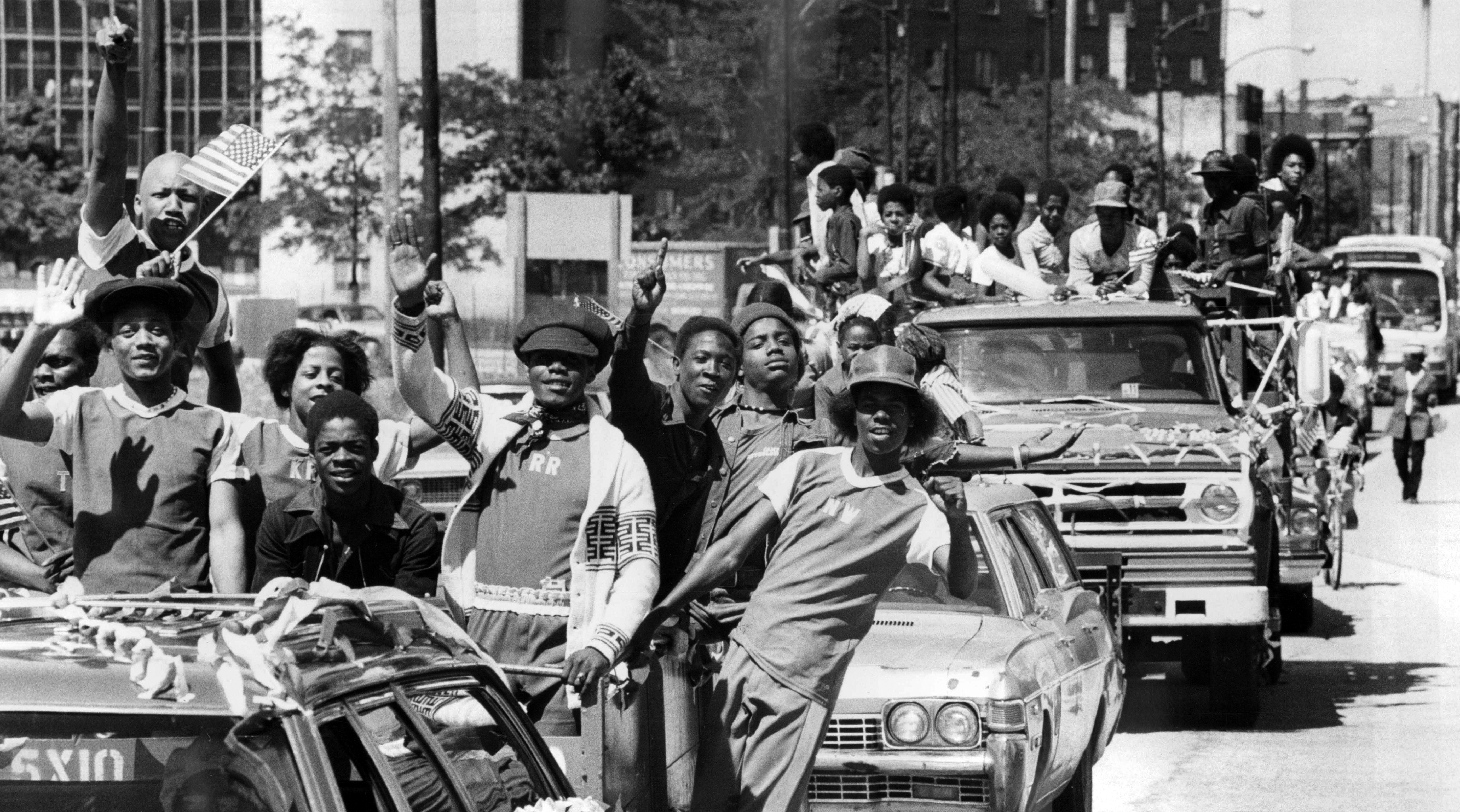
“Here we can demonstrate and celebrate what Americans — all Americans — have accomplished. What we have accomplished individually, but especially what we have accomplished together. The mood is first person plural. Here we can see what we have done. Here all earlier Americans become ancestors of us all.”
Daniel’s grandfather was a kosher butcher in Gdansk, Poland. Pauperized by pogroms, he left his pregnant wife and arrived here penniless in Newport News, Virginia. For three years, he was a peddler in the South, going house to house to raise the money to bring over his family. He saw his son, Daniel’s father, for the first time in a small town in Georgia.
Daniel believed that all Americans were his ancestors. Let us all think like Dan.
Jon Boorstin is the author of “The American: The Hidden History of Daniel J. Boorstin and His Twentieth Century,” publishing on Aug. 1 from University of Georgia Press.
Submit a letter, of no more than 400 words, to the editor here or email letters@chicagotribune.com.