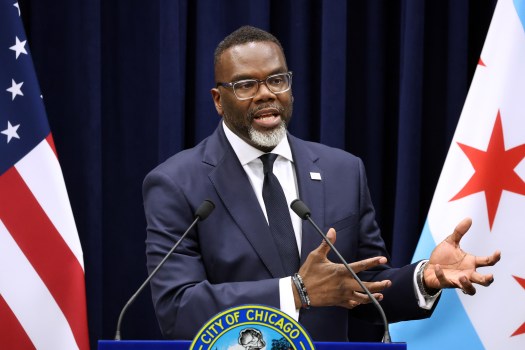

Andrew S. Boutros, U.S. attorney for the Northern District of Illinois, arguably is the most visible presence of the Trump administration in Chicago. In our previous conversations with him, he has struck us as personally ambitious and professionally aggressive but not overly ideological, a view that others also have expressed. We also found him genuinely concerned about violent crime in Chicago not for political reasons, but as a fulfillment of his sworn duties.
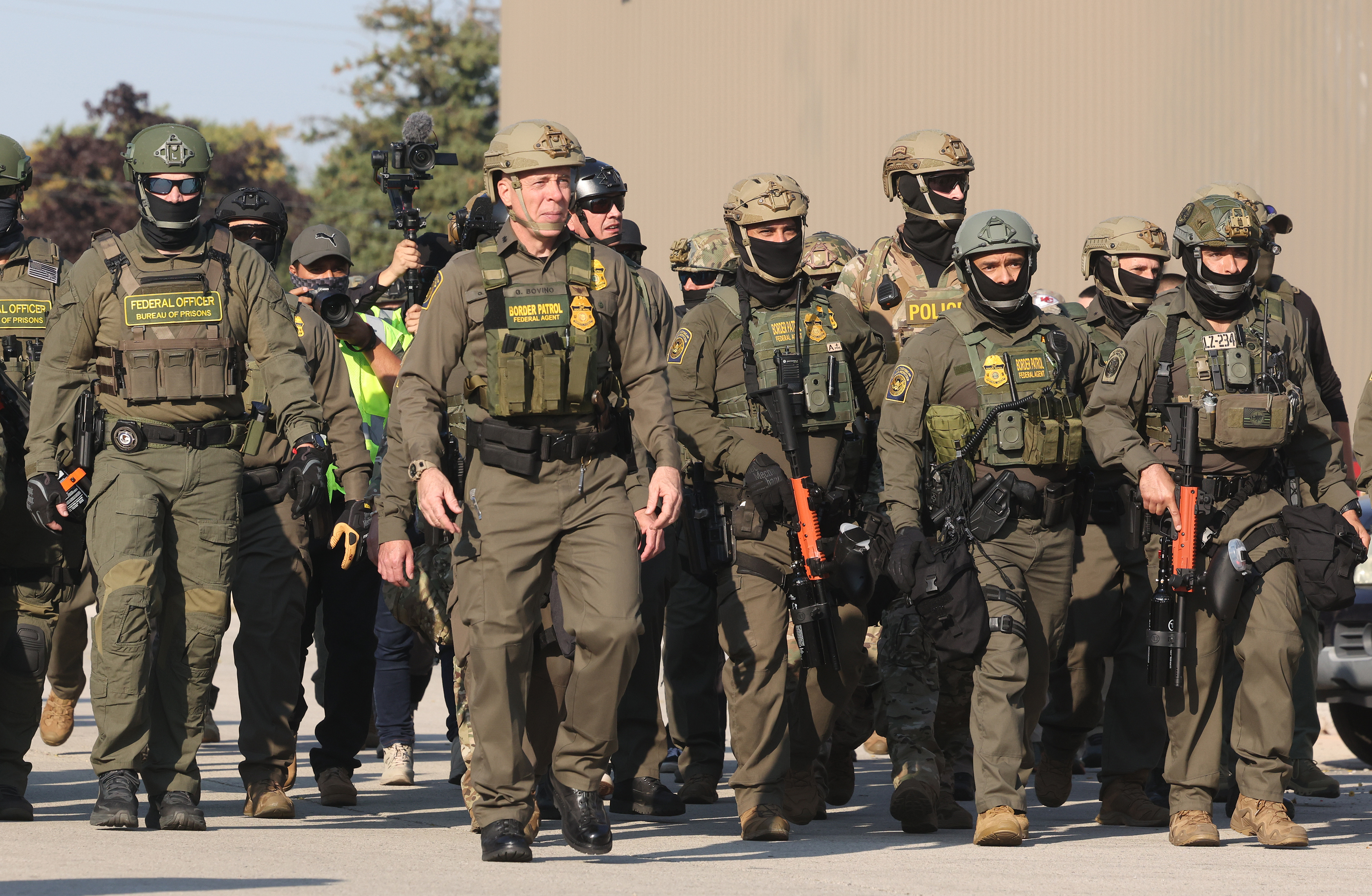
But once Greg Bovino and the U.S. Border Patrol arrived in Chicago with their thuggish tactics, Boutros was destined to become a lightning rod. And lightning struck.
Chicagoans of all political stripes rejected the military-style invasion of the city and they protested these actions, especially at the Immigration and Customs Enforcement detention center in Broadview. In some cases, such as the ones that have become collectively known as the “Broadview Six” — a piece of political branding designed to evoke comparisons with the “Chicago Seven,” a group of activists who clashed with the authorities during the 1968 Democratic Party Convention — protesters were arrested for, according to prosecutors, allegedly pushing and banging on a vehicle belonging to ICE. They were said to have impeded its free movement, scratching and otherwise damaging the body work. Not exactly heinous political crimes outside of the political context.
It then fell to Boutros’ office to persuade a grand jury that federal prosecutors had a case. Grand juries often rubber-stamp prosecutors’ allegations. But this was different. Chicago was under siege.
A fair reading of the grand jury testimonies released Tuesday by U.S. District Judge April Perry, a Biden appointee and veteran of many prior clashes with the Trump administration, including a ruling that the administration could not deploy the National Guard against protesters in Chicago (a ruling the Supreme Court did not overturn), shows grand jurors being aggressively skeptical of the U.S. attorney’s case against these protesters, a group that included progressive politicians with an interest in maximum publicity. One juror called it “a crock.”
Was this actually a result not of skepticism about the charges themselves but a consequence of those jurors’ fury at the Bovino crew’s actions, not to mention Trump’s many attacks on our city? Or was it genuine skepticism at bringing a rare federal felony case, which would have required proving that the six were engaged in a conspiracy, against what could reasonably be termed run-of-the-mill political protesting that turned violent mostly because it was being reactive to the aggression of the federal authorities themselves?
In other words, was the grand jury in the tank for the protesters and unwilling to look fairly at their actions or was it doing its duty to resist a nakedly politicized prosecution, trumped-up charges designed not to dispense justice but to send a political message? These are not questions often being asked in Chicago media.
In an ideal world, of course, everyone here would be acting based on the facts of the case. As Perry herself told the prosecutorial team on April 21: “Your sole goal is to do justice. Your client is justice itself.”
But things did not work out that way, mostly in our view because of what Bovino and his crew had been doing in the first place.
Boutros clearly suspected that some jurors were allowing their views on Bovino-style immigration enforcement to tarnish their fairness in terms of his office’s specific charges. One can empathize. People took sides. Whether you thought protesters should be prosecuted depended far more on whether or not you were in favor of the manner of immigration enforcement than on what they actually did or did not do.
Of course, Boutros had (and has) bosses in Washington, including the one in the White House, who also saw this prosecution in political terms, at least in terms of its importance. So Boutros, no doubt suspecting political preconceptions at work, addressed the grand jurors himself. And before that, his team had booted out a juror who had said he disagreed with the indictment. All of that led Boutros, and his line prosecutors, into deep trouble.
More than 100 alumni of the office, including well-known former federal prosecutors, published an open letter Monday saying that “the pattern and timing of charging decisions, public rhetoric surrounding the operation, and the extraordinary collapse rate of these prosecutions raise at least the appearance that improper considerations supplanted the office’s historical exercise of prosecutorial discretion free from political influence.”
And, of course, Democratic politicians and many in the media smelled blood in the water. A raft of Democratic politicians called for Boutros’ resignation.
Meanwhile, Boutros’ boss, acting U.S. Attorney General Todd Blanche, unequivocally defended him, saying on X, “this Department fully supports U.S. Attorney Boutros and his efforts to combat violent crime, drug trafficking, immigration violations, and fraud, and we look forward to more great work from his office.” Obviously, calls from Democratic politicians for Boutros’ resignation are merely symbolic. He has the administration’s support and was doing their bidding.
Still, all of this was made worse by the subsequent published revelation that Boutros apparently would be overseeing a criminal investigation related to E. Jean Carroll, the former writer who accused Donald Trump of sexual assault and won a substantial civil judgment against him — a prosecution that looks like the president weaponizing the Justice Department to extract personal revenge. How much choice did Boutros have with that gig? We don’t know.
Not everything in the former prosecutors’ letter can fairly be laid at Boutros’ feet. For example, we don’t doubt that many of the resignations mentioned in the letter are a consequence of young lawyers’ not wanting to defend the actions of this administration, especially in regard to immigration enforcement. But the tone was reasoned and much rang true.
We have appreciated much of what Boutros has done to keep our city safer. But Boutros has acknowledged mistakes made in the case involving the Broadview protesters. As he should. His name is on the door and he needs to take full responsibility. He has more work to do to ensure Chicagoans of nonpoliticized justice, even if he is hardly responsible for the climate in which he must operate.
That said, reasonable people can smell politics on all sides here. Two things can be true at once: One can righteously protest and still act in a way that merits prosecution. And Boutros is a whole lot better a federal official than those really responsible for setting up what happened in Broadview.
Still. The prosecution failed. Good. It was both poorly handled and never a strong case.
Submit a letter, of no more than 400 words, to the editor here or email letters@chicagotribune.com.