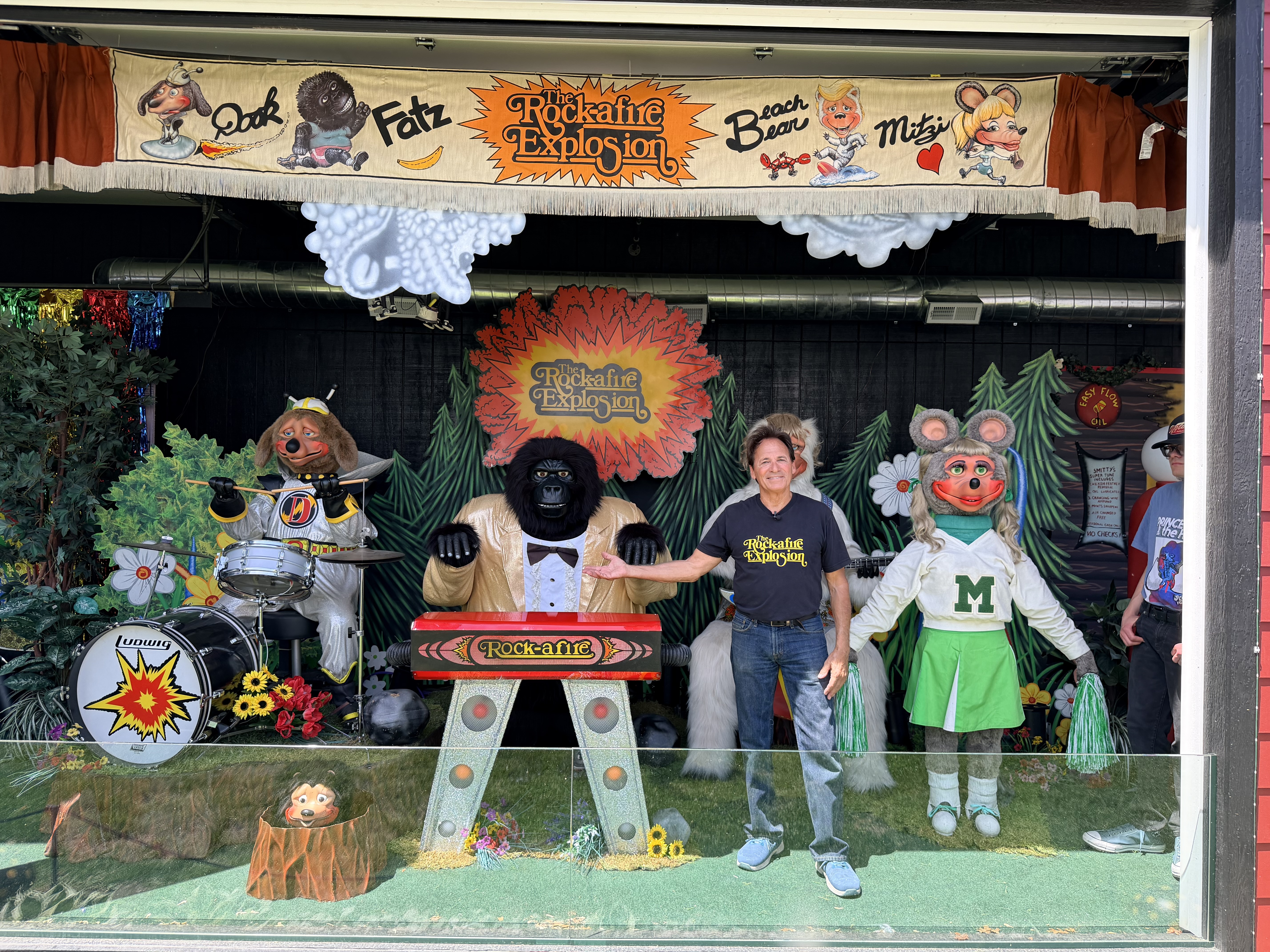

At the Volo Museum, a music group that rocked the 1980s is performing yet again, and the unusual troupe is drawing in more than just nostalgic adults; it’s the Rock-afire Explosion, the animatronic cartoon animal band.
This is the band’s third season performing at the unique museum, and last weekend’s opening show — which included a meet-and-greet with the group’s creator — was packed with fans. Despite the animatronics being decades old, the crowd skewed young.

Rock-afire Explosion is the creative and technological creation of Aaron Fechter, an eccentric inventor, musician and entrepreneur whose company Creative Engineering Inc. has a storied history in the entertainment industry.
But Fechter’s interest in engineering and technology actually began a bit differently. He dreamed he could “save the world” with his inventions, Fechter said, and through his career he’d work on projects ranging from a high-mileage car to an electronic message system he called the “anti-gravity freedom machine,” which despite development efforts was never released after the rise of email.
“I know, big dreams,” Fechter said. “I always bit off more than I could chew.”
When Fechter was a young adult, he was going door to door selling the “leaf-eater,” a device he created to clean pools, when he happened to meet a man who got him into the entertainment industry, building control systems for a shooting gallery.
It would kick off a career that — in some ways — helped define the lasting aesthetic of the 80s. ShowBiz Pizza Place, a family restaurant chain first opening in 1980, would become iconic for their animatronics, created by Fecter’s company.
The character concepts would evolve over the years into Rock-Afire Explosion, featuring the brown bear Billy Bob Brockali, Looney Bird, the polar bear Beach Bear, a gorilla called Fatz Geronimo, drummer dog Dook Larue, the mouse Mitzi Mozzarella, and Rolfe DeWolfe, a ventriloquist wolf with his puppet Earl Schmerle.
ShowBiz would later purchase Chuck E. Cheese Pizza time Theatre, and by the early 90s fully replaced Fechter’s characters. But the band and its characters would continue beyond the restaurant chain, and Fechter has kept his creations close through the decades.

The Volo Museum entered the picture by chance when Brian Grams, whose family has owned the museum for generations, found a set of the animatronics for sale on Ebay about eight years ago.
Grams said the museum has had a few animatronics over the years, but Rock-afire Explosion, which Grams recalls seeing as a child on television, was different. The level was far above anything they’d had previously.
“It’s pretty much the holy grail,” Grams said, “This one was a full band, lots of character, tons of movements.”
The museum actually bought the animatronics back in 2017, and reached out to Fechter after Grams did some research on the group’s history. But between a lack of a proper performance space and negotiations over licensing the band for actual shows, the animatronics remained in storage for years.
Talks finally had a breakthrough a few years ago, Grams said. Part of the issue, as he saw it, was that both hadn’t fully appreciated the value the other was bringing to the table.

“I don’t think I understood what a pull Rock-afire was,” Grams admitted. “And I don’t think Aaron understood the pull the Volo Museum has, either.”
That’s since changed; the animatronic shows have proven exceptionally popular, and Fechter “loves Volo now that he’s been here,” Grams said.
Fechter said part of his struggle through the years has been battling against a misconception that the group has been abandoned and is free to use; he’s continued working on Rock-afire Explosion in various ways through the years.
Something both Fechter and Grams noted was the resurgence in popularity animatronics have seen, especially with young people. Media like the popular horror video game series Five Nights at Freddy’s, which draws heavy inspiration from Fechter’s creations but with a dark twist have sparked interest for many kids and teens.

And that interest isn’t just limited to characters or aesthetics. When Grams was searching for an installer for the animatronics, he said he expected “some 60-year-old guy that used to work on them back in the day.”
Instead, he had teenagers and 20-year-olds reaching out. While he initially brushed them off, he finally ended up hiring a 17-year-old from Crystal Lake. Underneath their colorful cartoon animal exteriors, the animatronics are a skeleton of metal and pneumatic tubes. But Volo’s youthful technician had no problems, he said.
“My god, the guy is a whiz,” Grams said. “He knew everything inside and out. He knew how to do the programming, knew all the valves and lines and everything that goes wrong along with it.”
In attendance for the meet-and-greet was mother and daughter Tiffany and Kayla Ramsey. Kayla was ecstatic to be there, sometimes literally jumping for joy after meeting Fechter and getting ready to watch the performance later that day.
She’d first learned about animatronics through videos online, and became obsessed with their history, technology and characters.
“The mechanics, I love the depth of the characters … I absolutely love the way they move and the way they rock,” Kayla said.
Tiffany actually remembers going to animatronic family restaurants as a child, and while she recalled loving it as a kid, it wasn’t to the degree her daughter does, she said with a laugh.
This year marks the Rock-afire Explosion’s third season at the Volo Museum, and it’s continued to draw in repeat guests, including many young children, some as young as 6 or 7, Grams said. Many people from online fan groups are meeting in-person for the first time to see the shows, he said.
“These people are very passionate,” Grams said. “People are buying membership passes, coming multiple times just to see them.”
The shows will be operating through Labor Day, Grams said, and then on weekends only until the season turns.