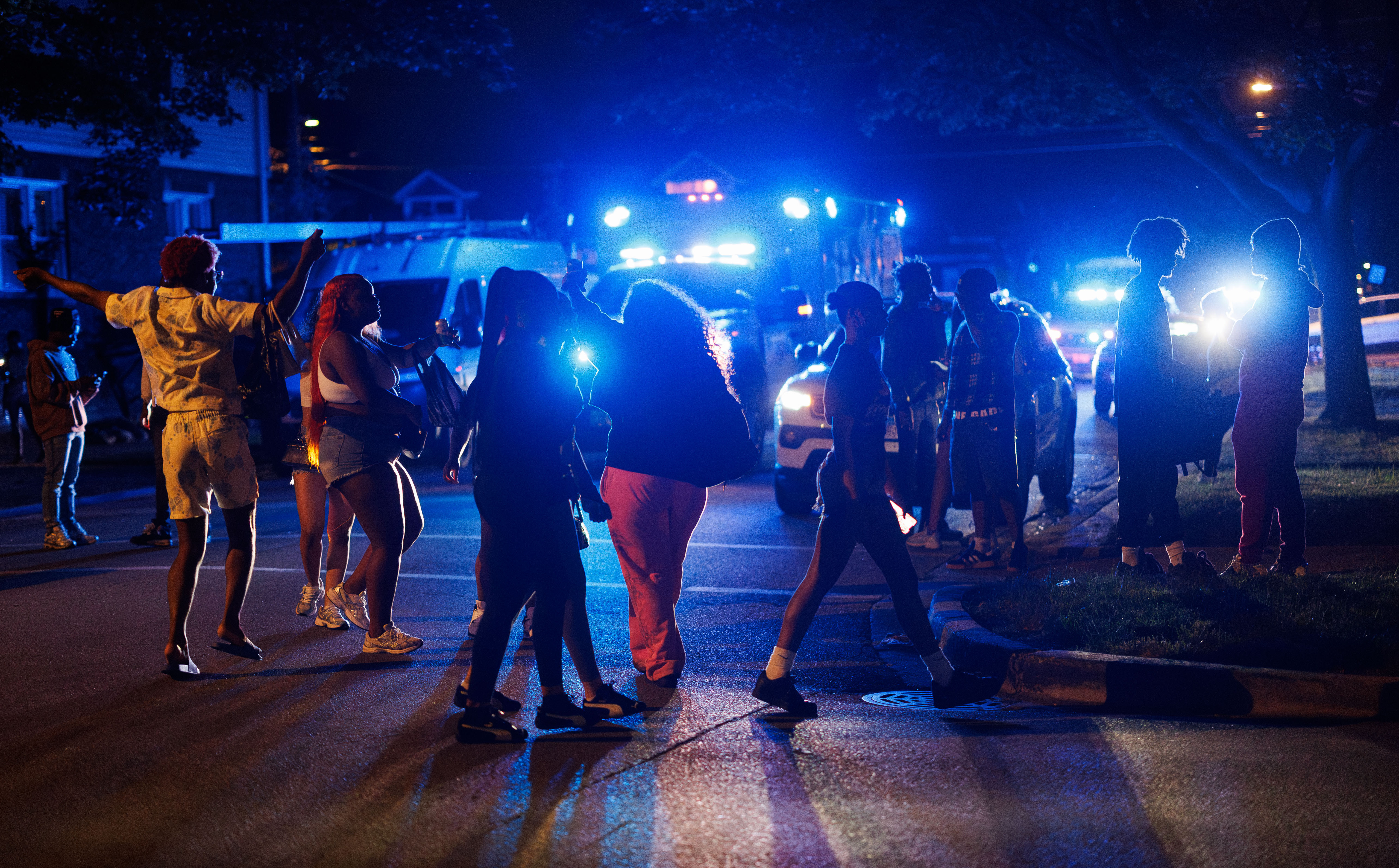
The 911 call came in just after 10:30 p.m. one recent Saturday night: Fifty teens in the street at 88th and Loomis, jumping on cars and damaging property.
Droves of Morgan Park (22nd) District police responded to the block, where dozens of young people were dancing, laughing, screaming and running back and forth.
Robert and Jasmine Williams sat on the front stoop of their bungalow as police pushed the crowd north. One kid turned two backflips in a row in the middle of Bishop Street.
The pair had heard about “takeovers” in other neighborhoods, but had never actually encountered one in Auburn Gresham.
“It’s entertaining,” Robert Williams said. “We used to do this at Route 66, the skate rink.”
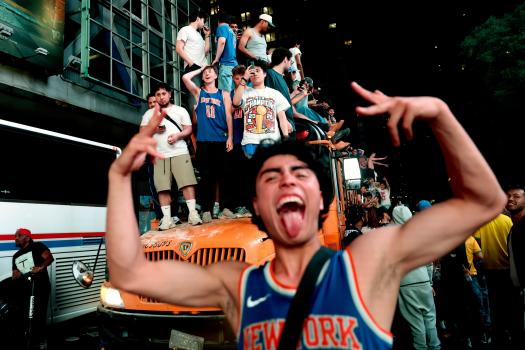
Such gatherings — known as “teen takeovers” or “teen trends” — have become increasingly common in Chicago over the last decade, especially during the warmer months. They are sporadic, organized quickly on social media, and can sometimes end in violence or even fatal gunfire.

Mayors and police superintendents have for years struggled with how to appease wealthier, mostly white residents and tourists who may feel unsafe while ensuring the downtown area and lakefront are accessible to all residents, especially the city’s Black youths, who mostly live in poorer neighborhoods on the South and West sides.
As the takeovers have once again risen to the top of the city’s ongoing public safety discussion, Mayor Brandon Johnson has responded with perennial opportunities like summertime job opportunities for youth and newer additions like free membership to city YMCAs for people ages 12 to 18. And community organizations up and down Chicago have planned “takeovers” of all kinds — prayer takeovers in Pullman, peace takeovers in Auburn Gresham and youth empowerment takeovers in Englewood, to name a few.
Cities as close by as west suburban Naperville and as far as Washington, D.C., are seeing similar events and wrestling with how best to manage them in a way that doesn’t endanger public safety and lets kids come together to hang out and blow off steam. In Chicago, city leaders have floated a range of possible solutions, from job programs and better social media regulation to city-sponsored social events to snap curfews and parental liability ordinances.
Adolescent psychiatrists, meanwhile, say the city’s leaders have repeatedly failed the city’s most vulnerable children, who are constantly exposed to trauma while their decision-making abilities are still developing.
Others — from young people themselves to professionals who work with them and the families who have endured the worst-case scenarios that can result from takeovers — see a mix of factors that lead to the takeovers and an accompanying range of solutions.
There’s the need for parents to know where their children are, they said. There’s the need for community institutions to provide support where parents can’t. There’s the fact that many neighborhoods don’t have the same youth gathering spaces they used to have.
Malik Fedrick says he knows “a decent amount” of people who do attend the trends when they see them — “to have fun and take their mind off stuff,” he said.
But Fedrick, 19, said he often sees news coverage of the takeovers and feels like something is missing: namely, “the real background of why they do a teen takeover and why certain people are doing what they’re doing.”
‘Who comes downtown with guns?’
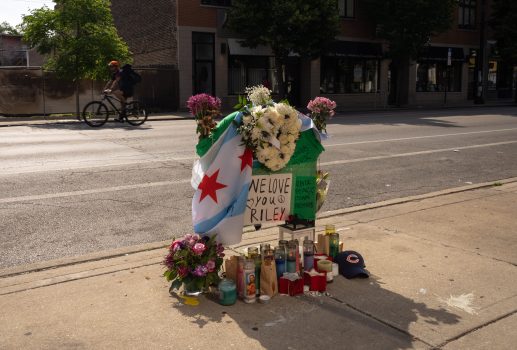
Armani Floyd told his dad where he was going the night of Nov. 21: He was going with a couple of classmates and basketball teammates to the tree lighting downtown. The tree lighting was the location of a planned “takeover” that mushroomed into a pair of shootings — one outside the Chicago Theatre on State Street and one at 140 S. Dearborn St., where Armani was shot and killed.
His father, Ulysses Floyd, a former high-ranking Gangster Disciple who has since become involved in violence interruption efforts, knows better than most people what targeted violence looks like. Police told him Armani was targeted, he said in a Thursday interview. But he can’t think why that might have been the case.
“He wasn’t no bad kid,” Floyd said. “He didn’t own no gun. He wasn’t in no gang.”

Instead, he said, Armani spent most of his time playing basketball — either at Project sWish or at the Kroc center at 119th and Ashland. He played as a shooting guard and a point guard. Floyd, 75, remembered standing in the bleachers at one of his games, “hollering his name” when Armani recorded a triple-double.
“I was proud of him,” he said. “I’m still proud of him. I’m still trying to find out what happened.”Floyd doesn’t object to big groups of young people meeting up: “I’m good with the kids assembling, going somewhere, as long as it’s a positive atmosphere.”
Armani, he said, didn’t go downtown looking for trouble. But, Floyd said, with people coming from all over the city — some of them armed — “they see somebody that they’re into it with or whatever. And then that causes a big problem.”
“The night Armani was killed, I was looking at the news, and they said they recovered like seven or eight guns, and some more people got shot,” he continued. “Who comes downtown with guns?”
Floyd said he saw a few ways to address takeovers: “More guardians involved, churches, institutions. Parents have to be involved. There has to be some structure.”
But once groups do materialize downtown, he said, what’s needed is “more boots on the ground” — referring to outreach workers and others who work to deescalate violent conflict could help stop confrontations from spiraling.
Shirley Floyd Sherley, Armani’s aunt, agreed with her brother’s assessment: “The more we become involved, the less dangerous it will be.”
Sherley, 71, quoted the old public service announcement: “It’s 10 p.m. Do you know where your children are?”

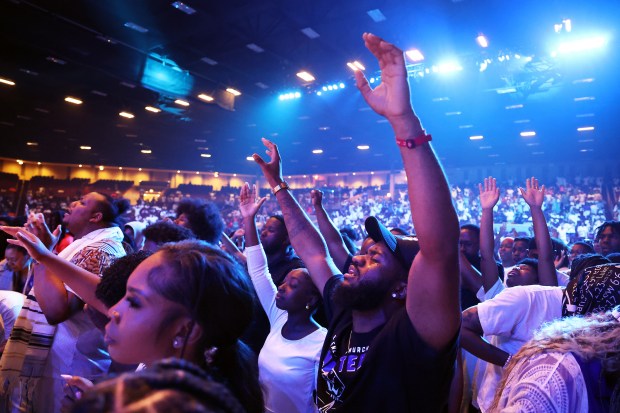
That said, Sherley also remembered growing up in Roseland and walking everywhere — to movies, to roller skating, to amusement parks.
“The movies were right here on 110th (and Michigan),” she said. “Fun Town was on 95th (and Stony Island). We had a good time.”
All of that is now closed, she said. Now, when her family wants to go to the movies, they go to Crestwood or another suburb. When her grandson wants to take a girl on a date, she said, “he goes west on I-80 — way over.”
She sees a need for more spaces where teenagers and young adults can spend their free time with some supervision, but “not the kind of supervision where they feel they have to be combative about it.”For Malik Fedrick, the place where he spends much of his unstructured free time is Precious Blood Ministry of Reconciliation, which he describes as an extended family. He’s done just about every program the organization offers and will spend hours there with his friends.
“We sit here and have fun and enjoy each other’s presence,” he said. “We play basketball, volleyball.”
But a lot of other things, like SkyZone or movies, are half an hour or 45 minutes away from Back of the Yards, where Fedrick lives. In his view, “teen takeovers happen because there’s not a lot of stuff to do. To have fun and be able to go outside.”
He said there was no getting around the fact that at takeovers, “sometimes they do outrageous things. Like, why are you jumping on somebody’s car?”
“People don’t know when to just let stuff be, and realize that there’s more than that person that they’re into it with out there,” he said. “You can literally harm somebody outside that (doesn’t) have nothing to do with nothing.”

Joe Montgomery, a youth mentor at Precious Blood, echoed that point: One of the best things adults and organizations can do for young people is take them places. He remembers being taken to the Wisconsin Dells, canoeing, go-kart racing, batting cages — normal things that not every teenager has access to on their own.
He mostly hears about takeovers “when something goes wrong,” he said. He hasn’t heard of one taking place in Back of the Yards, for example. Part of that, he speculated, is that downtown neighborhoods are “open space, neutral ground.”
“If I knew a parent could stop the kid from going,” he said, he’d reach out to that parent or guardian.
If that wasn’t the case, he said, he’d warn that young person to be aware of his or her surroundings.
“You’re already a stereotype,” he said, discussing how he’d advise someone who planned to go to a takeover. “Make sure you don’t fit it.”
Montgomery said he realized that people in wealthy, predominantly white downtown areas pay premiums for safe neighborhoods with amenities, and that groups of young Black and brown people can be seen as threatening even when everyone in a group is having a good time — “especially when you have not been close to what you see,” he said.
“People call the police, and they come with their sirens, and now that’s just going to make the kids get more anxious and frustrated,” he said.
Fedrick, for his part, thought police responding to trends should get involved if people were “acting out and they’re acting wild,” but said he’s also been around for situations where police intervention wasn’t necessary and went ahead anyway.
“If everybody’s just having fun, I think they should just let everybody know that they’re there,” he said. “But I don’t think they should get involved unless there’s a real cause to get involved.”
Last week, during a status hearing in the city’s ongoing consent decree, police Superintendent Larry Snelling again defended Chicago Police Department officers’ work to maintain a sense of safety and order. The superintendent highlighted the teen trend at 57th Street Beach during Memorial Day weekend when officers made 70 arrests and recovered 15 guns while dispersing people from the lakefront.
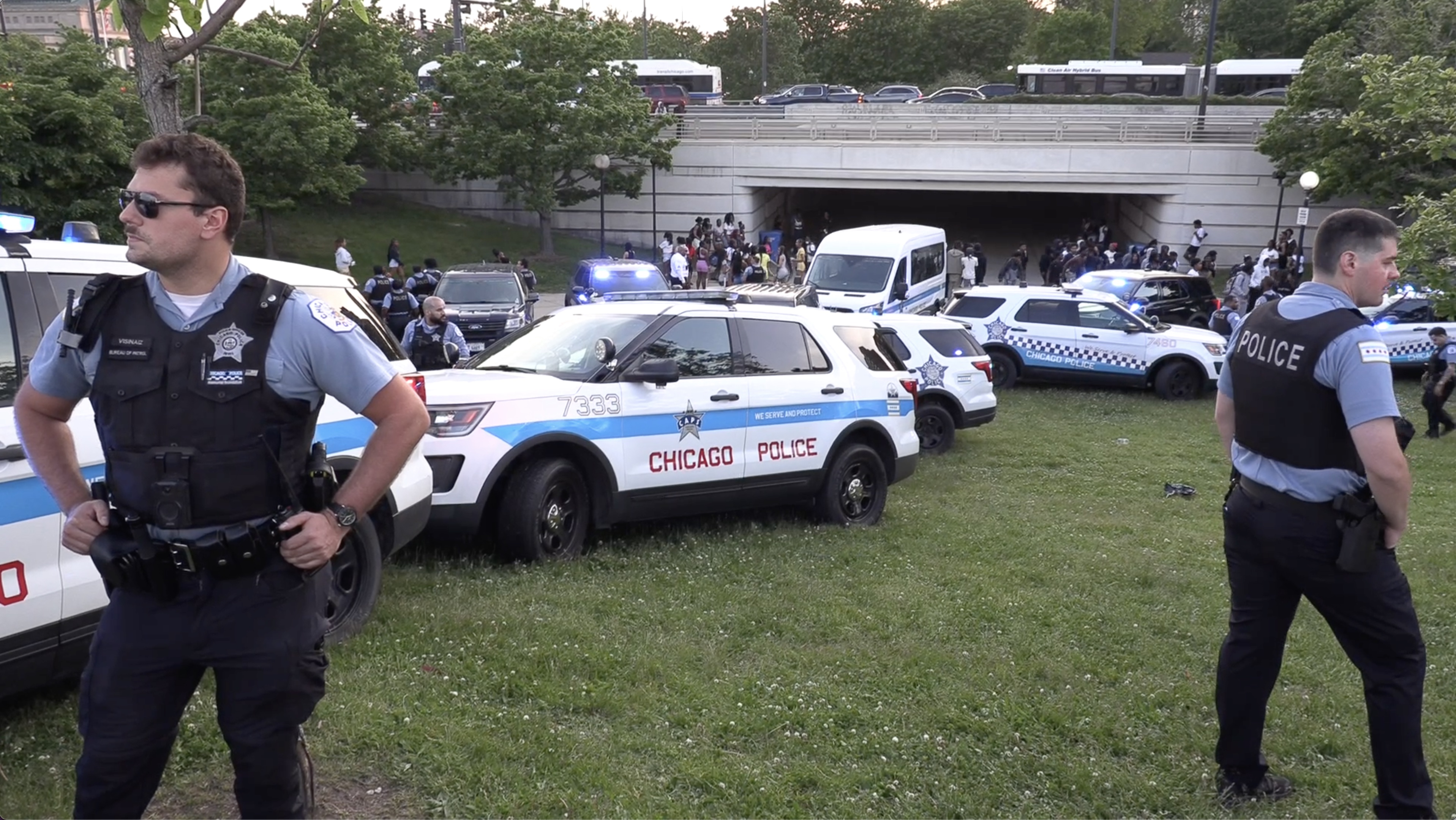

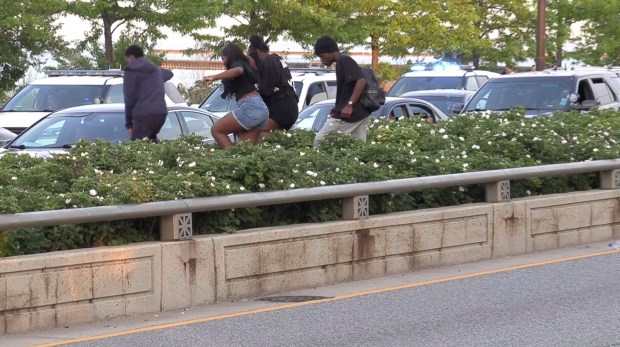
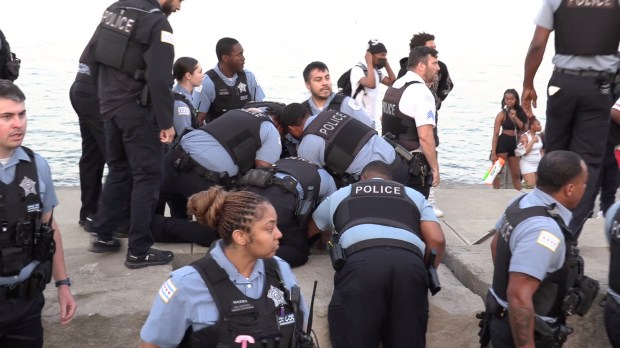


CPD’s current youth intervention efforts are, effectively, a referral service led by the bureaus of patrol and detectives. After children are arrested — and depending on the severity of the alleged offense — they may then be referred for resources from the Department of Family and Support Services’ Youth Intervention Pathways program.
What doctors say
Dr. Khalid Afzal, a UChicago Medicine adolescent psychiatrist, said the brain’s prefrontal cortex — which controls executive functions, impulsivity and decision-making — may not reach full maturity until a person is 25 or 26 years old.
“A teenager, if we think metaphorically, is like a Corvette engine in a Kia,” Dr. Afzal said in an interview with the Tribune. “They have so much energy and everything, but the car can not handle that.”
Maturation can be stunted by environmental factors, Dr. Afzal said, such as violence at home, neglect, exposure to drugs and the incarceration of family members.
When evaluating a child, Dr. Afzal said, he asks them about their neighborhood and their “scariest experience.”
“Many of them tell us (of) hearing gunshots at night, even during the day,” Dr. Afzal said. “They become, literally, traumatized by listening to these ambulances and police cars.”
For teens, much of the adolescent development period is marked by a search for identity and belonging, Dr. Afzal said. The teen takeovers, meanwhile, allow for participants to shed their personal identity and become part of a larger, more powerful group.

“These teen takeovers, technically, are mobs. The advantage of being in the mob is that I will not have to portray myself as an individual,” Dr. Afzal continued. “I’m going to ‘deindividuate’ — meaning I’m going to lose myself — and now I’m going to morph into this big, giant identity where I can do anything and nobody can identify me. That’s a power.”
At the end of the day, though, the reckless behavior among the city’s youths can be attributed to failures by the adults in charge, Dr. Afzal said.
“What these kids are doing, we grown-ups have failed them … by not protecting them, by not providing them the opportunity, by not preventing the exposure they receive early on, not providing them (a) nurturing environment like all children deserve,” he said.
Sara Thomas, a research assistant professor of psychiatry and behavioral sciences at Northwestern University, has for years studied the long-term consequences of Chicago youths’ contacts with the juvenile justice system. Her research has included interviews with about 2,000 kids from ages 10 to 18 from the South and West sides.
“Multiple studies that we’ve done and papers we’ve published in our own lab have talked about (how) violent victimization is one of the leading predictors for violent perpetration down the road,” Thomas said in an interview with the Tribune. “It’s those early experiences of being threatened, being shot at, being harmed that cause people to gear up and protect themselves and, ultimately, lead to a perpetration of violence.”
“The kids that I’ve spoken to, they are very reluctant to carry weapons,” Thomas added. “They don’t want to carry weapons, whether that’s pepper spray or a knife or a gun. But when they feel like all of their other tactics aren’t working to keep them safe, that is when they start looking to arm themselves in some way, because they feel like the alternative is not coming home.”
Shortly before he assumed leadership of CPD, Snelling — who grew up in Englewood — called for a clear-eyed examination of the factors that often lead the city’s youths down a path to violence.
“Because when you have a 14-, 15-, 16-year-old shooter, you can’t blame the 14-, 15-, 16-year-old,” Snelling said. “We have to start looking back to see where this child was failed. This goes beyond us.”

“These are young people who are coming together to create chaos,” he said. “That is the actual goal. People need to understand that.”
“The failure here,” he said, was that “we don’t put accountability on teenagers, because teenagers need it more than anybody.”
He called for greater consequences for the teenagers who take part in the gatherings, both from their parents and in the public conversation that they tend to set off.
“I think it’s an insult to young people, especially young, inner-city kids — I was one — to say that they shouldn’t be held accountable for this,” he said. “Because what we’re actually saying is, they don’t have the intellect to be able to determine right from wrong.”
City Council
As word of planned takeovers spread on social media, CPD typically deploys dozens of officers to the gatherings’ advertised locations. Last Thursday, CPD was out in force at Foster Beach for just that reason, on foot, bikes and in squad cars.
Ald. Leni Manaa-Hoppenworth, 48th, sent a warning email to constituents. But “at the end of the day, nothing happened,” Manaa-Hoppenworth said. “It was hundreds of kids, hanging out on the beach.”
She praised police and violence interruption workers for showing up to head off any trouble. The response was like any extra-crowded day, she said.
Manaa-Hoppenworth argued that while the meetups are currently “very polarizing … because of high-profile events that happen where terrible things occurred,” kids need opportunities to come together. It’s hard to find jobs and hard to pay for things, but public spaces are free, she said.
“We have to allow them to find themselves and build community and find each other, and I can’t imagine that it’s really easy right now to transition into adulthood,” she said. “We should not have to feel like we have to look over their shoulders for them to build community.”
Ald. Lamont Robinson, 4th, has heard about several planned gatherings in his South Side ward, but most haven’t materialized. He has tried to reach out directly to the young people who organize trends and even hired one as an intern.
“They are looking for safe spaces to be able to meet other teens,” Robinson said. “Our young men want a space to be able to meet girls and really be teenagers. Some of them understand that these trends are turning into something else, where people are getting hurt and property is being destroyed.”

He questioned the strategy of penalizing parents of kids who get into trouble at trends, arguing it could harm low-income families and would not address the fact that many young people don’t have parents.
Ald. Raymond Lopez, 15th, proposed that strategy in March when he introduced legislation aimed at holding parents accountable if their children violate the city’s curfew and other laws. The ordinance would have added fees of up to $5,000 for parents of teens who break laws, as well as required community service and family counseling.
The City Council rejected the idea, but Lopez said he still wants such legislation and is willing to drop a requirement for fines. Lopez blasted the idea that such rules would unfairly harm working-class and poor families. Too many parents are disengaged, and too many excuses are made for them, he said.
“I’m not interested in their money. I want them to become better parents,” he said. “Ultimately that’s going to be the best program we have for putting an end to this youthful madness that we have.”
A different response that’s gotten more traction is implementing a short-notice curfew for teens — anywhere between 30 minutes and 12-hours — but those attempts have all stalled at different stages of the legislative process.
Ald. Brian Hopkins, 2nd, a chief proponent of the measures that have so far not made the finish line, said he plans to soon push for a similar “dispersal” ordinance that would allow adults to be arrested and teens to only be taken into custody when police try to break up the ongoing gatherings.
“The dilemma I face is trying to split the difference,” he said. “The harder I go on this, the more I lose the mayor and his team, and the softer I go, the more I lose my original coalition.”
Hopkins said Snelling has told him that he wants the curfew powers “and he knows his police would use it effectively.”In addition to dispersal ordinance and a proposal to pressure social media companies to remove posts advertising parties, aldermen are also preparing an ordinance that would implement a scale of fines for parents whose children are apprehended at such gatherings, Hopkins added.
“We pass these three laws, you will see a noticeable decline in the number of teen takeovers that happen, and that’s what we’re trying to do, that’s the goal here,” he said.

Back in Auburn Gresham, as police herded the crowd toward 87th Street, Robert and Jasmine Williams said they didn’t mind the group being there. They figured that some of the kids were smoking weed or drinking underage, but said they’d been out for nearly two hours and hadn’t seen fights or heard gunshots.
The crowd moved past the Williamses’ house and into a parking lot on 87th Street. There, a group surrounded a car as people danced on its roof. A few people wearing face masks sprinted across the street into the middle of the crowd. Others sat on curbs in small groups, looking at their phones and debating their next move. A CPD arrest transport wagon pulled into the lot. Everyone scattered.A CPD spokesperson said a 16-year-old girl was arrested and charged with reckless conduct, criminal damage to property and violating curfew.
Jasmine Williams, a teacher, saw a former student in the crowd as the group moved north past her house. She asked the student about his mom and his sister, she said — and what the gathering was. In his words, she said, “It was just a (meetup). A party.”