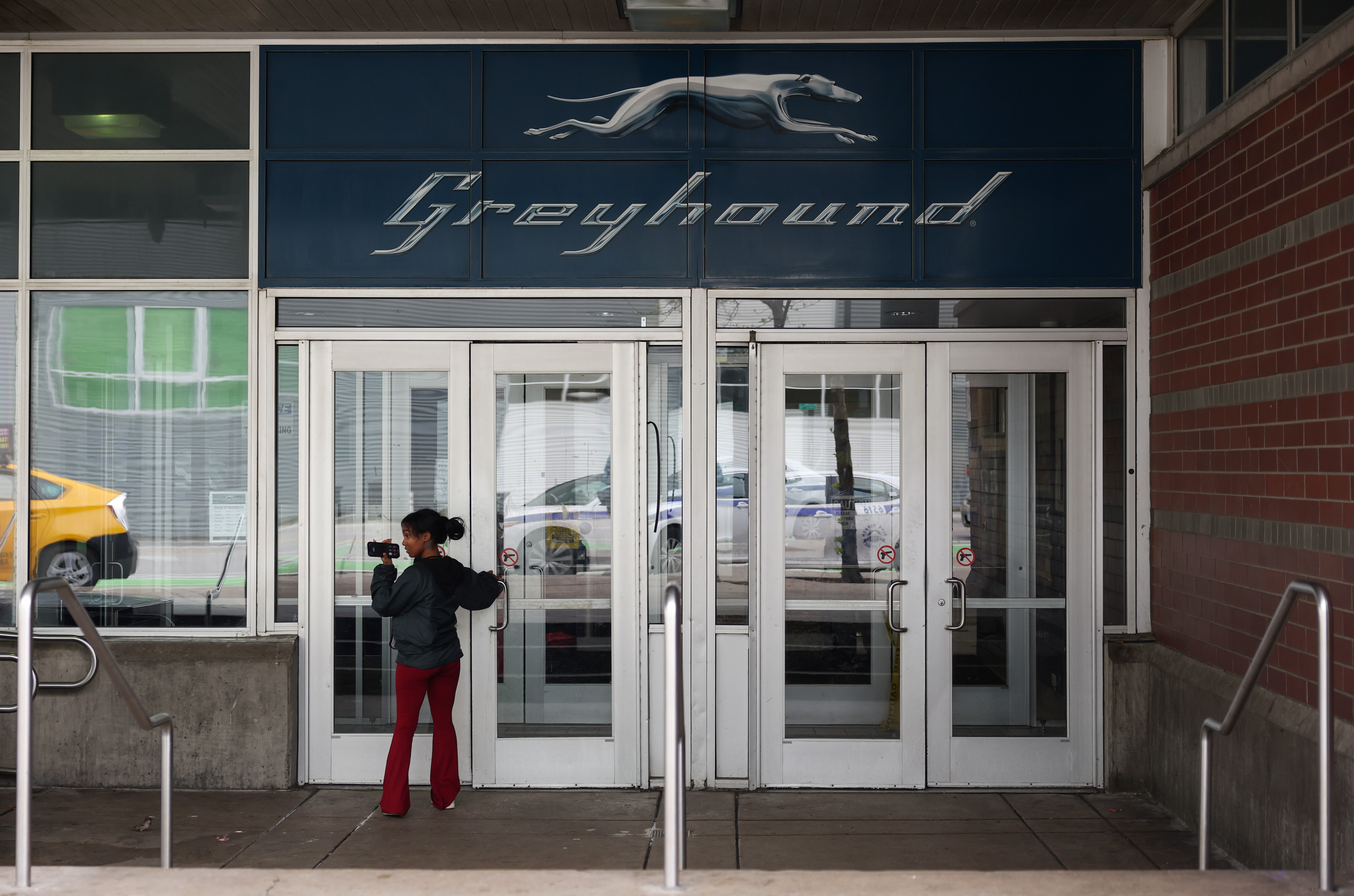
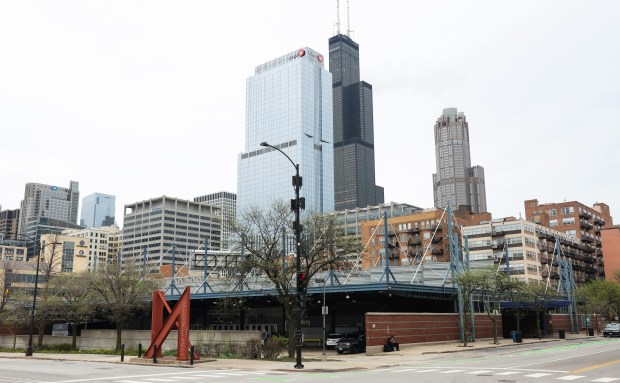
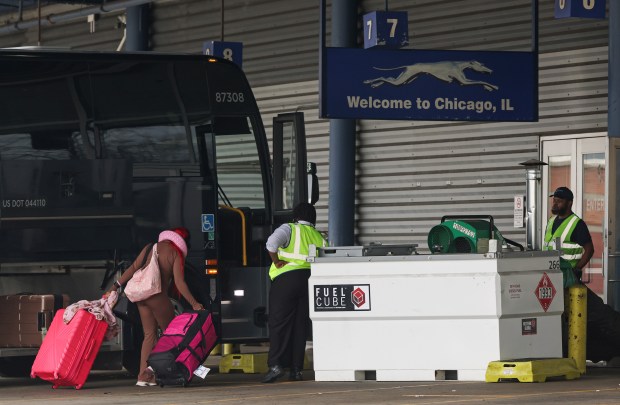
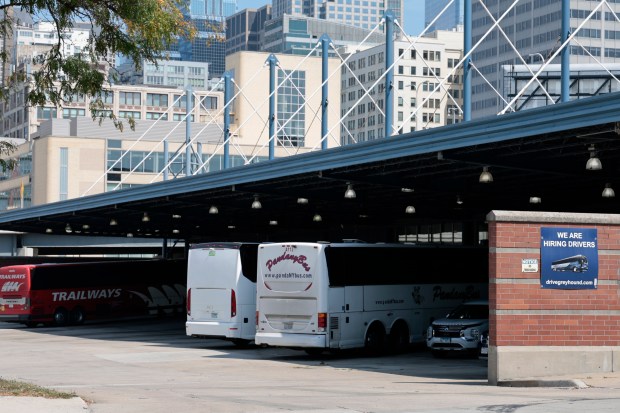

Chicago is set to buy the Greyhound bus station after aldermen on Wednesday approved Mayor Brandon Johnson’s plan to purchase the downtown site.
Johnson’s administration pitched acquiring the building as a critical step in protecting bus riders and keeping bus travel to and from Chicago affordable. But some aldermen argued the $19.2 million price was too high ahead of a 38-to-10 vote.
Ald. Bill Conway, 34th, had previously urged Johnson to share more details about his plans for the site, but on Wednesday endorsed the purchase as an essential part of Chicago’s transportation network.
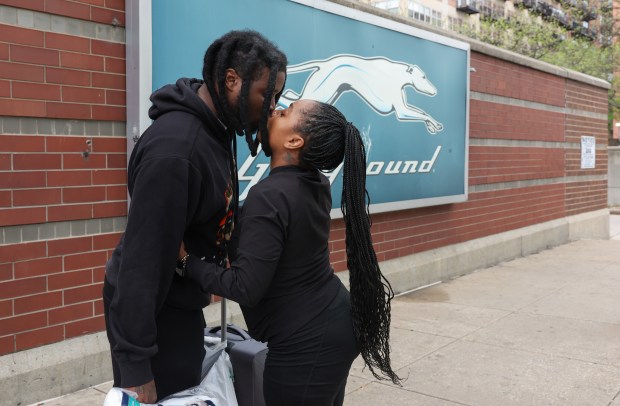
Conway noted he was “initially one of the project’s biggest skeptics.” But his qualms have been addressed, and the nearly half a million riders who use the bus station every year are “not powerful people,” he said.
“They don’t have lobbyists, they don’t write campaign checks, but they are people that matter and they rely on affordable transportation. They are our constituents too, and they frankly deserve to know who stands with them,” Conway said.
But some aldermen argued the sale will be too expensive and the city is ill-prepared to oversee a bus station.
Ald. Marty Quinn, 13th, said he believes the total cost of the purchase and rehabilitation — last estimated at $50 million in total — is an undercount. In the past, the city has struggled to operate its transit hubs, such as Midway International Airport, he added.
“Our budget gap that we’re going to get into in short order would suggest that we shouldn’t be in the business of buying property, we should be in the business of selling property,” he said.
The future of the station at 630 W. Harrison St. — and the future of intercity buses in Chicago — had hung in limbo since August 2024, when the long-term lease for Flix, the company that owns Greyhound, ended. The company has been on a month-to-month lease since.
The facility is currently owned by Twenty Lake Holdings, the real estate division of private equity firm Alden Global Capital. Alden also owns the Chicago Tribune through its Media News Group subsidiary.
Johnson’s administration plans to use $35 million next year and another $15 million in 2027 to purchase and rehabilitate the building, using money sequestered in a tax increment financing district that was expanded earlier this year to include the site. Officials have said the city will use third-party management contracts to operate the station.
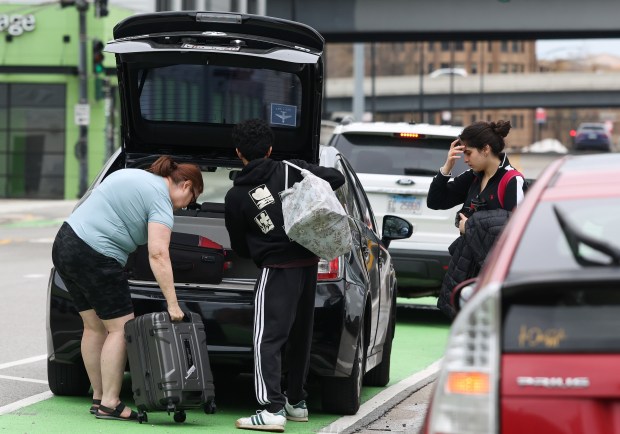
With the purchase, Chicago becomes only the latest city to buy a private bus station amid economic pressure. The move championed by transportation activists will help ensure bus companies don’t instead operate out of other nearby cities or use less safe curbside locations that are exposed to the elements to pick up passengers.
After Quinn’s speech, Ald. Jason Ervin, whose ward cuts close to the station and includes the TIF district that will fund the purchase and rehabilitation, reiterated that the money will not come out of the city’s corporate fund.
The city has a responsibility to make sure less wealthy Chicagoans have options to travel, Ervin said.
“I think we have to know and understand that there are people in our city that cannot afford to go to Midway or O’Hare or maybe even ride Amtrak, but still need to have a viable mode of transportation,” he said.
Conway said the bus terminal is also especially critical to people traveling to two nearby reproductive healthcare facilities from nearby states where abortion has been outlawed. He pledged to stay involved and “hold all parties accountable” as the purchase and construction move forward.