
For a place known as the “Second City,” Chicago spent most of the 20th century shaping modern America.
Not just reflecting the country, but stress-testing it, wiring it together, commercializing it, electrifying it and then shipping the finished product to the rest of the planet.
That’s what makes the nickname so unintentionally funny. Chicago may be the most undercredited origin city in U.S. history.
New York was the financial capital. Washington was the political capital. Los Angeles became the dream factory. But Chicago was the great switching yard of modernity — the place where railroads, migration, industry, advertising, Black music, organized sports, manufacturing, media and mass consumption all collided hard enough to become scalable national culture.
The “American Century” was shipped through Chicago with the efficiency of its hometown Sears and Spiegel catalogs.
The city also helped invent American TV branding.
The Leo Burnett agency alone created a gallery of modern mythology: Tony the Tiger, Charlie the Tuna, the Marlboro Man, the Pillsbury Doughboy, the Maytag Repairman and “Fly the Friendly Skies.” Not just advertising campaigns. National characters in U.S. living rooms and kitchens.
Chicago didn’t just participate in consumer culture. It industrialized it.
The same thing happened in sports. The NFL’s roots run directly through Chicago. Bears owner and coach George Halas was one of the architects of professional football as a national institution.
Then there’s basketball as we know it. The Harlem Globetrotters weren’t based in New York City; they attended DuSable High School and originated on the South Side at the Savoy Ballroom in 1926. The Trotters were dazzling Midwestern fans with ball wizardry and slapstick wit before their name became literal.
Long before Michael Jordan fueled the Chicago Bulls dynasty, Chicago was already the great urban basketball ambassador to the world. From intense Catholic league gyms and South Side playgrounds, to the legendary pipelines of Simeon, Marshall and Whitney Young, the city is a hoops hotbed. Jordan didn’t make Chicago basketball global; he stepped into a legacy.
Negro League baseball was scaled in Chicago, too, through the genius of founder Rube Foster. The East-West All-Star Game — one of the great Black sporting events in U.S. history — was played in Chicago before the MLB even established its own All-Star Game.
Music followed the same pattern.
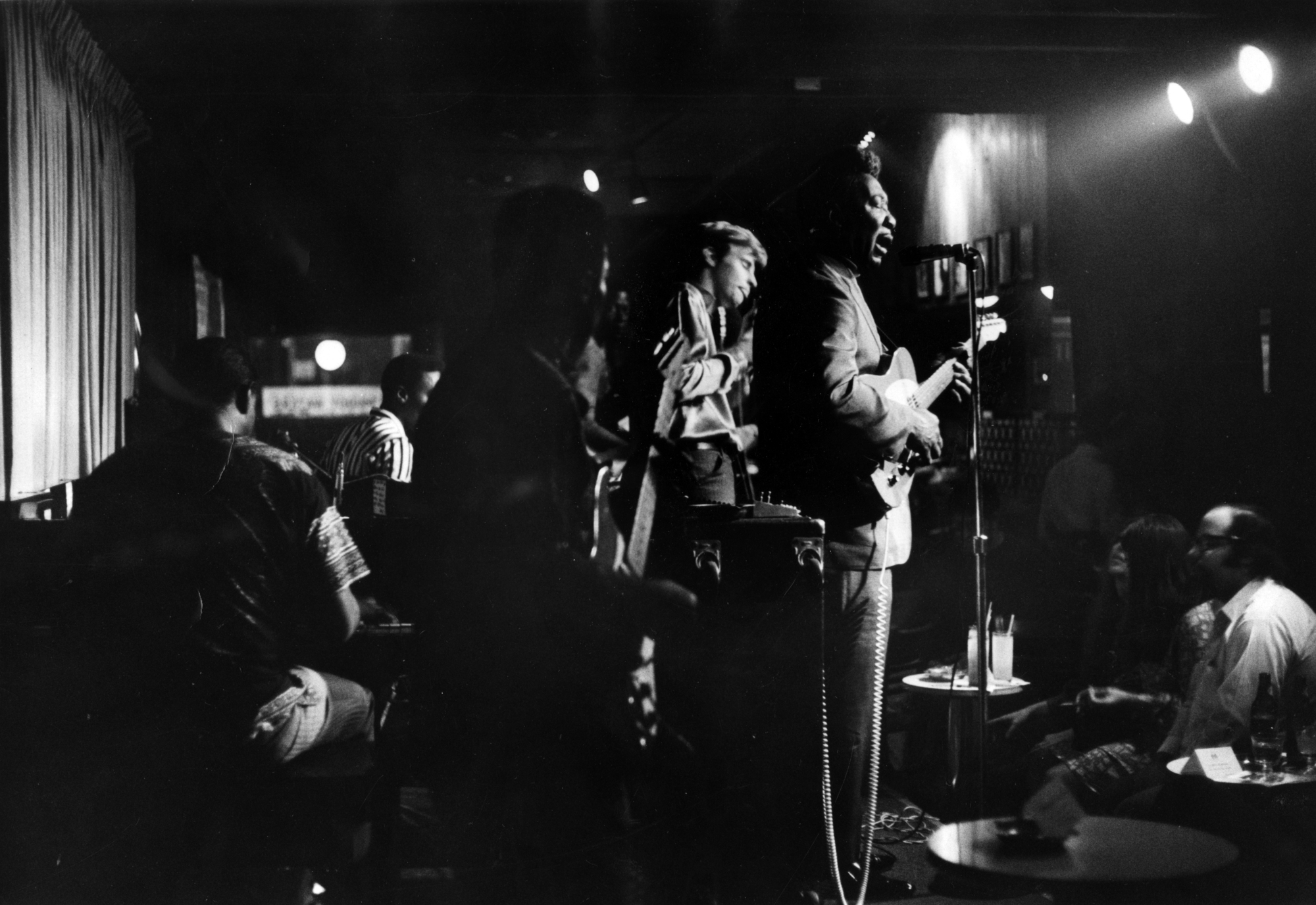
Delta blues migrated North but plugged into electricity in Chicago. Muddy Waters, Howlin’ Wolf, Willie Dixon and Buddy Guy helped transform regional Southern music into modern amplified urban blues — the direct ancestor of rock ‘n’ roll. Louis Armstrong became a national phenomenon there. Mahalia Jackson’s gospel authority radiated outward from Chicago churches into American culture itself. The churches gave us Sam Cooke, Jerry Butler and Curtis Mayfield.
Even the Beatles’ U.S. story unexpectedly runs through Chicago.
Before Capitol Records understood Beatlemania’s commercial potential, the Beatles’ first U.S. releases were handled by Vee-Jay Records on Chicago’s South Side — a Black-owned label that briefly held one of the most valuable catalogs in entertainment history before national disc jockeys or Ed Sullivan knew what hit them. Chicago repeatedly sees the future a little earlier than everyone else.
Sometimes decades earlier.
The 1893 World’s Columbian Exposition may have been the single most influential temporary event in U.S. cultural history. In one summer, visitors first encountered the Ferris wheel, large-scale electric illumination and moving sidewalks. There, Juicy Fruit gum, Cracker Jack and the light bulb went from invention to common consumerism.
Chicago introduced millions of Americans to the 20th century seven years before the 20th century even arrived.
The city also has left an indelible mark on mass media.
Ebony and Jet magazines did not merely chronicle Black America; they helped redefine how Black America saw itself. Playboy reshaped postwar publishing, lifestyle branding and modern magazine culture. “Soul Train” emerged from Chicago before becoming a nationwide Saturday morning TV fixture. And Second City became the most influential comedy incubator in modern entertainment, producing generations of performers, writers and directors who reshaped American television and film.
Which makes it fitting that Chicago also produced the two most influential film critics in the history of the medium.
The Sun-Times’ Roger Ebert and the Tribune’s Gene Siskel took film criticism from newspaper columns into the national conversation. Two Chicago critics became so culturally influential that studios feared them, audiences trusted them and movie advertising quoted them. That happened in Chicago too.
As did Barack Obama’s political ascent. As did the formation of Oprah Winfrey’s cultural empire.
The point is not that Chicago lacks recognition. The city is hardly obscure. The point is that Chicago is persistently mislabeled.
“Second City” implies runner-up status, as if Chicago spent the last century trailing behind the coasts instead of quietly building the connective tissue of modern U.S. life.
Chicago has often operated less like a secondary city and more like America’s broad-shouldered factory — where immigration, industry, race, labor, entertainment and commerce fused to become mass culture.
The city’s greatest historical talent may actually be synthesis. Chicago takes regional energy and scales it nationally.
Blues becomes electric. Stockyards become industrial systems. Rail hubs become national distribution. Local comedy becomes Hollywood. Playground basketball becomes a global marketing machine.
Even Chicago architecture reflects this instinct. The city did not simply rebuild after the Great Fire. It reimagined the modern skyline.
Consistently, Chicago behaves less like a provincial rival to New York or Los Angeles and more like a prototype for modern America itself. Which is why the comedy troupe nickname rings ironic.
The “Second City” spent more than a century helping create the first version of modern U.S. culture.
Those gifts are worth celebrating on the country’s 250th birthday.
Bijan C. Bayne is a cultural critic and filmmaker.
Submit a letter, of no more than 400 words, to the editor here or email letters@chicagotribune.com.