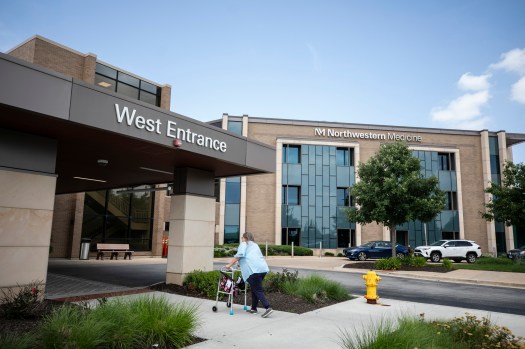


On the heels of its first anniversary, a program designed to improve emergency care for older adults at Northwestern Medicine Palos Hospital has received Geriatric Emergency Department accreditation from the American College of Emergency Physicians.
The Geriatric Emergency Department Initiative program, or GEDI, “is part of a small but growing movement in improving emergency care for elders across the country and around the world,” said Dr. Scott Dresden, who has been director of the program at Northwestern Memorial Hospital in Chicago since 2013.
“Emergency departments around the country are overwhelmed with patients, long wait times to see a doctor, and long wait times for beds in the hospital to become available to newly admitted patients. By better caring for elders in the emergency department, we hope to allow patients to spend more time at home and less time in the hospital,” he explained.
The program is making a difference. “We have seen significant reductions in hospitalizations for elders who are cared for by our GEDI nurses,” Dresden said. “Patients have also indicated higher satisfaction with their emergency department care if they were part of the GEDI program.”
One big benefit is the extra time trained nurses can spend with older adults and their caregivers or relatives “to better understand the underlying needs the patient may have. Many times in the emergency department we focus only on the issue that is most acute, but for elders, there often is more going on that led to the acute issue,” he shared. “The additional work that the GEDI team does to better understand the whole picture has led to many patients being able to be safely discharged home with additional help rather than being admitted to the hospital.”
It was staff at the Palos Heights hospital who lobbied to bring the program there in 2025, given how many seniors show up at its emergency department each year.
“We see 26,000 patients every year 65 and older out of a total of 66,000 patients,” explained Amanda Capuano, a registered nurse who’s spent four years in the emergency department at Palos Hospital and is team lead for its GEDI program.
“My manager and I had been having conversations about the geriatric program and wanted to bring it here. … They thought I would enjoy running the program here because I am a big believer in holistic medicine combined with Western medicine,” she said. “My grandpa was a patient, so I thought there would be an opportunity to provide the best care possible for our aging community.”
Thus far, seven nurses have trained for the program with more expected to join the team. It recently expanded to the night shift and “became so fruitful” that Northwestern’s downtown hospital added the program to its night shift. Capuano credited Julissa Sanchez, the first GEDI nurse trained for night shift, for expanding the program.
Nurses in the GEDI program learn about the clinical frailty scale and how to do a quick delirium screening. “The goals of these are to recognize and identify our most at-risk seniors for decline so you can put preventions in place in their lives as opposed to a rehab or nursing facility,” Capuano said.
Only patients 65 and older get the screening, but not all go through the process. To have a GEDI assessment, patients must come from a home or assisted living facility, because those who arrive from a nursing facility already should have those screenings in place, she explained.
“GEDI works to help those who have complex care needs such as frailty, fall risk, dementia and other similar problems,” Dresden added. “Also, many patients still need to be hospitalized when they are seen by the GEDI team for their acute medical problem. Even if patients are hospitalized, the work the GEDI nurses do can help shorten the patient’s hospitalization and get them home as soon as possible.”
After nearly 2,500 consults, 77% of the patients polled recommended the Palos Hospital emergency room afterward, Capuano said.
“I can see from my own family who come in and experience this with a GEDI nurse. My grandpa left with resources in place to keep him safer at home. I also do follow-up calls with every patient who has gone through the program just to see how they’re doing, make sure there are no barriers to resources, and that they are following the discharge instructions.”
A challenge, however, is having enough staff to make sure patients get the assessment. “Because each exam is so thorough and detailed, it’s time-consuming,” she said. “We have one of the largest pools of geriatric patients in the nation.”

As part of the program, nurses set up patients with occupational therapy, physical therapy and home health, as well as screening them for such things as veteran status so they can get associated benefits, save on medication costs and confirm patients are not on medication that can cause harm, especially opioids, which can affect older adults differently than 40-year olds, Capuano said.
Other resources are transportation to medical appointments via township services. Capuano keeps information for each township on food access and medical equipment.
Identifying senior isolation and providing opportunities for them to mingle with other seniors is another service, as well as a new initiative to save seniors money, “so they don’t need to choose between medications and other needs,” Capuano said.
One of her grandfathers, 77-year-old Ronald Houser, of Palos Park, came to the emergency room at Palos Hospital because he wasn’t feeling well and went through the GEDI program. “I appreciated that the nurses who took care of me took the time to ask questions about what my life is normally like,” he said. “It helped the healthcare team understand how much this illness was affecting me and my way of life.”
He also advised older people to be ready for a sudden trip to the emergency department. “That morning I was able to grab my Northwestern Medicine go bag and head to the emergency department with everything I needed,” he said.
The purple “go bag” can play a crucial role when time is of the essence, such as after a stroke or heart attack, especially when patients are incapacitated. A checklist encourages older adults to prepare a list of medications, copies of Medicare or health insurance cards, emergency contacts and items that would make a hospital stay more comfortable. Nurses are spreading the word about the bags and other elder care factors to first responders.
“Our firefighters are in people’s homes every day, and the GEDI team has given us new tools to spot red flags, things like empty refrigerators, unsafe temperatures, and medical concerns that might otherwise go unnoticed,” Ben Knights with the Palos Fire Protection District said in a news release. “Having a direct line to the GEDI nurses means we can connect seniors to help fast. It’s truly saving lives in this community.”
An unexpected result of the GEDI program is the bond Capuano and the other nurses have formed with some of the senior patients, especially the older ones. “It’s given me an opportunity to learn from our seniors what the community looked like all those years ago,” she shared.
Another is how many nurses have chosen to participate.
“A lot of times in everyday medicine, your main goal is to stabilize the patients. You don’t have time (to do more) because you always have someone coming through the door. You’re really focusing on a senior and what’s impacting them and their life while they’re coming in,” Capuano said. “Seniors are really grateful you took the time to talk to them. It’s a step away from documenting in the spirit of bedside care. It’s uplifting their spirit.”
It’s clear Capuano is passionate about the GEDI program and caring for the community’s oldest residents.
“I never anticipated at 22 when I started in the ER that I would be running a geriatric ER program,” she said, adding that she is working on an advanced practice registered nurse degree with an emphasis on geriatrics. “I’d like to start a gerontology clinic down in the south suburbs.”
Melinda Moore is a freelance reporter for the Daily Southtown.