
In 1995, a deadly heat wave hit Chicago, killing over 700 people and redefining the city’s emergency response.
But the threat of heat-related death still looms as recent years — and days — have shown, and especially as climate change intensifies and lengthens hot stretches.
Changes to city policies over the past three decades have not been nearly enough to protect residents, critics say.
In 2022, three women died in a Rogers Park apartment building inside their units, which were so hot their families described conditions as “oven-like.” Their deaths spurred laws at the state and city levels to tighten cooling standards.
In 2024, dozens of City Council members penned a letter asking Mayor Brandon Johnson and Chief Homelessness Officer Sendy Soto to call a working group and reexamine remaining shortcomings in the city’s approach to extreme weather, specifically cold and heat. Talks have recently stalled.
A Tribune analysis last year found that most city locations advertised as cooling centers were either splash pads or closed most or part of the time during a heat wave that took place over the Juneteenth holiday weekend, and only police stations remained open overnight. During this week’s heat wave, only five locations in addition to police stations planned to remain open through the Independence Day city holiday on Friday — but most will close at 6 p.m., and one at 8 p.m.
For a population of almost 3 million, medical experts, city leaders and advocates say that is still “inadequate.” Many agree that, at the very least, the city must offer more options for 24/7 relief, especially for people who are homeless or who have no or little access to air conditioning.

“Nothing has changed,” said Marc Raifman, a volunteer advocate with the Extreme Weather Planners Chicago Coalition and a Social Security disability attorney. “We’re in the same place we’ve been, that led up to (39) alders calling for change two years ago, and nothing has happened since then.”
In the 2024 letter, an effort led by Ald. Andre Vasquez, 40th, city leaders called yearly extreme weather events “dangerous (yet predictable)” and noted that some cooling centers would remain closed during said periods, that others advertised as such would lack air conditioning and that the city does not operate overnight cooling or warming centers despite it being when homeless people are most at risk of cold- and heat-related injury or death.
“It wasn’t adequate,” Vasquez told the Tribune on Wednesday, “when we were looking at both addressing the extreme heat — but also the cold — that places that were marked as cooling centers didn’t even know they were marked as cooling centers, right?”

In subsequent meetings, however, changes like extending the operating hours for cooling centers became a point of contention.
“Anything that has a budgetary repercussion is a hard sell to alders in our budget environment,” said Pooja Ravindran, chief of staff for the 40th Ward’s committee on immigrant and refugee rights, and who participated in the initial discussions. “And it really would take a concerted effort for 26-plus alders to get on board to find a stream to sustainably fund the operation changes that are needed.”
Symphony Fletcher, an emergency medicine resident physician at the University of Chicago, said the city should reframe its funding concerns. Hospitalizations, emergency room visits and healthcare expenditures will come to “significantly, exponentially outpace” the cost of extending cooling center operating hours. Heat also keeps people from participating in the workforce, taking public transportation and contributing to the local economy.
The city activates its cooling center network during periods of extreme heat 90 degrees and above. But advocates note that a heat index of 80 — which combines atmospheric temperature and relative humidity to determine how heat feels to the body — can already have negative health effects on humans, especially for people without access to effective cooling or adequate hydration.
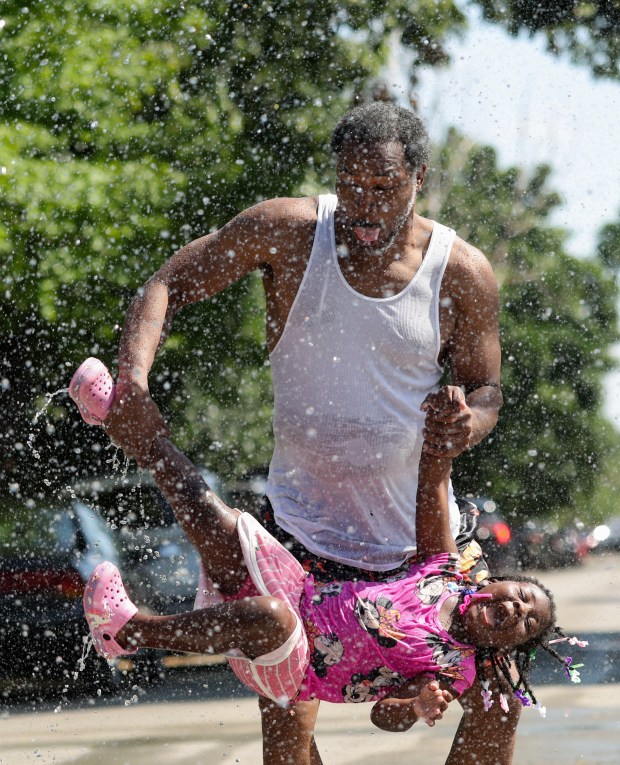
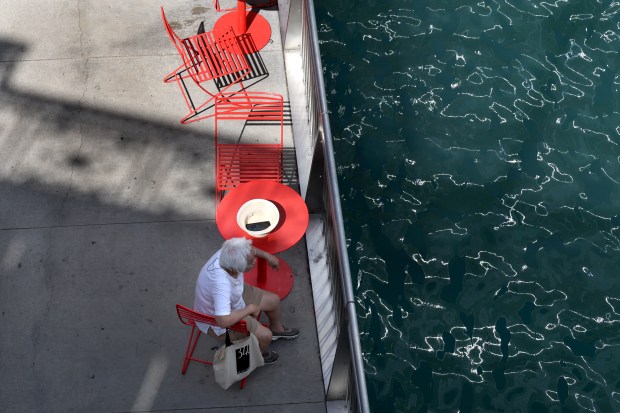
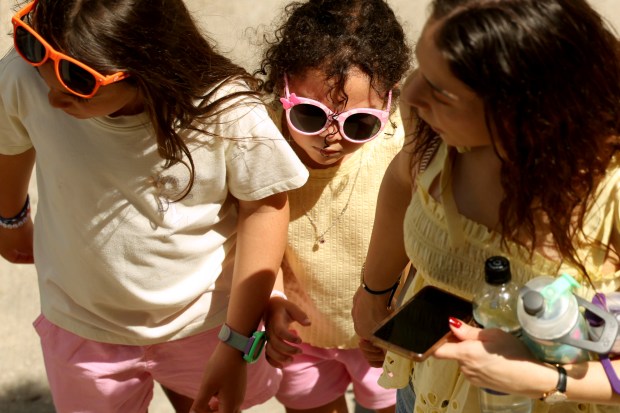
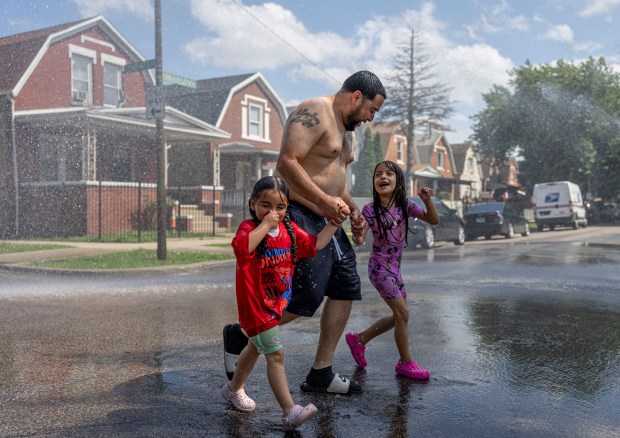

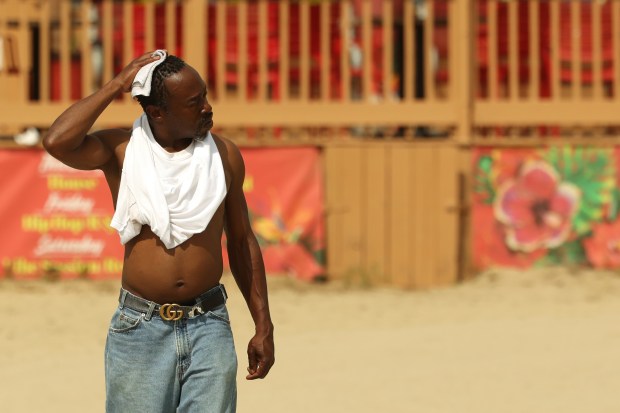
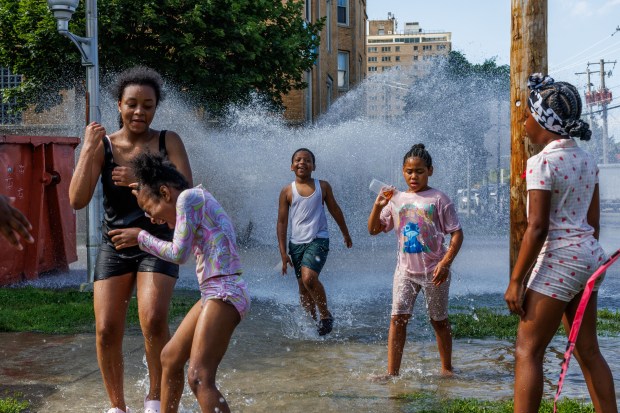
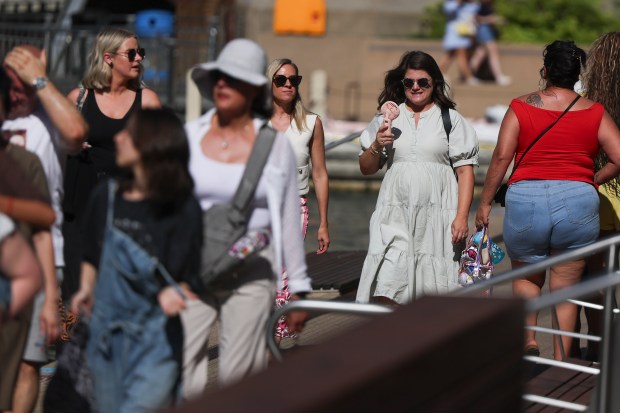
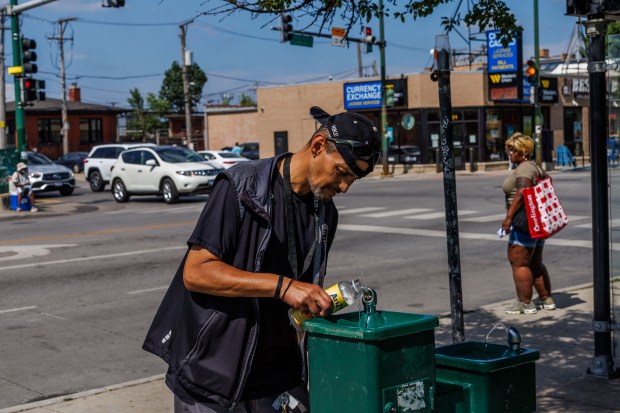


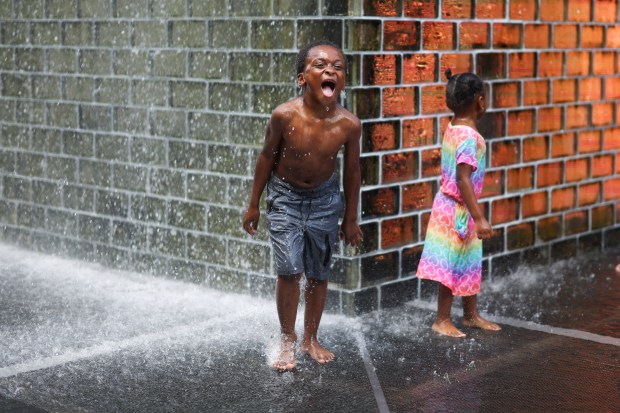
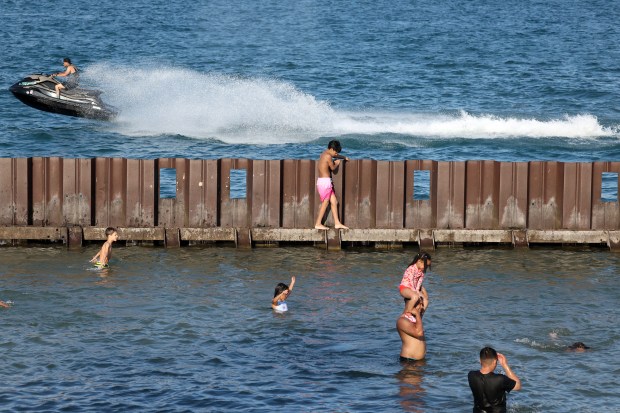
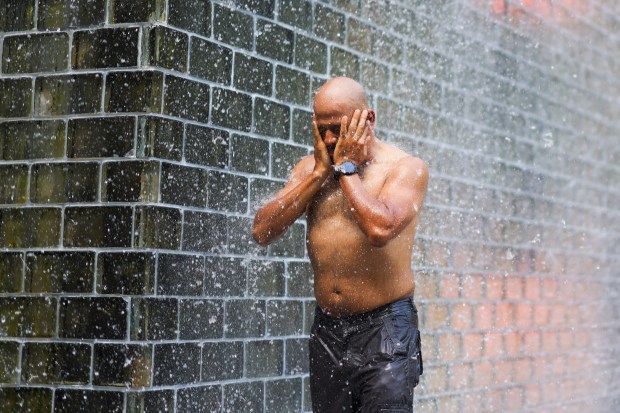
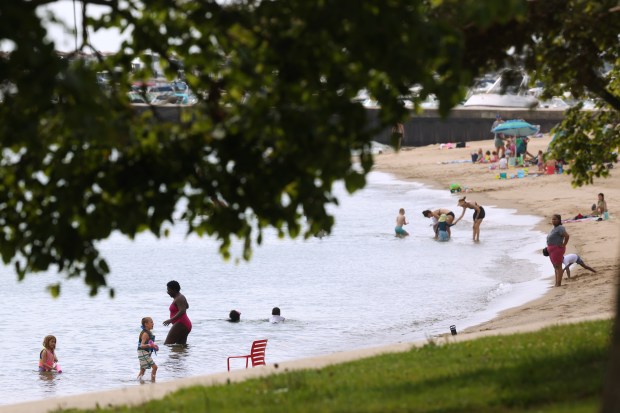
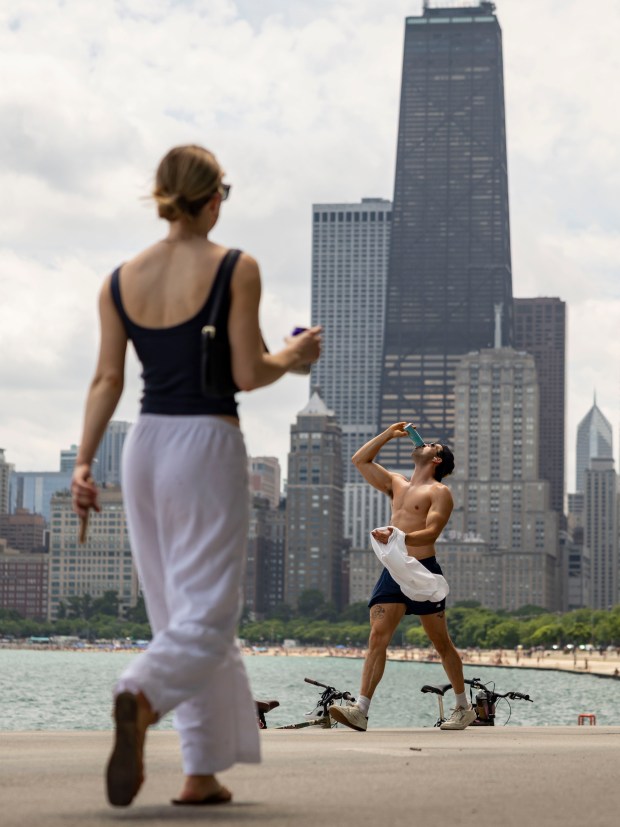
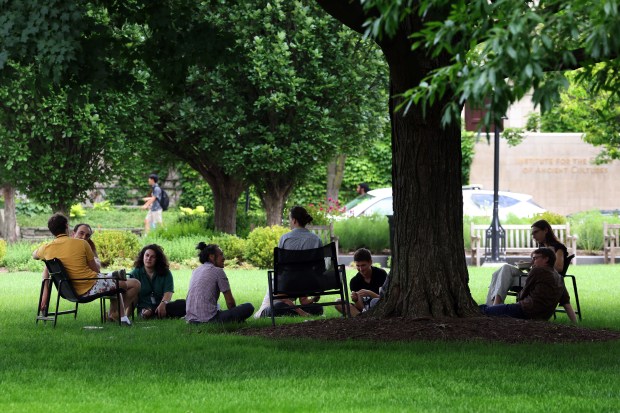
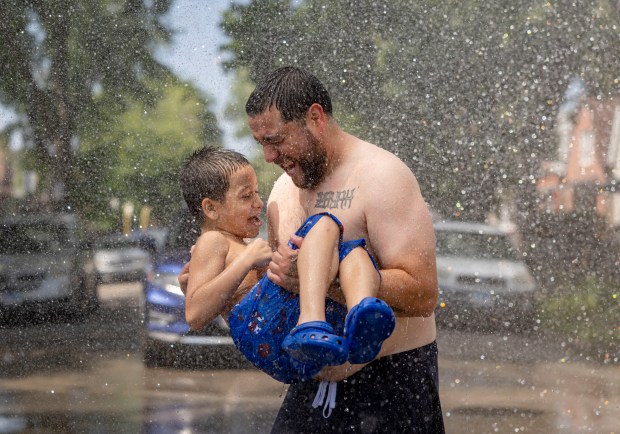
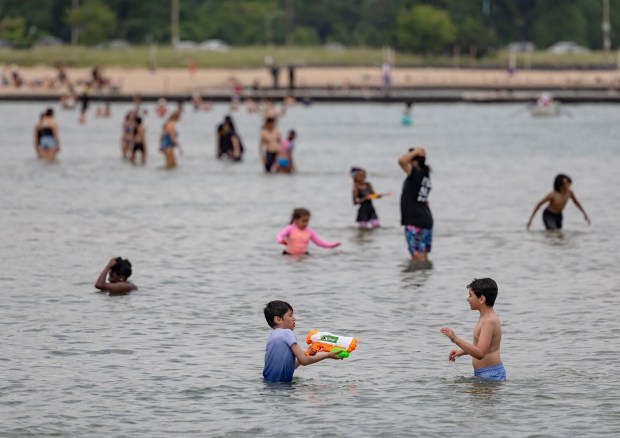
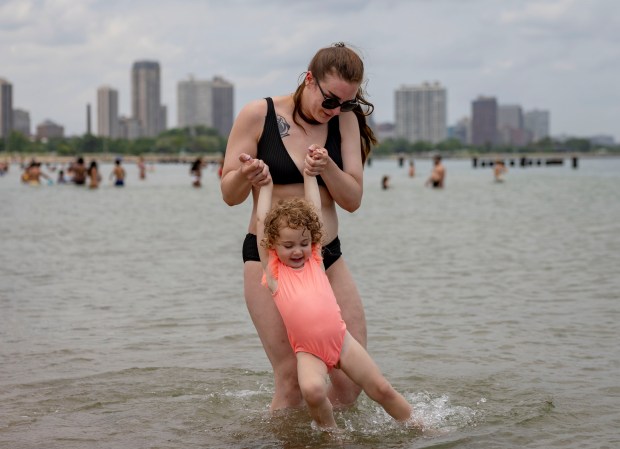
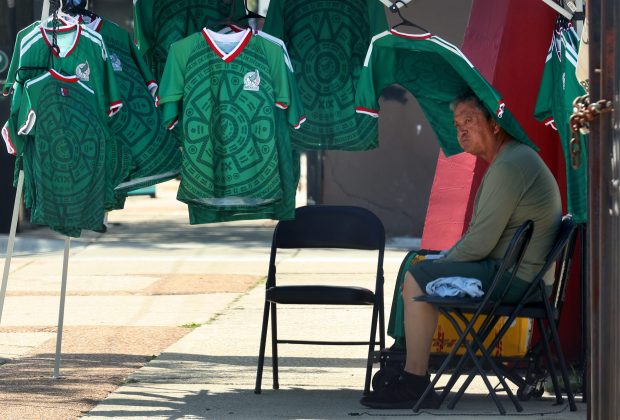
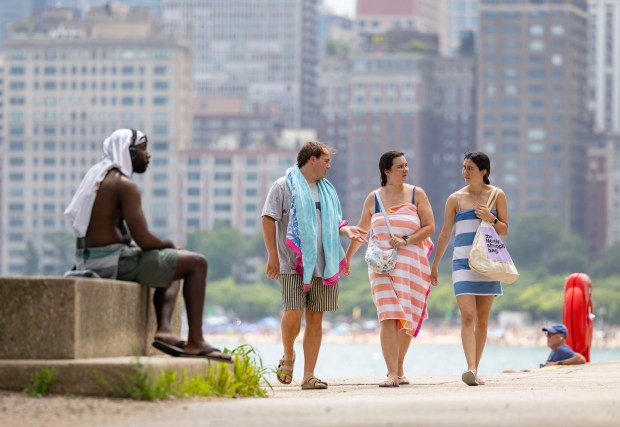

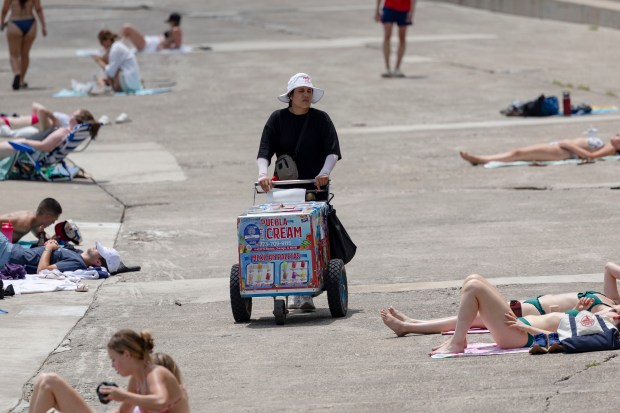
For context, heat indices at the Midway and O’Hare airport observation sites in Chicago were at 106 degrees on Tuesday when temperatures reached a high of 94, according to weather service data.
While dry conditions drive up temperatures dramatically, moist air keeps them a bit lower but makes the heat feel worse to humans. This is because, just like greenhouse gases trap heat, moisture holds onto heat in the atmosphere. Rising temperatures, in turn, lead to rising humidity. For every 1.8-degree Fahrenheit increase in temperature, the atmosphere can hold 7% more water.
More water vapor in the air makes it harder for people to sweat efficiently. While it can be a nuisance, sweat is how human bodies keep cool and release moisture, which then evaporates. That evaporation happens more easily in dry environments because, in humid environments, water already saturates the air, slowing the process.
So when nighttime temperatures remain high like this week, when the lowest temperature on Tuesday night was 79, the human body gets little relief and insufficient or poor sleep, which can compromise the immune system, increase the risk for cardiovascular disease and diminish cognitive performance.
Heat-related illnesses like heat stroke can also be fatal.
“When someone comes in with heat stroke, it’s particularly daunting and scary, because it can happen to folks of any age, in patients who are younger or older — it doesn’t always necessarily discriminate,” Fletcher said. “So it’s really scary to see someone so young … someone who doesn’t really have a significant number of other health comorbidities or other health conditions be so sick, so quickly.”
She also said some signs and symptoms of heat-related injury, such as sleepiness and exhaustion, can be easily missed at night.
“The vast majority of people die at night from heat,” said Howard Ehrman, co-founder of the People’s Response Network, a group that is pushing to expand the city’s health and social services.
Ehrman worked at a Cook County Hospital during the 1995 heat wave after being an assistant health commissioner for the city under Mayor Harold Washington.
“And the longer (extreme heat) goes on, the worse it is,” he added.
Offering overnight and consistent relief for vulnerable populations is becoming more imperative as climate change makes sweltering summer nights more common, extending human exposure to uncomfortable temperatures. In Chicago, overall summer average temperatures have warmed by 1.9 degrees since 1970 as Midwest summers become more humid, but that’s not the whole story: Average lows on summer nights have increased by at least 2.5 degrees in that same time.
The People’s Response Network is thus asking city officials to lower the threshold and activate cooling centers — all six community centers, all 81 library branches, air-conditioned park fieldhouses, 21 senior centers and other public facilities — when the heat index is 80 degrees or greater, opening 24 hours a day, every day.
“A lot of folks focus on those afternoon temperatures and heat indices, but it’s really the overnight temperatures that can do a lot of damage. That’s when our bodies really struggle to cope, when we can’t cool off,” Brett Borchardt, weather service senior meteorologist in Chicago, told the Tribune in an earlier interview. “One way to think about it is, if it’s midnight or 3 a.m. and it’s still 75 degrees outside — that’s almost like a summer day.”
The budget issue is further complicated by the fact that the city’s cooling centers are underutilized, making it harder to justify spending more money to keep them open longer, Ravindran from the 40th Ward said. And if Chicagoans aren’t using these spaces because they don’t have a way to get there, there is currently no transportation infrastructure to address that on an individual basis.
“That loop is just not working,” Ravindran said.

On Thursday morning, as temps climbed to the upper 70s — and were forecast to reach the mid-90s — Morgan McLukie, executive director of Tthe Orange Tent Project, a homelessness advocacy group, handed out several bottles of water and sunscreen to people in an encampment under a viaduct on the city’s Lower West Side.
A man gave McLuckie his small, portable fan, which she would help him recharge.
“It’s been miserable in there,” the man, Calvin Lomax, told the Tribune, gesturing toward his tent. But people have been stopping by with water and ice.
“The summer is so tough because there’s only so much you can do,” McLuckie said. “And then the cooling centers are so far and few between; and, yeah, you can go to police stations or libraries. But then there’s the whole comfortability aspect to it. Who really wants to be sitting around in a police station all day, let alone if you have any kind of background at all? And then libraries, I’ve heard people just get dirty looks sometimes, and it’s just not super welcoming.”
Fletcher said the city has access to the necessary data to be strategic about extending hours for certain centers across the city, with a particular focus on communities that face higher rates of heat-related injuries and deaths.
The mayor’s office did not respond to specific questions about requests from advocates or whether the working group is actively taking any steps.
“While temperatures are expected to begin to cool slightly during the holiday weekend, protecting the health and safety of residents, particularly seniors, people experiencing homelessness, and other vulnerable populations, remains our top priority,” the office said in a statement Tuesday.
The city’s Department of Family and Support Services, the office said, was coordinating across agencies to connect residents to support “as conditions evolve.” The agency’s homeless outreach teams were also conducting well-being checks, distributing bottled water, and helping people find shelter, cooling and transportation resources.
Chuka Onuh, a third-year medical student at the University of Chicago Pritzker School of Medicine — who published a Monday op-ed in the Tribune with Fletcher about cooling center gaps — said medicine often treats the failures of policy.
“The cooling centers — it’s such a sort of microcosm of public policy writ large,” he said in a Wednesday interview. “We already have these things that we’ve invested in. How, then, do we actually allow them to reach their full capacity, to serve the intent they have? … How do we actually allow them to live up to their promise, of what they were advertising?”
A DFSS spokesperson told the Tribune on Monday the department had no plans at the time to extend the hours for the Garfield Center at 10 S. Kedzie Ave. past 8 p.m. or to activate any of its community service centers overnight. The Garfield Center would be the only DFSS location to also open over the weekend, from 9 a.m. to 5 p.m. on Saturday and Sunday.
“Thankfully, it looks like the weather’s going to cool down a bit,” Raifman said in reference to the other community centers closing for the holiday Friday. “But if (the heat) went up again, you know, those places would still be closed. Because this happens every time — we’re not in a different place than we were.”
On Thursday, the Chicago Public Library announced four of its branches — the Harold Washington Library Center and Sulzer, Woodson and Legler regional libraries — would open as cooling centers Friday from noon to 6 p.m. Regular library services would not be provided.
“That is good,” Ehrman said, “but the city refuses to open any place at night.”
Some Park District fieldhouses and buildings are open Friday and Saturday with reduced hours.
“I am grateful for this and the coalition hopes to work with the city to make such openings more predictable, allowing us to help people living outdoors plan ahead where they can get cool,” Raifman said.
The decision-making at the city level regarding its response to the extreme heat or cold is often done “ad hoc,” he said, or as the need arises.
In its statement Tuesday, the mayor’s office concluded, “City departments will continue to monitor conditions closely and adjust resources as needed.”
Raifman noted the city has had years to plan for extreme heat occurring over a holiday.
“And it’s so clear that none of that planning has been done or is even being attempted,” he said. “What that tells you is that, despite having a press conference where they’re talking about how this is such an emergency, they don’t actually consider it an emergency; they consider it just normal course of business.”
The People’s Response Network is also asking the city to deploy air-conditioned Chicago Transit Authority buses to homeless encampments; Chicago Housing Authority, senior and Section 8 buildings; neighborhoods with the highest 1995 heat death rates; and areas with the highest poverty rates where people either do not have an air conditioner or cannot afford to turn them on.
The CTA provided 40 buses for cooling and transportation purposes when, during an August 2006 heat wave, a power outage affected thousands on the city’s South Side, forcing senior housing residents to evacuate.
None of the city’s news releases about this week’s heat wave, however, have mentioned cooling buses, and city officials did not respond to questions about whether any would be deployed. On Sunday, when daytime highs remained in the low 80s, cooling buses were available at six locations along the 2-mile Pride Parade route.
Research has found that the abundance of skyscrapers and asphalt in Chicago traps high temperatures, amplifying the effects of heat by an average of 8.71 degrees, meaning the city has the potential to be that much hotter on a given day, particularly when temperatures are already high.
On the other hand, where plants and green spaces are plentiful, temperatures remain cooler. Yet even trees have been deployed inconsistently across demographics; a 2022 Tribune investigation found the city planted more trees in wealthier, whiter neighborhoods.
A Tribune analysis the following year also found that areas with more white residents had far more parks and bus shelters, which provide relief from the heat, than areas with the hottest average surface temperatures and more members of minority groups. Additionally, experts say racially discriminatory housing policies nationwide, such as redlining, have historically pushed large minority populations into industrial zones, where previous research and government studies have shown urban temperatures are higher than in other areas.
“What’s happening around the world — wars, climate disasters — people in power have made decisions that people are expendable,” Ehrman said. “The people who are dying are the poorest people, in the poorest neighborhoods.”
Like gun violence, Onuh said, heat can compound other demographic factors, such as housing and socioeconomic status, to become fatal.
“What was that person’s living situation? What put that person in an ecosystem, with that reality?” he said. “The heat serves as just another lens through which we can see the intersection of inequities across the city.”