When the Continental Congress delegates were signing the Declaration of Independence 250 years ago, Northwest Indiana was largely a bystander. However, it did play a role in the Revolutionary War.
That revolt against British rule ultimately resulted in reshaping the terrain in Northwest Indiana as well as bringing white settlers in droves.
The hunger for land west of the Appalachian Mountains, including Northwest Indiana, was one of the contributing factors leading to the signing of the Declaration of Independence 250 years ago, historian James B. Lane believes.
Lane, emeritus history professor at Indiana University Northwest, set the scene.
For a couple hundred years, French Canadians lived in harmony with tribes in the area, including Porter County’s first white settler, Joseph Bailly, whose homestead on the Little Calumet River is now a part of Indiana Dunes National Park.
Bailly’s counterpart in Lake County was Jean Baptiste du Sable, who is most famous for being the founder of Chicago.
Like Bailly in Porter County, Du Sable operated a trading post in what is now Lake County, Lane said. Both men got along with the native Americans here, even to the point of each taking an indigenous woman as a wife.
Understanding what drew the trappers to this area requires a look at Northwest Indiana’s geography at the time.
“A lot of people know that Northwest Indiana is naturally very marshy, kind of swampy,” Porter County Historian Serena Ard said.

That was especially true along the Kankakee River. The Great Kankakee Marsh drew hunters from Europe as well as North America. Presidents Benjamin Harrison and Teddy Roosevelt were among the avid sportsmen who enjoyed fishing and hunting there, staying in lodges along the river, Lane said.
A smaller, but still large, marsh was along the Little Calumet River. It was home to “a swarm of different animals, plants, all sorts of wildlife,” Ard, curator at the Duneland History Center in Chesterton, said.
“There was ample hunting to be done, plants to harvest for medicines and things like that,” she said.
Mark Shurr, emeritus history professor at the University of Notre Dame, has led archaeological digs in the area, including at Baums Bridge in southern Porter County.
“It was native American territory, and there was very little otherwise going on” in Northwest Indiana in 1776, Shurr said.
While the Continental Congress was signing the Declaration of Independence 250 years ago, Northwest Indiana was then, as it is now, a crossroads.
The Kankakee Marsh impeded north-south travel through the region, but there were east-west routes.
Baums Bridge was one of the few places to cross the Kankakee River. “If it was rainy season, you’re probably not going to be able to get across the Kankakee River there,” Ard said.
But there wasn’t a permanent settlement there. “We don’t know of any actual sites from that time period that have been recorded,” Shurr said.
The marsh “was just a great place for habitat – waterfowl, all kinds of raccoons, etc.,” Lane said.
Where there were prairies in Northwest Indiana, bison roamed. It’s the Indiana state animal for a reason.
In 2016, The Nature Conservancy brought 23 bison to Kankakee Sands along U.S. 41 in Newton County. The nonprofit operates a bison viewing area for visitors to see the continent’s largest land animal.
A bison calf weighs 30 to 70 pounds at birth. Adult bulls stand up to 6 feet tall and weigh 2,000 pounds, while cows are up to 5 feet tall and weigh 1,200 pounds. They can run up to 35 mph.
The bison graze on 1,100 acres of prairie, eating up to 40 pounds of vegetation a day.

Binoculars are mounted at the viewing site, and they’re even made to help people with color blindness see the correct colors.
As the indigenous people passed through Northwest Indiana, they stopped in forested areas like the ones at Deep River County Park and Chellberg Farm at Indiana Dunes National Park to tap sap from maple trees and make maple syrup and other sugary treats.
They followed trails like the ones the buffalo and other large animals made, paths that might sound familiar today.
Ard gave a presentation to the Northwest Indiana Genealogical Society in Portage recently to discuss these trails.
“The landscape of Northwest Indiana tended to be a peak location for travel,” she said. “Indiana is the crossroads of America, Northwest Indiana probably more so than any other part of the state, and it’s been like that for centuries.”
“The Sauk Trail could be considered one of the biggest, most important indigenous trails east of the Mississippi,” Ard said.
It was created by mastodon and bison, “and then people used it because, hey, they cleared all the gunk out of the way. Let’s take this path,” she said.
There’s a marker in front of Valparaiso City Hall on Lincolnway to note the Sauk Trail that went by it.
Other notable trails went along the shoreline, which was a miserable route in wet weather because the wagon wheels sank in the sand. Pioneer journals mention the trail, calling it “better than any macadamized trail you could ever find” when frozen in the winter.
The Chicago-Detroit Road, one of the first roads through the area built at the behest of the federal government, originally took that Lakeshore Trail route, Ard said.
“The Lakeshore Trail does not get enough credit,” she said. “The Lakeshore Trail was really, really important for the development of Chicago and most of Northwest Indiana.”
That brings DuSable back into the picture.
“He was certainly in Northwest Indiana in the 1770s, but exactly where his trading post was set up is up for dispute,” Lane said.
“There’s still a lot that historians don’t know. The written record is kind of skippy,” he said.
DuSable is honored in Chicago, but not as much in Northwest Indiana.
“In the 1970s, there was an effort to rename Gary in his honor instead of an absentee landlord,” Elbert Gary, who was a founder of U.S. Steel. Richard Hatcher was Gary’s first Black mayor at the time, and some people thought the city should be named after someone with Black ancestry, Lane said.
Du Sable was born to a French father and an enslaved African mother on Hispaniola, in what is now Haiti, around 1745, the Field Museum’s website says.

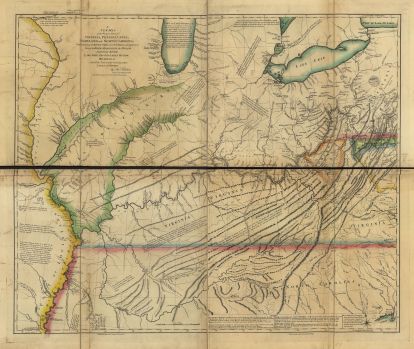
Before the Revolutionary War, this was French territory, mon ami. Then there was the French and Indian War, which ended in 1763. That’s when Britain took control of this area from France as its prize for winning the war.
People like George Washington, who wanted to get rich off land speculation, had their eyes on the area between the Appalachian Mountains and the Mississippi River, Lane said.
But the British and the colonists had differing ideas for this area, Ard said. Britain was mainly content with maintaining the fur trade around the Great Lakes. “Why mess with something that’s making me money?”
At one point, the British arrested Du Sable in what is now Michigan City, thinking he was pro-American. “It turned out he was not. He was a fur trader, and he was just doing business in Michigan City – well, Trail Creek,” Ard said.
“Then very quickly he became lieutenant governor of their headquarters in Mackinac Island,” Lane said.
Most people there at the time were indigenous or French, so the British saw Du Sable as the perfect link to them, Lane said.
The other significant event here during the Revolutionary War came on Dec. 5, 1780. Exactly where, though, is up for debate. There are historical markers at Indiana Dunes State Park and at Krueger Park in Michigan City, each claiming to be the site of a battle – a skirmish, really, according to Lane – at Le Petit Fort.

Shurr, Lane and Ard each offered narratives of that skirmish.
Le Petit Fort wasn’t what people today think of as a fort, Shurr said. It was more of a little stockade where people could store their furs.
“At the time, this was not even part of the Northwest Territory,” Shurr said. That designation came soon after the Revolutionary War, in 1787. “This was contested land from the colonial perspective.”
So in 1780, a group of people from southern Illinois, around Cahokia, wanted to take over Fort Detroit. One party attacked Fort St. Joseph in what is now Niles, Michigan, to distract the British from the attack on Fort Detroit. “They raided the fort, took some prisoners, and headed west,” Ard said.
“On their way back to Illinois, the British found out” and caught up with them at Le Petit Fort.
Two sources place that location. One, from a major to his superior, said it was a day’s ride, about 12 miles, from Trail Creek, which would put it at Indiana Dunes State Park. Another report said it was at Trail Creek.
“They say it using the French name,” Ard said, so they were talking about the creek itself, where there was a trading post.
“Trail Creek is called that because there was a meeting point of several different trails,” Ard said.
“The people who raided Fort St. Joseph lost that battle” at Le Petit Fort, Ard said. The British took Lt. Tom Brady. He was a lieutenant, not in the military sense but because the British gave military titles to their Indian agents.
“It is believed that is the man that Mount Tom is named after,” Ard said.
“He was less supportive of the American cause and more angry at the British,” she said.
When a handful of Spaniards from the St. Louis area attacked Fort St. Joseph, they raised the Spanish flag. Ard believes the Spanish did it because Spain was going to try to claim the land between the Appalachian Mountains and the Mississippi River. “And that is how Northwest Indiana became Spanish land for a day,” Ard said.
Doug Ross is a freelance reporter for the Post-Tribune.