
On July 4, 1976, I marched in the Bicentennial parade down Cherry Lane in Northbrook, dressed as Davy Crockett, “king of the wild frontier,” coonskin cap and all, alongside my older brother, who was in the garb of a revolutionary minuteman.
What did I know about Davy Crockett at that time? Not much. In addition to the coonskin cap, I think I knew he’d died at the Alamo, whatever that was, but whatever it was, it was important to remember it. Did I carry my simulated musket and powder horn? Yes. Was my heart infused with patriotic fervor? Maybe. Mostly, I remember that it was the kids on the curb who were getting all the candy.
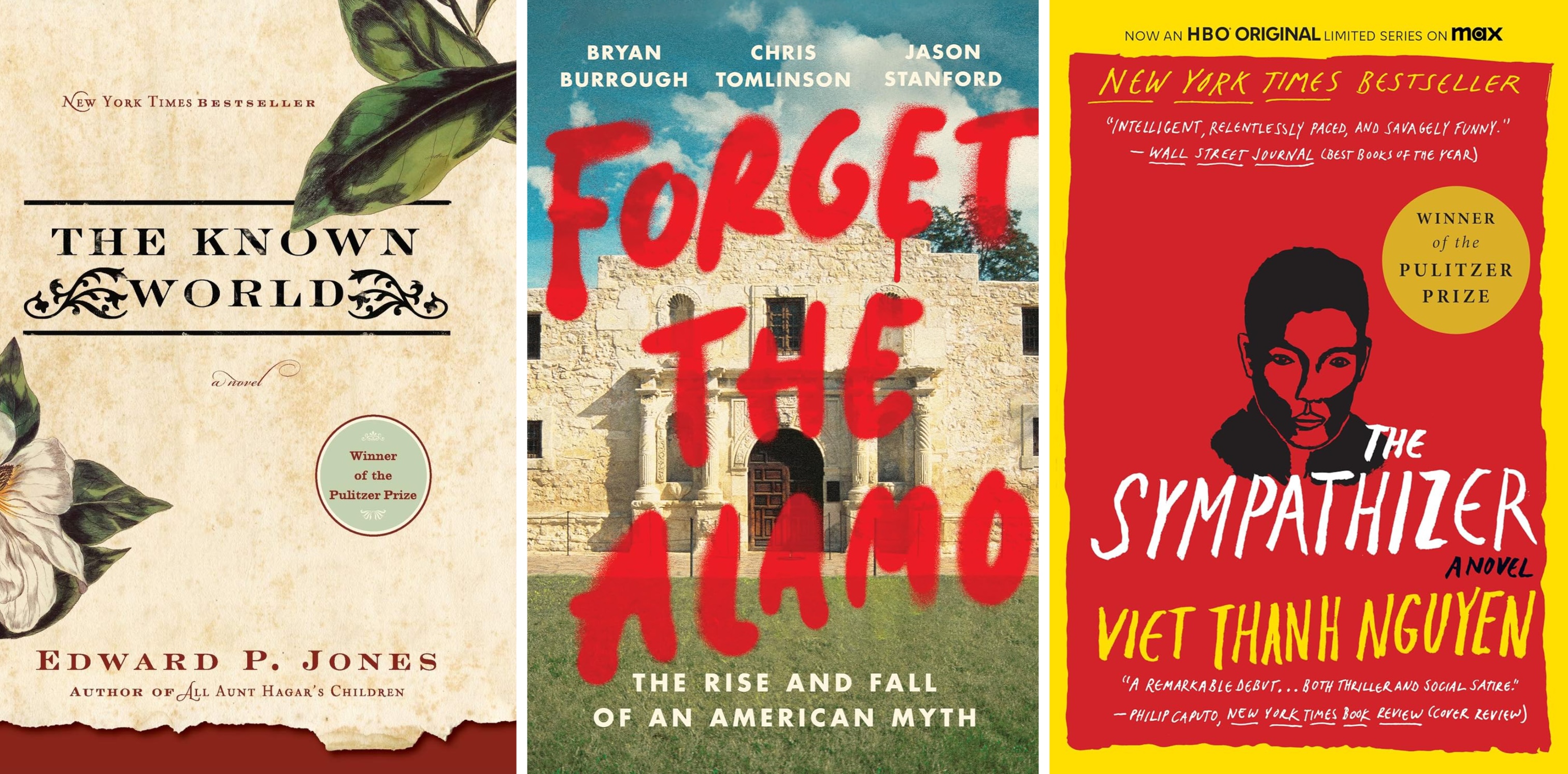
Several years ago I came across a book titled “Forget the Alamo: The Rise and Fall of an American Myth” by Bryan Burrough, Chris Tomlinson and Jason Stanford, three native Texans who did not want us to forget the Alamo altogether, but instead to recognize the schoolchild story I’d grown up with as a myth, and that the “real” history is a much darker tale of slavery and exploitation, and not nearly so heroic.
It’s a good book, and I can testify that knowing that there is considerable nuance to the hero story of Davy Crockett and the other Alamo defenders did not diminish my sense of patriotism, because as I’ve grown older I’ve come to (personally) understand patriotism as a not a fan-like allegiance to a team, but a responsibility to understand the country’s history, warts and all as we pursue the illusive promise of life, liberty and happiness for all from the Declaration.
It is this persistence that I appreciate, even when we seem to be taking strides in the wrong direction. Books exploring our messy history are useful to this endeavor, so in addition to “Forget the Alamo,” these are some other unforgettable patriotic works.
“The Known World” by Edward P. Jones is a novel, but the story’s exploration of slavery not as a product of racial enmity, but a manifestation of power, property and law from the earliest days of the republic refuses to deliver any pat conclusions. It also happens to be one of the most powerfully written books I’ve ever read. A masterpiece.
“The Warmth of Other Suns: The Epic Story of America’s Great Migration” by Isabel Wilkerson is one of the landmark nonfiction books of the 21st century, telling the story of the mass exodus of Black Americans from the South to the North and West, the origins of the exodus, along with the impacts on the communities joined and those left behind. A compelling narrative and essential history rolled into one.
There is a lot of great fiction about the Vietnam war, Tim O’Brien’s “The Things They Carried,” and Karl Marlantes’ “Matterhorn” come to mind, but the best novel to understand America and the war is Viet Thanh Nguyen’s “The Sympathizer,” a book told from the Vietnamese perspective that reveals the consequences of American power used carelessly.
And here are three books that together illuminate our country’s economic history of great wealth for some and precarity for others.
John Steinbeck’s “The Grapes of Wrath” remains the great spiritual rendering of Depression-era America.
“Nickel and Dimed” by Barbara Ehrenreich is now a quarter-century old but feels as current as the day it was released in its illumination of the societal traps that ensnare working-class Americans.
Lastly, “Evicted: Poverty and Profit in the American City” by Matthew Desmond echoes all the way back to “The Known World” for how the capital-L “Law” is used to immiserate the powerless.
You will know America better if you read these books.
Book recommendations from the Biblioracle
John Warner tells you what to read based on the last five books you’ve read.
1. “Buckeye” by Patrick Ryan
2. “Blue Sisters” by Coco Mellors
3. “The Lion Women of Tehran” by Marjan Kamali
4. “Twice” by Mitch Albom
5. “Mad Mabel” by Sally Hepworth
— Laura S., Frankfort
This is a job for Kent Haruf, “Our Souls at Night.”
1. “What We Can Know” by Ian McEwan
2. “Theo of Golden” by Allen Levi
3. “Angel Down” by Daniel Kraus
4. “The Wind-Up Bird Chronicle” by Haruki Murakami
5. “A Far-Flung Life” by M.L. Stedman
— Doretta M., Arlington Heights
I’ve recommended Michelle Huneven’s “Search” to at least a dozen people and they’re all skeptical when I describe the plot, a Unitarian church searching for a new pastor, but they are all won over in the end.
1. “Atonement” by Ian McEwan
2. “The Every” by Dave Eggers
3. “Whistler” by Ann Patchett
4. “The Friend” by Sigrid Nunez
5. “The Calamity Club” by Kathryn Stockett
— Blair T., Chicago
Min Jin Lee’s “Pachinko” remains a favorite go-to for people looking for a hefty story to sink their teeth into.
Get a reading from the Biblioracle
Send a list of the last five books you’ve read and your hometown to biblioracle@gmail.com.
John Warner is the author of books including “More Than Words: How to Think About Writing in the Age of AI.” You can find him at biblioracle.com.