
The tattoo on Amari Mead’s inner left arm demands attention.
Mead calls it her Butterfly Garden.
The artwork includes the footprints of Kaiden Amir Tappler, imprinted with the meaning of his name, “Warrior Prince” surrounded by butterflies and roses. The tattoo has yet to be finished, but the words ‘this too shall pass, because nothing lasts forever’ and a clock face without hands fill out the arm below the elbow. The clock doesn’t have hands, because as Mead says, “grief has no time limit.”
Kaiden Amir’s footprints forever rest where he usually slept in Mead’s arms. It was there, as the two slept in the bed in Mead’s Auburn Gresham apartment, that he passed away. Kaiden Amir came into the world April 15, 2023, and departed fewer than three months later.
“I woke up, and something felt off because I woke up on my own accord … not from his cries for a morning feed. I flipped on the light and saw that his lips were blue,” Mead said.
“The first few weeks after my son Kaiden’s death left me feeling numb, lost and utterly alone. I couldn’t see how I could fit into this world without him,” she said. “Despite having family and friends surrounding me with love, none of them could comprehend the depth of my pain.”
‘Grief is a beast’
The American Psychological Association defines grief as the deep and poignant anguish experienced after significant loss. Grief that ensues after the death of someone beloved is unique to each individual. It can destabilize because it lacks a timeframe; it’s not linear and “normal” doesn’t apply.
Illinois programs like Missing Pieces and global organizations like Soaring Spirits International aim to help the bereaved navigate complex emotions and guide them through the grief process.
“Grief is a beast … there is no cookie-cutter package for it,” said Melody Stried, a licensed clinical social worker and founder of Lotus Health Counseling & Coaching. Stried, a Forest Park resident, has worked over 25 years in hospice and palliative care. Her knowledge of grief is also personal, as a daughter, sister and mother of cancer patients.
“After memorial services, everyone is like, ‘Let’s go back to normal; this isn’t healthy for you,’ but it is,” she said. “We reach out to people the first two weeks, and then go back to our lives. We don’t want them to hurt, we want them back to normal. But who are we to say when grief needs you the most?”
Without treatment, symptoms of grief can escalate and/or persist. Extended grief, also known as complicated/prolonged grief, can be so overwhelming it debilitates and prevents people from resuming simple, everyday tasks, which experts explain as an emerging public health crisis.
It’s the “great leveler,” according to Amy McNicholas, director of the Missing Pieces program. “We know that if we don’t address it, unsupported grief is where we see long-term social and health issues.”
Since 2022, Missing Pieces has been supporting families like Mead who have lost a child under the age of 25. Mead’s pain was further compounded when Kaiden’s death was on the news the morning after.
Their team of “grief navigators” — a social worker, trauma therapist, child life specialist, nurse and a community health worker — support families who lost a child.
They connect them to grief resources and social services, often by referral from hospitals, county medical examiner’s and coroners’ offices. They meet the grieving where they’re at, communicating via texts, calls and in-person check-ins from death to 18 months.
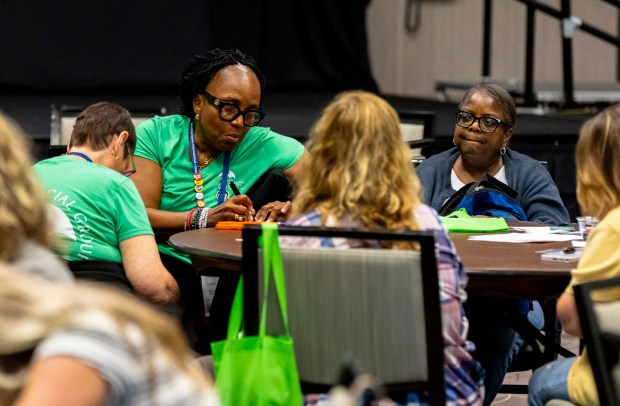
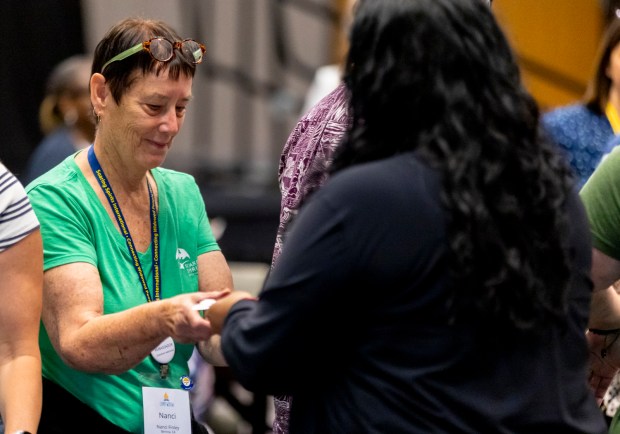
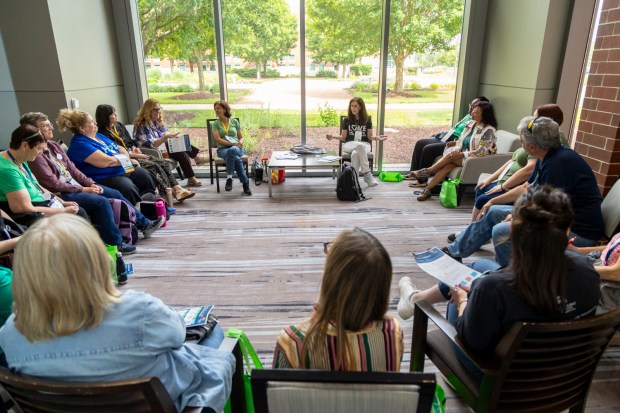
“We have interventional care, hospice and palliative care. Let’s get bereavement care to the point where every family that experiences it can get the care they need,” McNicholas said.
In doing outreach, grief navigators uncover factors affecting those adapting to life after a loss – ripple effects that may impact well-being and stability, which can prevent individuals from addressing grief.
The effects can include a family not wanting to remain in a home their child died in, scheduling transportation to get a loved one home for burial or not being able to stay current with the rent when grief prevents a return to work. Individuals can feel overwhelmed while still having to navigate systems that include hospitals, coroners, funerals, behavioral health and the legal system.
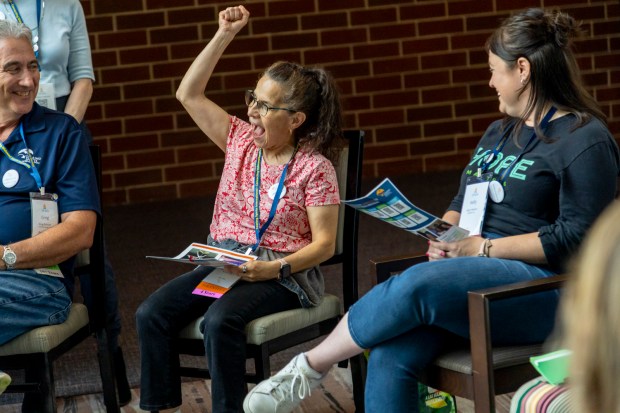
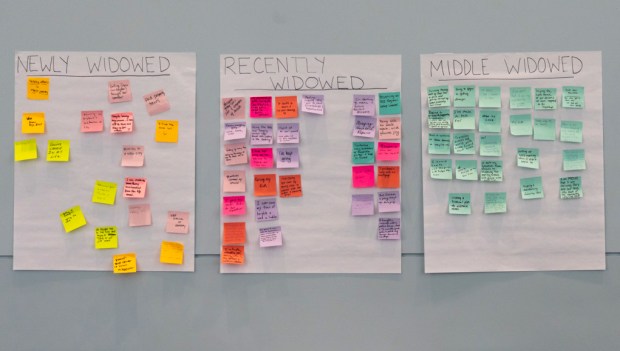
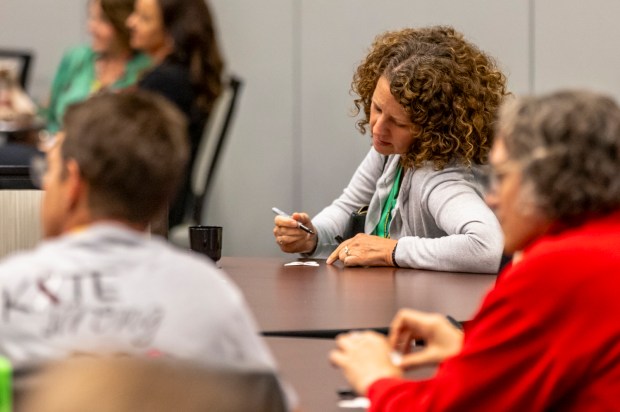
For 18 years, Soaring Spirits has aided widows, widowers and their children through peer support and events like Camp Widow, a day-long program where participants process their loss.
Jennifer Loudon came to Soaring Spirits International following the killing of her husband, Chicago police Officer Thor Soderberg, in the summer of 2010. Now a board member of the nonprofit, Loudon credits the organization with helping her feel whole again a decade later, having rebuilt a life that “she could still love.”
“I’m never gonna be over it, but I didn’t want to be under it anymore,” Loudon said about grief. “It is so different for everyone … some people have family support, their faith community, but still need more. I went to Camp Widow in 2012 and having access to people who understood the complexity of grief made it safe for me to consider the complexity. I was never going to be done (grieving), but I could be okay without being done. That was a big mental health breakthrough for me.”
Unsupported grief can lead to social and health issues
The HAP Foundation, a Chicago and Oakbrook Terrace-based, nonprofit hospice and palliative care research and advocacy organization, oversees Missing Pieces. Bereavement care is a safety net for people overcome by loss, a centralized hub for support through direct outreach to families, according to Joseph Matty, president of the HAP Foundation. In 2025, Missing Pieces served over 450 families with grief support, at no cost to them, according to the foundation.
McNicholas and Matty want to see the Missing Pieces model embedded in existing healthcare systems – making grief care part of the continuum of care for Illinoisans. To that end, the organization is part of a $6.2M Patient-Centered Outcomes Research Institute (PCORI) research grant with Ann & Robert H. Lurie Children’s Hospital of Chicago and University of Chicago Medicine to research, evaluate and prepare grief navigation for replication.
“Our mission is to understand grief as an emerging public health issue that greatly affects all of our wellness,” McNicholas said. “Grief navigation can be a healing mechanism, not because it fixes loss but because it is helping families feel seen and less isolated. We know connection and loneliness are big topics within public health and how unhealthy they can be.”
As support needs change, grief navigators pivot to address them. Families stay connected beyond the 18-month mark, calling navigators when needed and participating in annual events like the Butterfly Picnic where they gather to remember their loved ones in camaraderie.
“We’re really supporting the whole family unit, any person that loss has affected,” McNicholas said. “Grief is the great leveler. We know that if we don’t address it, unsupported grief is where we see long-term social and health issues.”
The other side of grief
Loudon said that had she not found Soaring Spirits International and a phenomenal therapist, she would still be in a place of mental illness.
“I think not talking about grief does contribute to mental health crises,” she said.
Stried is comfortable with conversations about grief. She says while many try to put everybody in the same box when it comes to grief, it doesn’t work.
“We give nine months for a life to come into this world, but we’re lucky if we give it nine days when it’s ending,” she said.
Mead is still on her grief journey.

She vividly shares the details of Kaiden’s birth. She pushed for 45 minutes, and he was born healthy. She had postpartum preeclampsia and had to stay at the University of Chicago hospital for a couple of days before she and “her guy” went home.
“He didn’t cry much, he had a snort in his cry. He was super chill,” Mead said. Evidence of his calm demeanor could be seen in cellphone videos of Kaiden receiving his first immunizations.
Mead’s recollection of Kaiden’s passing prompts her to apologize. She admits she has holes in her memory around that time because the grief was so heavy. She couldn’t return to her apartment, so her mother, Nina Manney, packed up the apartment without her. At work as a school paraprofessional, she would hear a song from a nearby classroom and start crying because it was on one of Kaiden’s playlists.
“I was trying to figure out how I’m supposed to continue living when my heart isn’t here anymore … he was my purpose for living,” Mead said.
Mead recalled her first conversation with Missing Pieces’ McNicholas, who said: ‘I’m really sorry this is what you’re going through. I’ve been there myself. It’s not easy. It is extremely hard. What do you need?’ She listened to me talk about Kaiden, she still listens to me talk about Kaiden,” Mead said.
Since connecting with Missing Pieces, Mead said she and McNicholas were in constant communication, with McNicholas constantly checking on her. As time went on, healing was progressing and they talked less, but Mead said the profundity of the conversations didn’t wane. “I can reach out to Amy anytime I want, and say, ‘I’m having a really tough time today. Can I call you?’ She’s always, ‘Yeah, give me a call.'”
Mead lights up when she shares her experience at her first Butterfly Picnic. She said the event made her feel seen and part of a community that helped her navigate how to keep Kaiden’s memory alive.

Mead wears a necklace with Kaiden’s ashes. She keeps the items he used in Ziploc bags so when she wants, she can reconnect with his scent. It’s a guilty pleasure Mead shares with her mom.
Mead is now married and working toward a degree and a career in education. She has gone from not wanting children and avoiding putting herself in a position to face heartbreak again to trying for another child with her husband of almost a year, Mekhi Mead. She also reaches out to other grieving parents who follow her on social media, sharing support she received.
“Amy and Missing Pieces helped me navigate my grief, allowing me to remember Kaiden by embracing the ebbs and flows,” Mead said. “They guided me forward, enabling me to laugh again and continue living each day.”