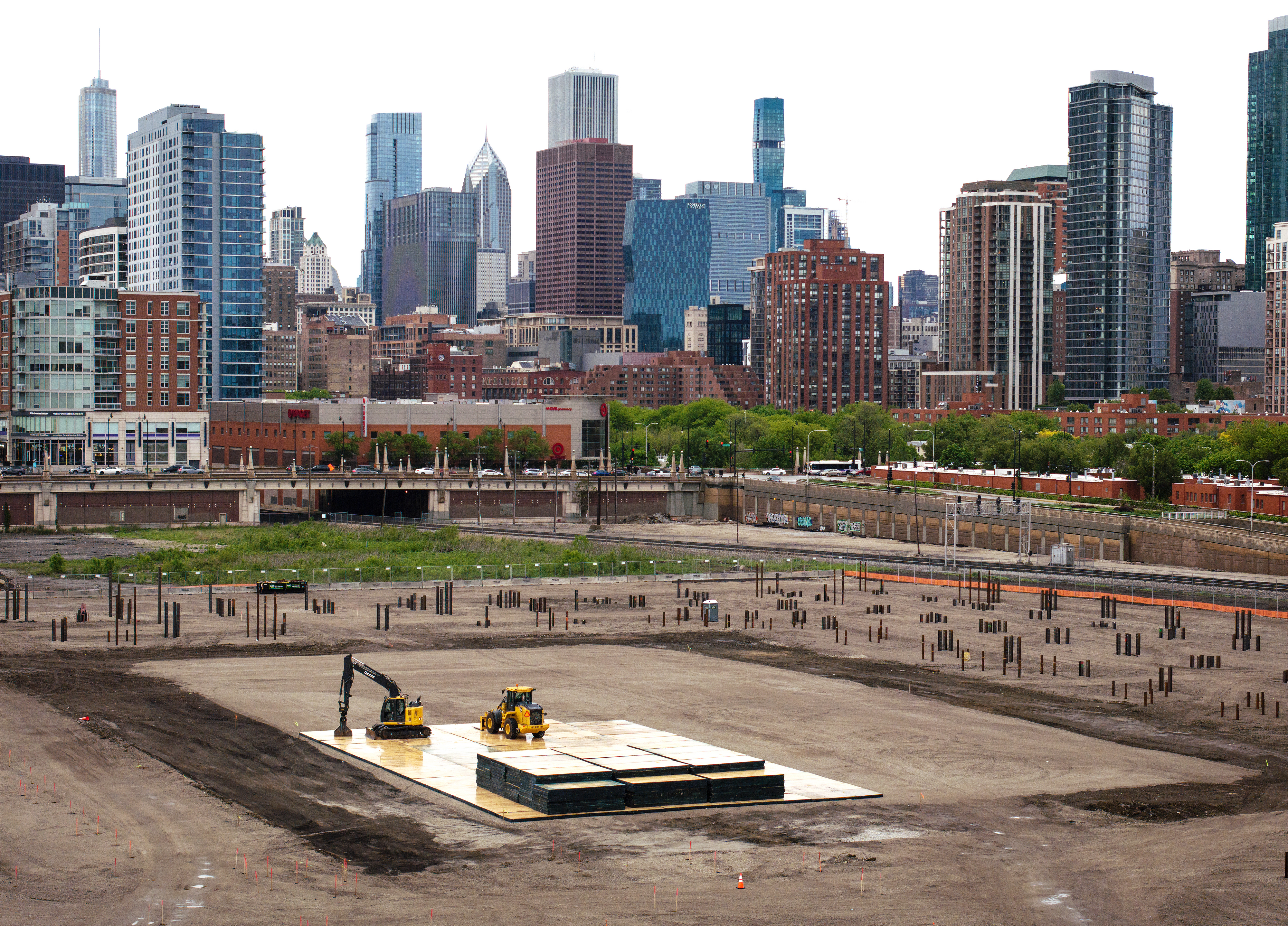

Aldermen approved a plan Wednesday to spend $425 million in taxpayer money to spark development at The 78, the barren downtown lot where the Chicago Fire are building a soccer stadium.
The plan backed by Mayor Brandon Johnson will fund a broad array of infrastructure projects at the site, including a river wall, new roads and Metra track adjustments. Around half the money will fund a parking structure, cement foundation and public plaza city planners say are needed to spark high-rise development beyond the stadium at the long-unused site.

“We need density in this city, and that density is made possible through privately-financed vertical development. We cannot achieve this without the necessary physical infrastructure,” said Ald. Pat Dowell, whose ward includes the site. “This is a project for the future of the city of Chicago.”
Before aldermen voted 44 to 5 to approve the part of the plan funding the parking, foundation and plaza development during a City Council meeting, Dowell told her colleagues the infrastructure was not going toward the stadium. Instead, it will tee up the emergence of a whole new neighborhood with housing and businesses, she argued.
“We don’t get there if we don’t have roads, if we don’t have water and sewer lines and electrical underground,” said Dowell, 3rd.
But some in the City Council blasted the project as a misallocation of precious taxpayer money.
Ald. Bill Conway, 34th, said he wouldn’t be able to “look taxpayers in the eyes” if he supported “a stadium parking garage and stadium plaza instead of public transit or the many other pressing needs facing our city.”
A majority of the money, $287 million, will come from a nearby West Loop tax increment financing district primarily located in Conway’s bordering ward. The alderman, who will lose money he might otherwise control, said the project will only generate $20 million annually in property tax and parking revenue.
“I think this is a bad deal for taxpayers,” Conway said. “It’s paired with vague promises of housing and jobs, and I sincerely hope those aspirations come to fruition, but at this point in time the numbers just make no sense.”

He said the expenditure will leave the TIF district dry for years and argued $55 million of the money should instead be used for concourse reconstruction at Union Station.
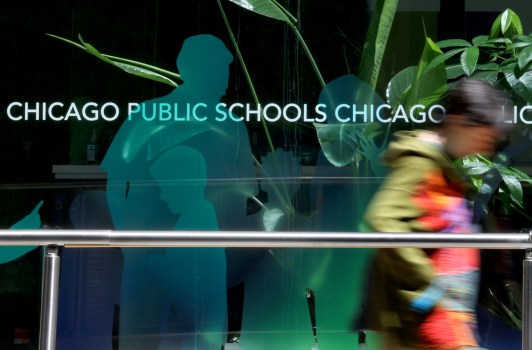
Ald. Byron Sigcho-Lopez, whose 25th Ward formerly included the land, argued the money would be better spent on schools. He said the public has been “misled” to believe the Fire stadium is truly privately funded.
“Billionaires can just make a request of City Council and get all the green lights to get the support, but when families in our communities, when Chicago Public Schools, when our families are experiencing cuts… we are not making that a priority,” he said.
But a strong majority of aldermen supported the project, arguing that it would grow the city’s economy despite the eye-catching price tag.
The infrastructure investment aimed at triggering growth is “what exactly TIF is supposed to be used for,” said Ald. Anthony Beale, 9th.
“When you look at the jobs that are going to be created by this, when you look at the revenue that’s going to be brought into the city by this project, the restaurants, the parking, the ticket sales and all the things that go along with that, that’s how we make our economy grow,” he said.

Ald. Andre Vasquez, chair of the aldermanic Progressive Caucus, said he had reservations about the project when it first surfaced, but said he had been convinced that the money was needed to finally unleash development at The 78.
“You can understand why infrastructure is needed, why transit is needed, why you need to get the grade up,” he said. “All that makes sense to then continue to build upon that and create the opportunity to grow a tax base, to grow units and to have a neighborhood to add to the 77 we already have.”
Johnson also addressed a still-brewing struggle Wednesday over his Chicago Housing Authority board nominees, who aldermen blocked in a Tuesday committee meeting.
Asked at a news conference following the meeting whether he still intends to remove the current CHA CEO, Keith Pettigrew, who was approved in March over the mayor’s objections, Johnson retorted “What’s most appropriate would have been an open, transparent process. That didn’t happen.”
It was another sign that the mayor is not giving up his crusade against board members over Pettigrew’s appointment — even as Johnson’s favored pick, former Ald. Walter Burnett, confirmed to the Tribune on Wednesday he is no longer interested in the post.
“We cannot allow sort of the political games that are being played to get in the way of progress,” Johnson said. “I’m going to fight for working people.”
Aldermen were also slated to consider what referendum questions Chicago voters will face in November’s general election and next February’s municipal election, but Johnson’s allies and opponents used parliamentary maneuvers to delay the referendum questions from moving forward.
Johnson opponents first blocked a referendum question proposed by the mayor that asked voters if they supported the city using “all lawful means” to recover financial compensation from the federal government for costs associated with President Donald Trump’s “Operation Midway Blitz” deportation campaign last fall.
Immediately after, Johnson allies blocked a series of other referendum questions, including ones asked voters if the city should make pension debt payments earlier in the year, if the city should withhold money from sister agencies to enforce debt repayments, if the city should create a monument celebrating Chicago’s contribution to music and arts and if the City Council should get its own legal counsel.
Asked why he stalled several referendums from Johnson opponents, Ald. Jason Ervin, Johnson’s handpicked Budget Committee chair and floor leader, answered, “It’s July, way too early.”

One of the referendums he stalled, on the timing of the pension payments, had been slated for the November election. Supporters of the pension debt question later motioned to add a council meeting next week so they can consider that question again before an August deadline to add it to the November ballot.
Aldermen advanced two other November questions: one asking voters if the city should establish a permanent fair ground and another asking voters if the city should re-implement acoustic gunshot detection software.
They also approved a $9 million settlement for a man who spent 17 years behind bars after being coerced by police into a false confession for a 2002 murder.
The council later approved the appointment of Dr. Garth Walker as commissioner of the Chicago Department of Public Health. Walker is leaving his post as the chief medical officer of Rush Health to take the position.

After the speedy appointment, Walker will take over a department last steered by Dr. Olusimbo Ige. The former commissioner, appointed by Johnson in the fall of 2023, resigned at Johnson’s request in May after allegations of a hostile work environment and significant turnover.
Weeks earlier, a Tribune investigation revealed Ige voluntarily returned tens of millions of dollars in federal COVID-19 grants, cutting off funding for disease surveillance and racial equity programming. Ige told NBC 5 Chicago she believed the human resources investigation that preceded her exit was part of a broader effort by Johnson’s administration to discredit her.
Aldermen also passed an ordinance barring city employees from using confidential information to wager in online prediction markets like Kalshi and Polymarket. They then approved Johnson’s appointments to the Northern Illinois Transit Authority Board, though attorney Lester Barclay, the CTA board’s current chairman, faced a split 25-to-19 vote.