

Ten years ago we watched with rapt horror from our home in Birmingham, Ala., as Hurricane Katrina grew into a monster. Filling the Gulf of Mexico, it was heading straight for our family in New Orleans.
The call came Aug. 29, the day Katrina made landfall. Nine members of my wife’s family were hoping they could ride the storm out at our house. They had gone to a hotel in Baton Rouge, but the sheer size and scope of the storm made that a poor idea. What should have been a five-hour drive to Birmingham became a 12-hour ordeal battling the hundreds of thousands trying to evacuate. We all thought they would be with us for a few days. A week tops. We had no idea.
The house was filled to bursting — four adults and five boys (all under 7 years old) plus my wife, two sons and me. It was a happy reunion for our sprawling family. Wine was opened and a party broke out, as it so often does with Orleanians. The mood was festive and lively. Laissez les bon temps rouler.
Then the news came crashing in.
The television was on for days, and what it showed was an American city in ruins. Almost all communication with the city was cut off. The cousins didn’t know how their neighborhoods fared, let alone if they had a home to return to. It became clear that they were no longer weekend guests; they were refugees.
We settled in for a long wait. The boys were enrolled in a nearby school. Their parents were glued to the television, desperate for any news. Had the rest of the family gotten out of New Orleans alive? Were their homes still standing? Were they damaged? We just didn’t know.
What we learned first was that people can be amazingly kind and generous. The refugees would be out to dinner, and other restaurant guests would pick up the check — always anonymously. People who had seen their Louisiana license plate figured they could use the help. Even after a decade I get choked up thinking about that.
Eventually some news emerged. All of the family members had evacuated, in a dozen directions, but were alive and well. A neighbor checked on one relative’s neighborhood in Terrytown, on the West Bank, across the Mississippi River from much of New Orleans. There was no electricity, he reported, and refrigerators had begun to smell so bad that the stench reached the street, but most of the houses were intact. The hurricane had blown a few houses off their foundations while others had tree damage, but theirs seemed OK.
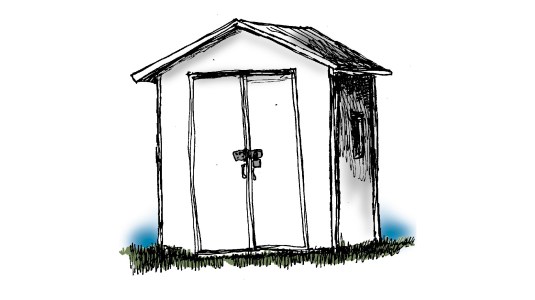
One of our refugees, Rene, had built a shed in his backyard in Gretna, also on the West Bank, a few weeks before Katrina. He was very proud of it and was desperate to know its fate. We all were. It was such a small thing, and it meant nothing compared with the loss of life and property that Katrina caused. We knew that, but focusing on a little thing can help you keep your sanity when something so massive, so incomprehensible is weighing down on you.
After Katrina, Google Earth started posting satellite images of the New Orleans area. It seemed like Rene checked for updates a hundred times a day. Hoping, praying for the survival of a little shed amid the carnage. Days stretched into a week. Then two. Still no image. Then, one morning, we were all gathered around the computer as Rene tried for the thousandth time to see if Google Earth had updated images of his home. It had. Rene zoomed in. Would you believe it? There in the backyard was his shed, upright and undamaged. We cheered.
That shed symbolized everything. A promise that things would get better and that there was a reason to go back and rebuild — which is exactly what they did. The school the boys had been attending in Birmingham threw them a going-away party. Over the months they lived with us, our families grew closer. The house felt empty and a little sad after they left.
My memories of Katrina are filled with wrestling matches with five rambunctious boys, watching the faces of people I care about wrinkled in worry. Feelings of relief and, most of all, gratitude that the family had made it through unscathed. Prayers for those who were not as fortunate. Of total strangers offering a hand with no expectation of recognition — being kind just because kindness is what was needed. And, of course, I’ll remember that shed. Still standing.
Scott Stantis is the Tribune’s editorial cartoonist.


