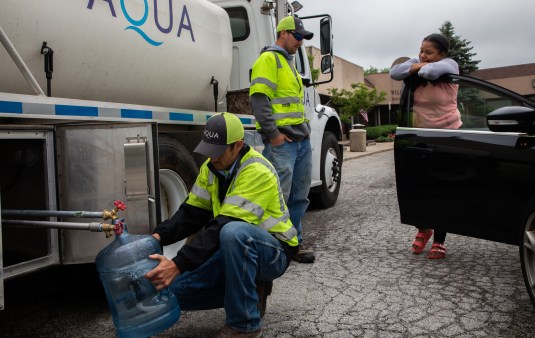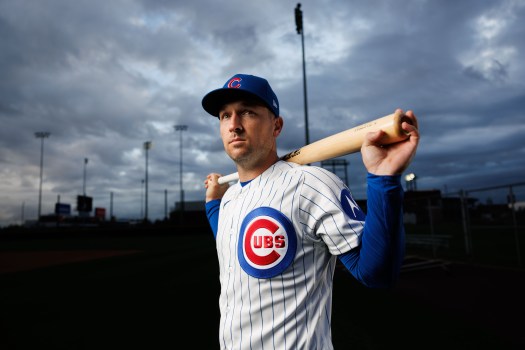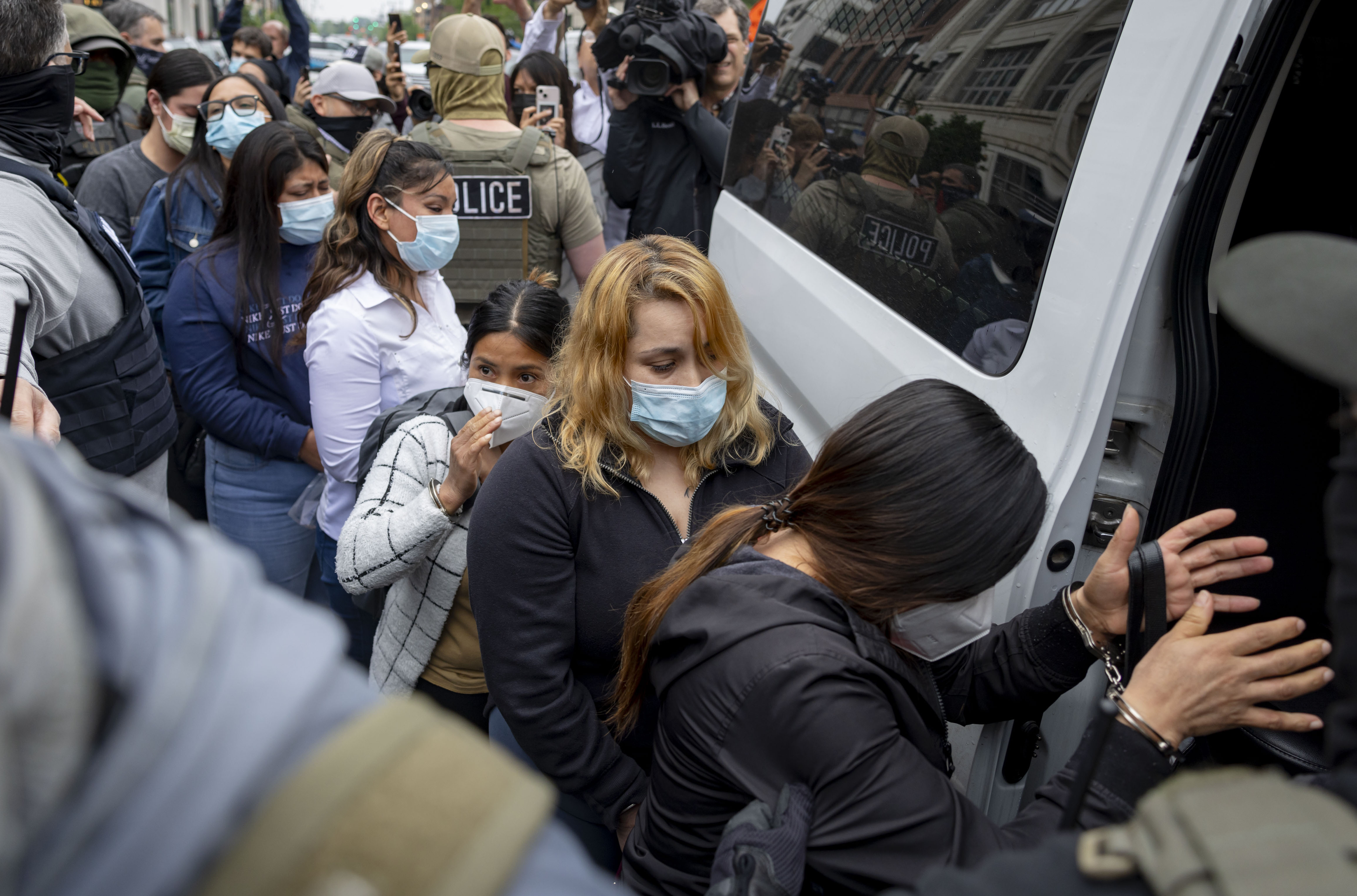




The Chicago Tribune won the Pulitzer Prize for local reporting Monday for its coverage of Operation Midway Blitz, the Trump administration’s immigration enforcement mission in the Chicago area last fall.
Awarded by Columbia University, the prize — the country’s top journalism honor — recognizes exceptional coverage of significant issues of local or statewide concern. The judges cited the newsroom’s comprehensive coverage of the blitz, including a story examining the federal government’s raid on a South Shore apartment complex, the shooting of a U.S. citizen in Brighton Park and an investigation into how criminal charges against protesters have not withstood the harsh light of the federal court system.
The Tribune’s capstone piece, “64 days in Chicago: The story of Operation Midway Blitz,” also was included in the winning entry.
Chicago Tribune wins Pulitzer Prize for local reporting: Read the stories and see the photos
“I am incredibly proud of the entire newsroom, and most proud of the way that the newsroom banded together to rise to this moment,” Mitch Pugh, executive editor of the Tribune, said Monday afternoon.
The Pulitzer judges honored the coverage further by naming it a finalist for the public service medal. The Tribune has now been a finalist for that prestigious honor four times since 1980.
More than 75 Tribune reporters, photographers, senior editors, copy editors, audience engagement editors, page designers and editorial board members contributed to coverage of the unprecedented incursion, reporting that frequently challenged or disproved the Trump administration’s version of events.

The Pulitzer Prize board honored the Tribune “for its powerful coverage of the Trump administration’s militarized immigration sweep of the city that described in vivid, muscular prose how the siege-like incursion of ICE agents unified Chicagoans in resistance,” according to the award.
The Tribune’s entry was moved by the Pulitzer board from the public service category, where it was originally entered and nominated, into the local reporting category. In addition to the Tribune, a local reporting prize was also awarded to the Connecticut Mirror and ProPublica for a series on unscrupulous towing companies.
For the Tribune’s staff, Monday’s award was a recognition of the challenging real-time coverage of an event unlike any other in Chicago history, pitting two months of unprecedented federal immigration enforcement efforts against a groundswell of community resistance.
The coverage culminated in “64 days in Chicago,” a riveting December coda in the aftermath of the ICE initiative that both disrupted and united the city during Operation Midway Blitz.
“We wrote about the abuses of power that were happening throughout the city and suburbs,” said Tribune reporter Gregory Royal Pratt, who co-authored a number of stories included in the Pulitzer-winning series. “It was a remarkable effort for the entire newsroom, and it really underscores the importance of a vibrant, free press to question and push and report on what’s actually happening in our communities.”
Laura Rodríguez Presa was also among the many Tribune reporters whose extensive coverage of Operation Midway Blitz brought the story to life for readers in Chicago and beyond.
She said giving a voice to everyday Chicagoans whose lives were most affected by Operation Midway Blitz was at the center of her work.

“There were voices that they were trying to silence, including mine,” she said. “So I knew that it was more important than ever to speak up and to share what everyone else was experiencing.”
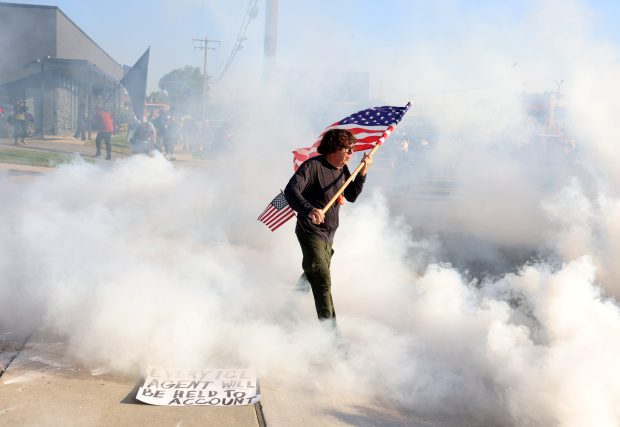
Among the memorable photographs included in the Tribune’s entry was a September shot of a Marine veteran emerging through tear gas and waving a flag at the ICE holding facility in Broadview, symbolic of both the citywide protests and the dramatic scenes documented in images and words during the 64 days of Operation Midway Blitz.
Tribune photographer Stacey Wescott said advice from her editors to pack a gas mask made it possible to capture a timeless moment amid the chaos.
“Everybody else is running, all the photojournalists, because it was that first day when really all hell broke loose,” Wescott said. “Had they not told me, ‘Make sure you’ve got that gas mask,’ I would have probably been like many others there and kind of caught off guard.”
The win marks the newspaper’s 29th Pulitzer Prize in its 179-year history. The Tribune was last awarded the prize for local news in 2022 for “Failures before the Fires,” an investigation conducted with the Better Government Association that exposed the city’s long history of failed building- and fire-safety code enforcement.
Other recent Pulitzer wins include Tribune photographer E. Jason Wambsgans, who was awarded the top prize for feature photography in 2017.
In 2012, then-Tribune columnist Mary Schmich won the Pulitzer Prize for commentary.
Pugh said the latest Pulitzer is particularly gratifying in light of the pressures facing the Tribune and news media more broadly.
“It’s no secret that the job of a journalist is probably as challenging as it’s ever been, whether that be due to the economic forces that are at play right now, or whether it’s this sort of relentless, cynical effort by those in power to undermine what we do: honest, unflinching news reporting,” Pugh said. “It’s really gratifying when you see a team come together under those circumstances, in the face of all of that, and do truly outstanding work.”