




A federal judge on Friday granted the Chicago Police Department a three-year extension to comply with the consent decree it now operates under, giving the department until 2027 — a total of eight years — to implement a series of much-anticipated court-ordered reforms.
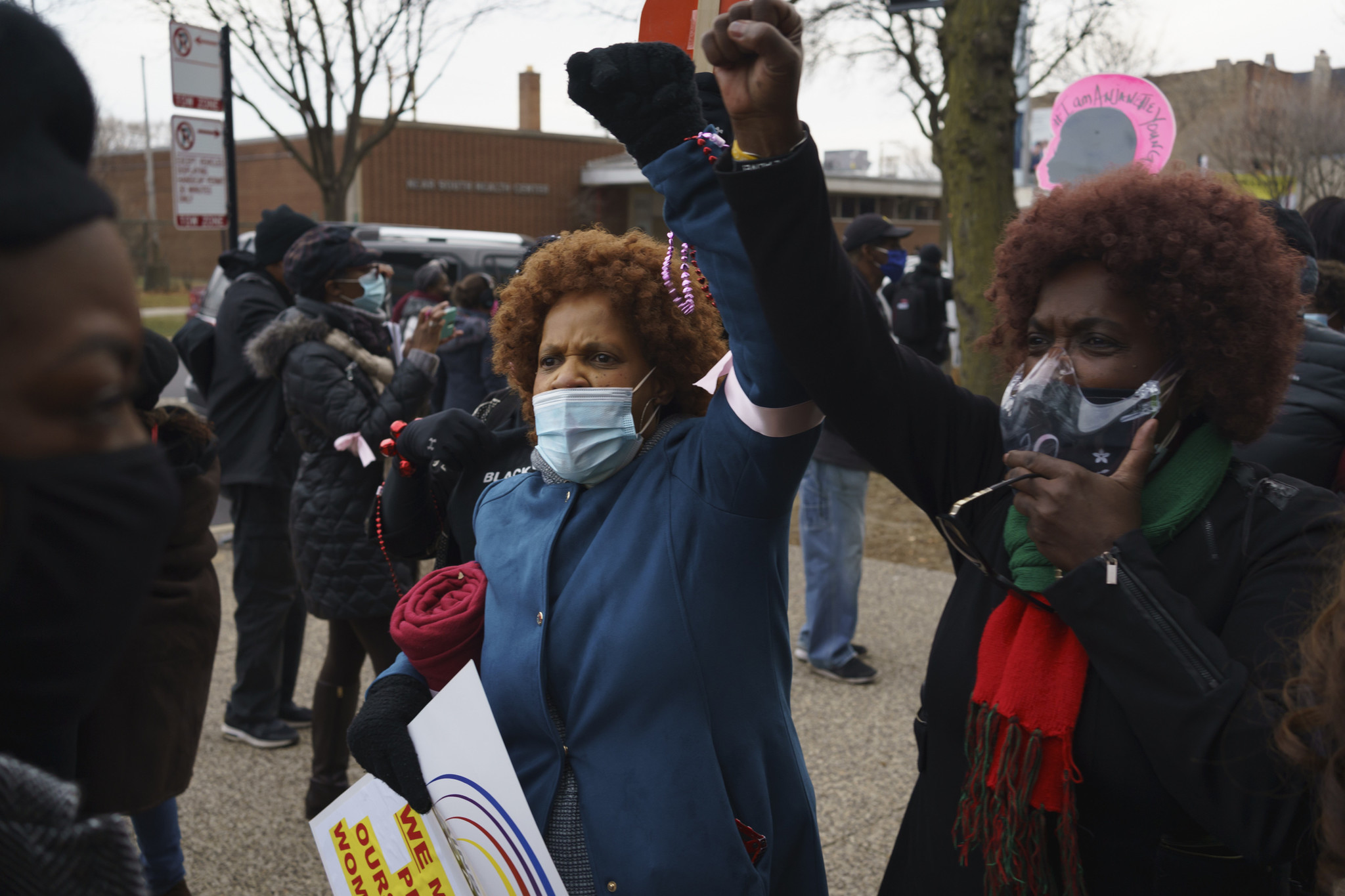
CPD also agreed to allow portions of the consent decree to govern search warrants, a key area for reform advocates, particularly in light of the 2019 wrongful raid at the home of Anjanette Young and other similar botched police action nationwide.
Chicago police officers wrongly raided Young’s residence and handcuffed her while she was undressed.
The department made the stipulations in an agreement with the Illinois attorney general’s office, which is overseeing implementation of the consent decree. The matter was addressed in a hearing Friday before U.S. District Judge Robert Dow, who called the new timeline and the search warrants “critically important issues to the success of the decree.”
“We recognize that for many people of Chicago, CPD compliance with the consent decree cannot come soon enough,” said Mary Grieb, an attorney with the AG’s office. “And we agree.”
Grieb, though, said it is important to be “realistic and transparent with the public” about how long the reforms will take.
The Chicago Police Department has been under the sweeping consent decree since 2019, after a U.S. Department of Justice investigation of the department that came in the wake of the killing of 17-year-old Laquan McDonald by former Chicago police Officer Jason Van Dyke.
The original terms of the court order gave the department five years to complete reforms, though police departments under consent decrees often take longer than that to come into full compliance.
“In the past few years, we have seen firsthand how deep these problems are,” Grieb said.

Chicago police Superintendent David Brown pointed to a number of reasons for the extension. He said it would likely take several budget cycles to equip the department with the technology it needs to fully comply with the reforms and assess whether the fixes are working. He also noted that the consent decree requires a ratio of about one sergeant for every 10 officers, a figure the department is “way under,” he said.
Brown said the city will also need several staffing and budget cycles to bring the ratio down.
He also noted that the stipulation to include search warrants adds additional consent decree work.
CPD has received criticism in the past for moving too slowly, or failing to create a necessary culture change to make the reforms effective, but department officials say around 10 years is typical for complying with a consent decree.
“You’ve got to first write the policies and then develop the curriculum and train everyone and then you can have the opportunity to change the culture,” Brown said.
After the hearing, Brown, along with Mayor Lori Lightfoot and Attorney General Kwame Raoul, released a joint statement that said it “will take time” to properly implement reforms.
“The City of Chicago initially agreed to ‘endeavor to achieve’ full compliance with the requirements in the Consent Decree within five years,” the statement read. “This timeline must be extended to achieve the operational and technological goals of the CPD that will lead to true cultural change within the CPD.”
When granting the extension, Dow said both he and those evaluating the department’s reform progress believed five years was an unrealistic goal. He noted that the Los Angeles Police Department completed its consent decree in about 12 years.
“We are bound and determined to get there a lot sooner than 12 years, so I think eight years is an excellent target to strive toward,” Dow said.
Regarding the search warrant addition, the Police Department agreed that warrants would apply to three paragraphs in the impartial policing section of the document. Under the sections, CPD would be required to ensure that its policies and procedures — now including but not limited to search warrants — do not discriminate against people based on race, sex, gender identify or other protected classes.
The sections prohibit police from using factors like race, sex, housing status or financial status when making “routine or spontaneous law enforcement decisions, except when such information is part of a specific subject description.”
The agreement says CPD must demonstrate that its search warrant process is fair and not discriminatory and implement “sufficient policies, training, data collection, supervision and accountability systems.”
“It likely will improve trust in the way we interact with the public when we do have to search or detain people,” Brown said.
CPD officials said the search warrant application was requested by the AG’s office, but that the department agrees with the importance of warrant reform.
“In Chicago and around the country, we have witnessed the tragic and horrifying consequences of bad warrants based on bad information,” Grieb said. “These often lethal consequences fall disproportionately on Black and brown people.”
Grieb said the framework already in the consent decree, when applied to search warrants, will provide a remedy for unjust search warrant actions.
“Everyone knows search warrants have been in the news a lot the past year,” Dow said, as he granted the parties’ request. “Frankly, they have been challenging issues for CPD and judges alike for a long time.”
The department is regularly monitored on its reform progress by an independent body. In the most recent report from independent monitor Maggie Hickey, the department achieved preliminary compliance in just over 50% of the provisions that have been reviewed.
The next report is expected in the coming weeks.
mabuckley@chicagotribune.com