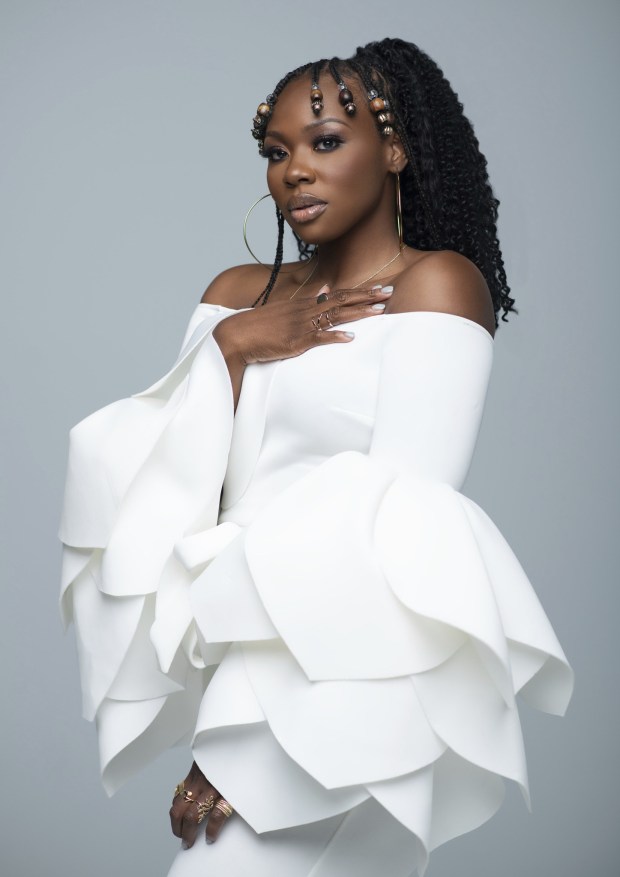
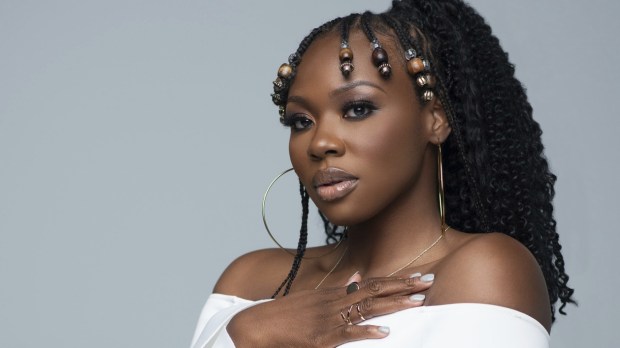

Nola Adé makes music for healing. It’s catchy and sumptuous and unique, something to move the listener, both emotionally and physically. And that’s just how she likes it.
But getting to this state in her creative career took some time. Born and raised in Chicago, Adé’s musical journey began at a young age as a member of the choir. Throughout her childhood, she’d perform during school or local talent shows, but Adé said she didn’t fully come into her identity as a musician until after college and law school. “After all the school that I went to and everything, I just was like, ‘Look, this is all that I have. This is all I really want to do,'” she explained.
Music, for her, was more than just a means of expression.
“I believe that my purpose right now is to do music. Whether that leads to something else, I’m not sure,” she said. “I have no idea if I will end up merging music and law one day, but I feel like right now, I’m presently where God wants me to be. And that’s where I’m trying to live. I’m trying to live in the present and let God lead me and show me where to go.”
She wants to go is in the direction of healing others. Part of that stems from actively healing herself, too. When she’s making music — when she’s deep in the songwriting process and collaborating with other artists — she feels both a drive to do more and a channeling of possibility. Perhaps it will be her lyrics about the complications of life or her melodies soothing the listener’s ear that will bring comfort to others.
“It’s the gratifying feeling of helping someone through music through song,” she said. “And it just always just feels really good.”
Last month, Adé released her latest EP, “Royal.” In sound, the new collection of songs differs from her first EP, “The Love Dance,” which was a familiar mix of soul and R&B. On “Royal,” Adé has incorporated more jazz and Afrobeats to create a genre she calls “Afro-soul” music. And while Afrobeats as a sonic choice has risen in popularity around the world within the last five years, Adé’s new sound is not just trend-chasing. She grew up listening to all types of music, from hip-hop to rock to pop and R&B. At home, her parents exposed her to Afrobeat pioneers like Fela Kuti as well as other African artists in different genres.

“I just grew up listening and learning and just loving music. These are Nigerian types of music, like Highlife music, Fuji music, and it just really is a part of who I am,” Adé explained. “When I started to grow and understand everything, I was just trying to figure out a way to merge the two. Like, how do I merge where I come from ethnically and where I was raised and born?”
With that intention came the creation of “Royal.” Work on the EP began in 2021. Adé, an atypical songwriter, uses her phone’s voice memo function to record bits of music when she is out and about. Later, she will return home to her studio where she either looks for music to pair with the melody or works with a producer to create a whole new beat around her sound.
Whatever the method, she leans into the process that feels as “organic” to her as possible. It’s been a little trickier, with Royal,” which was largely crafted online through working with overseas producers, compared with “The Love Dance,” which incorporated an abundance of live sound.
Despite those challenges, Adé said leaning into her roots — the sounds and rhythms and melodies that sound most natural to her — has made for a more explosive sound for the listener. The tracks, like the title track “Royal” and centerpieces “Energy” and “We Are (Children of Freedom),” are upbeat, “feel good” songs that transport and excite.
“There are a lot of uplifting lyrics and a lot of uplifting words that people can take and apply to their own lives that people can really relate to. Because we’re all going through something. And it’s about knowing how to encourage yourself and knowing how to get yourself out of certain slumps,” she said. “I had to learn that in the journey writing this EP, and I hope that people can really take that away for themselves as well.”
“Royal” is out now on streaming platforms.
Britt Julious is a freelance critic.