
To help inform voters on who’s running for Chicago’s elected school board, the Chicago Tribune education team posed a series of questions to the candidates in each district. These questions ranged from basic information on their background and campaign platform to their stance on several issues facing Chicago Public Schools.
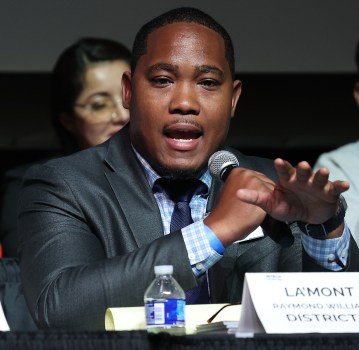
See the answers from La’Mont Raymond Williams, candidate for elected school board in the 9th District, below.
About the Candidate
Name: La’Mont Raymond Williams
Age: 36
Neighborhood: Ashburn
School District: 9
Education: Bachelor of Arts in criminology with minors in political science and history, Upper Iowa University; Juris Doctor, Loyola University Chicago
Current Job: Chief of staff and general counsel to Cook County Commissioner Bill Lowry
Previous Political Experience: None. Unsuccessfully ran for state senator of the 16th District in 2022.
Questions and Answers
In the interest of transparency, the candidate’s responses shown here are published as written and have not been edited by the Tribune.
Did you attend Chicago Public Schools or is anyone in your immediate family a CPS student? Yes.
Have you worked at Chicago Public Schools or another school? What is your background in education?
I did not work for CPS. I tutored, mentored, and coached students, including CPS students. I currently coach youth basketball in Evergreen Park, IL and serve as an active chaperone for my niece who attended Wacker Elementary School in the 9th District.
Why are you running for a seat on the Chicago Board of Education?
I am running because our students deserve better. I am running to represent the working class and middle-class families of the 9th district, families like my own. I am running to uphold the fiduciary duty as a member of the CPS Board to be responsible with taxpayer money. I am running to tirelessly work to mitigate the increasing CPS budget deficit projected to reach over $700M. I am running because current CPS students suffer the consequences of inadequate funding and inadequate resources, leading to cutting basic services like busing for elementary students and resources for special needs students, due to mismanagement. I am running to address the current, and growing, budget deficit plaguing CPS and to ensure financial stability at CPS. I am running because in public education is often the only option for families in the 9th district and I want to make sure if public education is their only option, it is the BEST option. I am running because I represent nearly 35,000 students, 81.6% of whom are African American and come from working and middle-class families. I am qualified for this unique position, and I am ready to serve on day one.
How would you describe your district?
My school district is over 80% African American and wholly on the south, southeast, and southwest side of Chicago. Most families in my district are working and middle class families with a high concentration of CPS employees including teachers. The 9th District is my home as I grew up and still live in the 9th District.
How would you describe your campaign platform?
My campaign centers around, “our students deserve better.” I am the only independent and qualified candidate in this race as I am not backed by any special interest group or receiving special interest group money. I have support from the community, local leadership including alderpersons and committee persons, and labor. I received this support based on my years of legal and governmental experience and service, my proposed solutions to fix CPS’ problems, and my ability to deliver for our students, parents, teachers, CPS faculty, and community.
What is the single most important issue facing CPS students?
The most pressing issue facing CPS and our students is the looming budget crisis facing CPS. Currently CPS has a projected budget deficit of $505M with an increasing likelihood it will balloon to over $700M. CPS cannot continue to run with a deficit of over $500M. This looming financial crisis affects every facet of CPS’ ability to fund and provide resources to our students. The looming financial crisis affects whether we can provide for more resources for special education, smaller class sizes, busing and transportation, the Black Student Success Plan, ESL and bilingual staff, needed capital improvements, etc. This affects our credit rating, which affects how we can leverage our short term and long term debt. I propose an overall audit of CPS’ budget including an audit of CPS’ debt obligations. Additionally, I propose honest and robust discussions with the City, State, and federal elected officials to implement new and creative revenue streams.
Provide three to four key points you want voters to know about your campaign.
- I am the only candidate with both legal and governmental experience advising, consulting, and working on complex governmental budgets like CPS’ budget.
- I am an independent voice and a critical thinker who runs on serious solutions and not special interest talking points.
- I believe in accountability through transparency and will commit to frequent interaction with the 9th District residents, data, and reports to inform any vote I take.
- I am a proud CPS alum and product of the 9th District who believes CPS is often the only choice for many Chicago families, so let us work to make it the best choice.
Given this year’s budgetary problems and disagreements on how to solve them, what do you propose for the district’s funding in future years? Would you support the district in taking on any loans in future years to fund the annual budget?
I am hesitant about taking on any additional loans in the future unless we exhaust all possibilities for additional revenue. I do not want to overburden taxpayers more than what Chicago taxpayers currently face. I recommend several proposals to address both short term and long term district funding. For example, I recommend targeted lobbying of the State to increase the public education funds derived from the Illinois lottery, specifically eliminating, either permanently or temporarily, the “carve outs” under Illinois law which allow Illinois Lottery’s net proceeds to go to other causes/projects instead of the Common Education Fund. Currently, public education receives approximately 35% of the net proceeds from the Illinois lottery. Our student are our greatest investment and Illinois law should reflect this. Additionally, I recommend immediately liquidating the remaining unused CPS schools and buildings from when former Mayor Rahm Emanuel closed 50 public schools in 2013. There are 30 of these schools remaining with many of these buildings located in the 9th District. CPS has no intention to utilize those schools and liquidating these facilities (selling them to a third party) will both create short term revenue we can reinvest into our students, and remove liabilities and expenses in CPS’ budget. Currently, CPS wastes millions of dollars on these unused facilities in maintenance a year.
The Chicago Board of Education recently adopted a new 5-year Strategic Plan. Which aspects do you support and which would you change, if any?
I am enthusiastic about the current strategic plan, specifically the attention towards focusing on the success of historically disinvested student populations. The emphasis on Black Student Success, bilingual pathways, and students with disabilities deserves both praise and support. As a member on the Board, I will gladly work to ensure The District meets and exceeds these aspects of the Strategic Plan.
As thousands of migrant families settle in Chicago, how should the District handle the influx of English learners? What more should be done to ensure consistent bilingual education is provided and funded?
CPS is often the only choice for many Chicago families, including recent arrivals and migrants, we must work to ensure it is the best choice. CPS must fund bilingual and ESL education to better equip our students, specifically as this is a need and not an elective. There are many students who are unable to receive proper instruction due to language barriers. We must secure more revenue, particularly revenue which does require more burden on taxpayers if possible, to provide these essential and vital services. Additionally, I propose CPS partner with vetted nonprofit organizations who can provide these serves in collaboration with CPS. Additionally, I would propose CPS outline a five-year strategic plan specific to complying with the corrective action from ISBE, especially with the influx of migrant children who will attend CPS. Additionally, I opine this is an opportunity to reengage the State for more resources to assist CPS in compliance with the ISBE corrective action given Chicago took the bulk of migrant arrivals, many being children, and the State provided some assistance for the influx. I opine this logically flows as educating the new arrivals will be paramount if they are in the Chicago Public School system and the State and City committed to welcoming migrants. This is an opportunity for more collaboration with the State to address an issue affecting not only Chicago but the entire state. The CPS Board must keep all creative options on the table to secure the funding for these services, the services themselves, or both.
Do you believe the district has historically underinvested in South and West side schools? Yes.
If yes, what solutions would you propose to address inequities and opportunity gaps in the school system?
CPS must procure and responsibly allocate the necessary funding to cure historical disinvestment in CPS, specifically in underserved communities which comprise many areas in the 9th District. I propose fully embracing the Black Student Success Plan and empowering the Black Student Success Working Group, along with its recommendations. Specifically, the 9th District only has three (3) schools ranked as exemplary but the 9th District is predominantly black and encompasses the majority of the Southside of Chicago. Additionally, I plan to address and close the intransigent achievement gap, created by decades of disinvestment, by breathing life and power into the State legislation mandating the Black Student Achievement Committee. I propose reallocating funds to the formation, implementation, and sustainability of this committee at the CPS Board level. According to CPS, 35% of CPS students are African American with the majority of these students concentrated in the South and West sides of the City. I would work to increase the representation of African American teachers. According to CPS data from 2024 approximately 20.5% of in classroom teachers are African American. Lack of representation in the classroom can be significantly detrimental to the development and learning of African American students who may experience more difficulty relating, culturally, to non-African American teachers. I strongly advocate for qualified and equitable representation
Since his election, Mayor Johnson has indicated a desire to move away from school choice and bolster neighborhood schools. This was recently reinforced by in the District’s 5-year Strategic Plan. Do you share this position? Why or why not?
I share Mayor Johnson’s desire to elevate the curriculum and services of our neighborhood schools. I appreciate our selective enrollment schools as I am a product of CPS selective enrollment as a former IB student at both Ogden Elementary and Lincoln Park High School. However, I do not believe a student, like me, who lives on the Southwest side of the city, should travel more than two hours across the city to achieve a quality education. We must ensure a world class education is an option and available in our neighborhoods. We must improve our neighborhood schools so more than only three (3) schools in the 9th District have an “exemplary” rating.
What solutions do you propose to provide busing for students at selective enrollment and magnet schools?
I propose CPS audits its currently proposed $9.9B budget to determine what, if any, bad contracts the Board can cancel, revenue opportunities, and other opportunities to reallocate resources, without impacting students, teachers, and faculty, the Board can take. Once determined, I propose CPS increases its transportation budget to pre-pandemic levels to accommodate busing for our students. Lastly, CPS must work collaboratively with bus companies, drivers, and other employees to ensure we can accommodate an increase in busing. This situation is personal for me as I rode the bus to school from K-8 and my late grandfather, Overtis Sykes, was a school bus driver for the now closed Garrett A. Morgan Elementary school.
Please share your thoughts on how the District and the Chicago Teachers Union can settle on a new 4-year contract.
CPS and CTU can settle a new contract through continued good faith negotiations and focusing on the areas of agreement between the parties to create a baseline for productive discussions. Our teachers deserve a contract and many of the terms are reasonable; however, I believe compromise is needed when we take into consideration the budget outlook and the projected deficit facing CPS for the next five years. Additionally, collaborative and targeted lobbying by both CPS and CTU towards the State to secure more funding for the District, specifically closing the loops through the carveouts to the Lottery net proceeds which should go from 35% proceeds to public education to 100%.
In 2024, Chicago Public Schools’ average literacy proficiency rate is 31%, an increase from pre-pandemic years. These rates, however, were lower for students from low-income families, English learners and students with Individual Education Plans (IEPs). How should the district seek to improve literacy rates going forward?
There is a dire need for more resources for students from low-income families, English learners, and students with IEPS. I propose advocating for more resources under the remaining funds from Elementary and Secondary School Emergency Relief Fund (ESSER). I propose advocating and workmen with our congressional and State leaders to receive more funding through the Individuals with Disabilities Education Act (IDEA). CPS currently receives funding through these federal acts, but we can and need more. As a coach, mentor, and uncle to students who have IEPs and special needs it imperative these students receive the utmost support and dedicated minutes possible so as not to create an aggregate and cumulative effect due to lack of dedicated minutes. I will zealously advocate for our students, especially our students with special needs, IEPS and 504 plans. I propose full implementation of the Black Student Success Plan and Black Student Success Committee recommendations. I continue to advocate for increased resources for bilingual and ESL curriculum and staffing. CPS must reallocate resources to invest in the needs of the nearly 69% of students struggling. These students represent a major concern in the performance of our district and require us to directly address this issue. Additionally, I propose auditing the current CPS IEP and 504 plans and protocols, while working with special education subject matter experts and officials from other large urban school districts, to update our best practices for providing these services to our students. As an uncle, coach, and mentor to students with special needs and behavioral needs, I know firsthand how critically important it is to provide these services for both the best well-being and development of our students, and for the peace of mind to our parents knowing their children receive an equitable opportunity for education.
What is your position on expanded funding and renewal terms for charter schools?
Currently charter schools receive approximately 24% of CPS budget dollars; however, CPS does not have direct oversight over public charter schools. CPS has some oversight through its budget allocation and ability to terminate charter school contracts if charter schools are underperforming within the district. I spoke with charter school advocates and expressed there is a need for charter schools to work more collaboratively with the District as charters do fill a void and all schools will face negative consequences if we do not mitigate the budget deficit. It is my position charter schools must perform to justify CPS funding as this is the only “direct oversight” CPS has through its budget allocation. Charter school advocates agree with me charter schools should be held accountable for their performance. I am currently in agreement with the assessment criteria for charter schools, but I am open to revisiting this issue should it be in the best interest of our students and the District.
Please provide your thoughts on how to keep Chicago Public Schools as safe havens for students to learn and flourish fear of violence. How do you propose the district approach this?
First, we must listen to our students, parents, teachers, faculties, and LSCs about what overall safety issues affect our schools and what specific safety issues affect our individual schools. I fully support utilizing mental health experts as our subject matter experts on best practices to support student, faculty, and staff mental health. CPS recently proposed the Whole School Safety Plan (WSSP), which focuses on several aspects to address the mental health of both students and teachers. I advocate CPS engage students, faculty, and staff under the proposed WSSP, specifically, the Required Emotional Safety Components’ guidelines of Educational Awareness, Skills and Strategies, Culture and Climate, Established Structures, and Crisis Support. I further recommend CPS strengthen its anti-bullying policies to ensure we are consistent with best practices across similarly situated school districts. The safety of our students and the feeling of safety for our students in their learning environments is paramount to creating conditions conducive to learning.