
In case you’ve not been paying attention, the Grand Army of the Republic Memorial Hall and Museum has come a long way since its multi-million-dollar renovation was completed in 2016.
With little fanfare but certainly lots of effort, this beautiful 19th century landmark in downtown Aurora greatly expanded its hours and its programs. And in doing so it has picked up plenty of accolades from the Illinois Association of Museums.
For example, a couple years ago, the GAR museum received the Small Institution of the Year award. In 2025 Director Eric Pry of the GAR museum was named Museum Professional of the Year. And last week four more honors were added to that growing list, including the Special Service Award to Michael Sawdey, longtime chair of the GAR Memorial Commission.
Intrigued by “this unusual structure in downtown Aurora about which nobody seemed to know anything,” Sawdey said he got involved when former Mayor Dave Stover announced plans to revive the GAR commission. And he stayed with the project because of his interest in cultural studies. That includes “how everything in culture is connected to everything else,” he added, which is “really what museums help us understand when they are doing a good job.”
Sawdey has worn plenty of other hats in those nearly three decades on the commission. The professor of fine arts, emeritus, at Aurora University is also inaugural director of AU’s Shingoethe Center, which contains thousands of items detailing the Native American experience, an outgrowth of the collection owned by Aurora residents Herbert and Martha Schingoethe.
“He’s also the smartest person I know,” insisted Pry, who credits Sawdey with guiding the GAR museum through “a lot of growth and change.”
After the renovation was completed, “we had to figure out what our purpose was,” continued Pry. “He took the reins and helped breathe new life into it.”
According to Sawdey, that meant widening its focus beyond the Civil War to include veterans of all American wars, as well as the experiences of citizen soldiers in American history and veterans’ services outside the military. These themes suggested that, rather than approach the GAR as only “a military museum,” the mission should be “an educational one,” he continued.
And that meant stepping up community engagement.
“The building is beautiful and it is nearly unique in the United States,” pointed out Sawdey. “But the life of the building is in the programming it offers to the community.”
And so, the goal “was to let people know we were not just an old building downtown but a free community service that happens to be in a very unique one-of-a-kind place,” noted Pry.
The effort paid off. For one thing, museum doors have gone from being open four hours a week to four days a week. Also, the number of events have more than doubled – from around a dozen annually to 31 on the books as of now for 2026, said Pry.
Included in last year’s busy calendar was “Fueling the Front Lines,” an exhibit exploring the evolution of culinary science and logistics during wars. Put together by 11 Aurora University students majoring in a diversity of subjects, this project won the recent Community Partners Award from the Illinois Association of Museums.
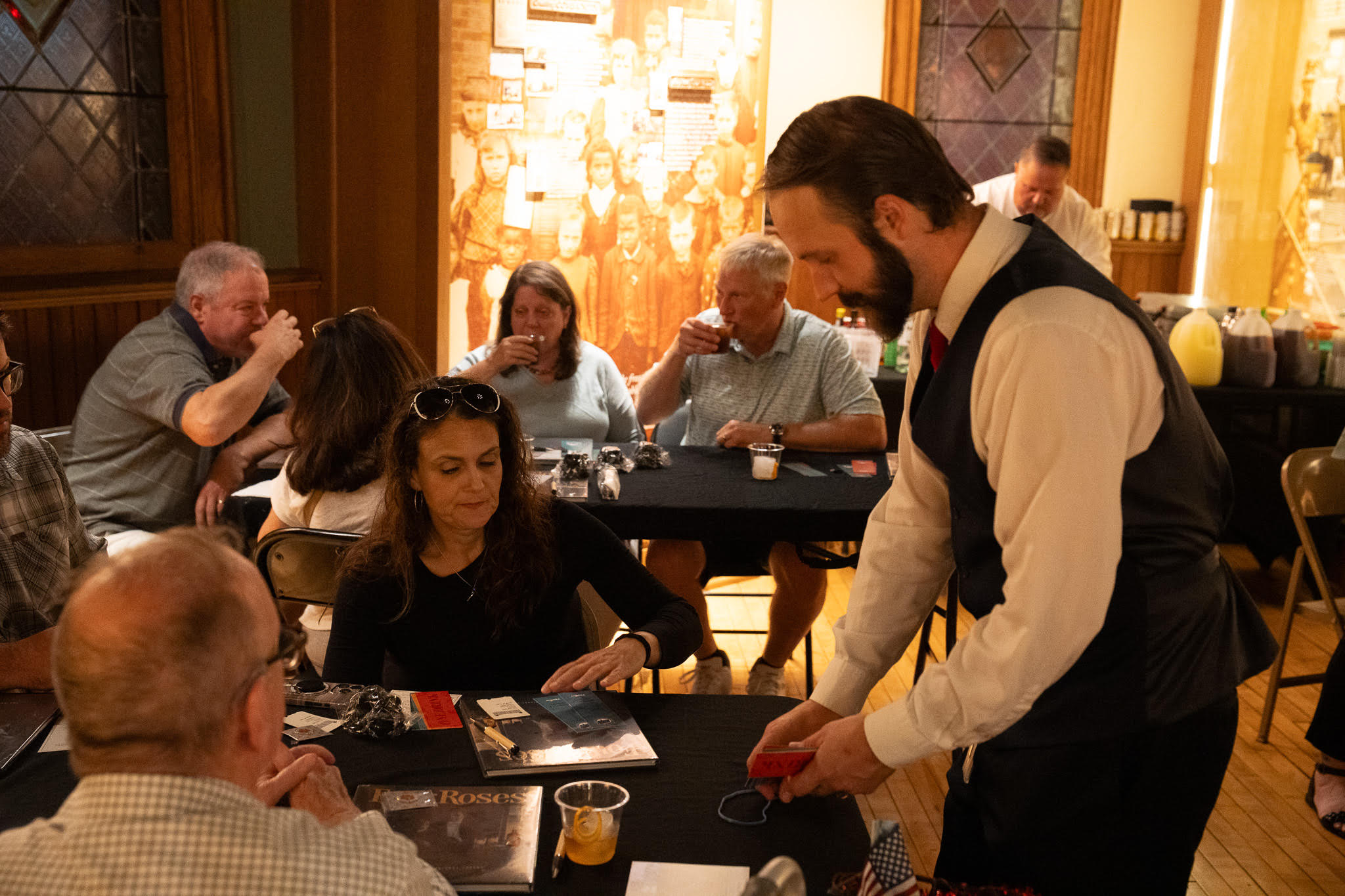
A second event, directed by GAR museum educational specialist Stephanie Shelton, also was honored in the category of Educational Programming. According to Pry, “Booze and Berets” was a quickly sold-out social experience that focused on cocktails inspired by conflicts going back to the Revolutionary War.
A favorite drink: The French 75, which consists of champagne, gin, lemon juice and simple syrup garnished with a lemon twist that is named after a popular cannon from World War I because it has “a kick to it” like the French 75mm field gun.
Another fact added to the fun, pointed out Pry: That piece of artillery happened to be manned by a crew from Aurora during the war who named it “The Aurora” and who “repaired it and brought it back into the field” three times after it was out of service.
The GAR museum also won the Special Project award, based on the year-long work of interns Bennett Driver from Northern Illinois University and Brooke Patton from AU, who transcribed and printed over 100 Civil War letters from Capt. William H. Gale, quartermaster with the 44th Illinois Infantry.

“We did pretty well this year,” noted Pry of the GAR’s growing list of kudos and accomplishments.
And, even with budget cuts that led to reduced staffing, there are no plans to slow down.
Last year’s one-night “Booze and Berets” was so popular it is being expanded to two evenings: Sept. 17 and 18, with the $40 tickets including samples of each cocktail and food. Other upcoming Night at the Museum events are May 9, June 13 and Aug. 8. And exhibits in the next few months include the Smithsonian’s “Mask of Lincoln Poster” which opened on April 15, and “How the GAR Shaped Our Nation” which opens on July 4 when America celebrates its 250th anniversary.
According to Sawdey, future goals include developing more relationships with educational institutions, upping the museum’s online presence and reaching audiences beyond the immediate geographic area, especially with historical tourism in the U.S. growing.
“Interest in Civil War history remains high,” he said. “But nearly all destinations for Civil War tourism are in the East and South,” which literally puts the GAR Hall, one of the few such places in the upper Midwest, in a good spot.
According to Pry, the museum is going through an assessment program as it seeks accreditation from the American Alliance of Museums, which would vault it into an “elite 3% of museums” in the country.
With growth, of course, comes challenges. Among them is the demanding task of turning a pile of artifacts into a museum collection, which includes cataloging, researching, describing and photographing.
The GAR museum receives donations from many families in the area, and has also become a “collecting point” for materials originally gathered by veterans groups and other museums, noted Sawdey. While the city of Aurora recently developed storage and work areas to facilitate that ongoing process, “there is always a need for more trained staff to help,” he added.
For Pry, the work that lies ahead requires staying focused on the “foundational work” of museums – collection, exhibition and public programming. This staff and the GAR commission “thrive on passion,” he insisted.
“They love history. They love the city. But especially they love what our veterans have done for us.”
dcrosby@tribpuub.com