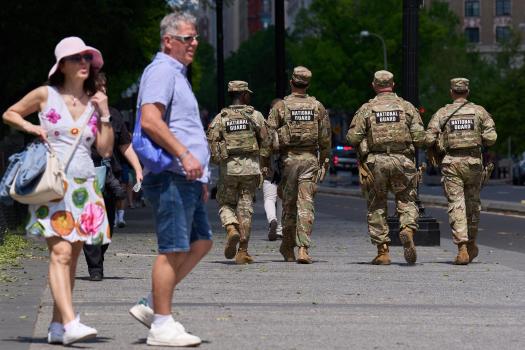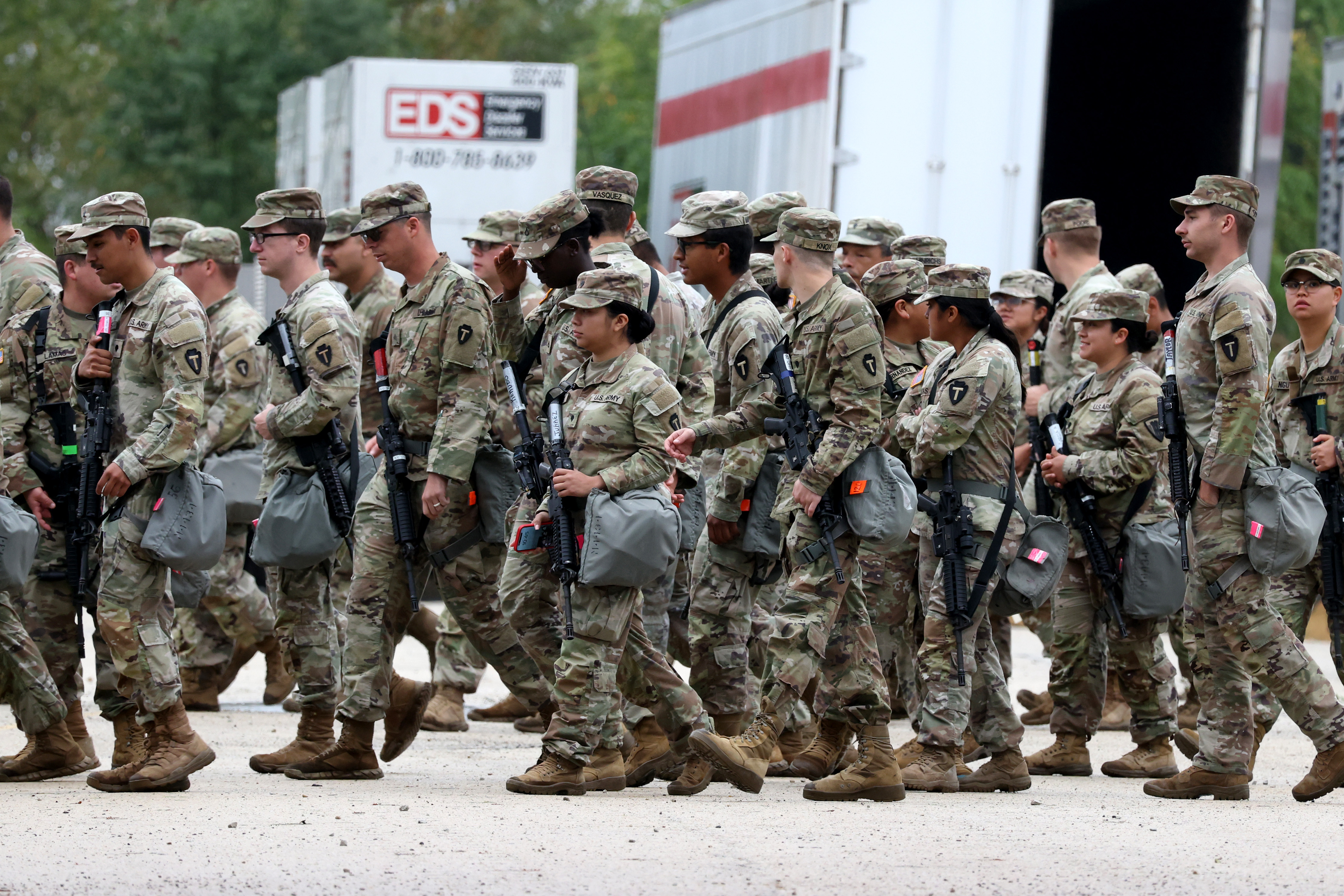
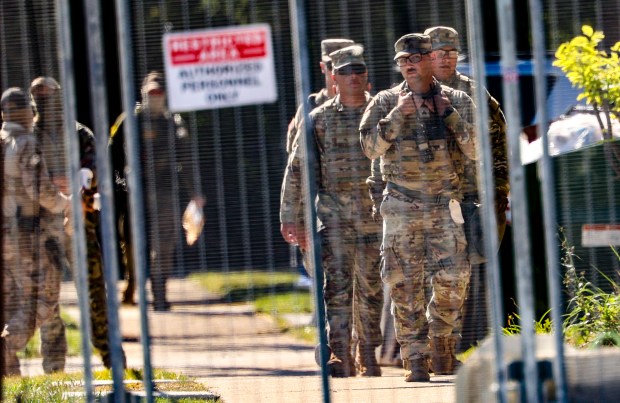
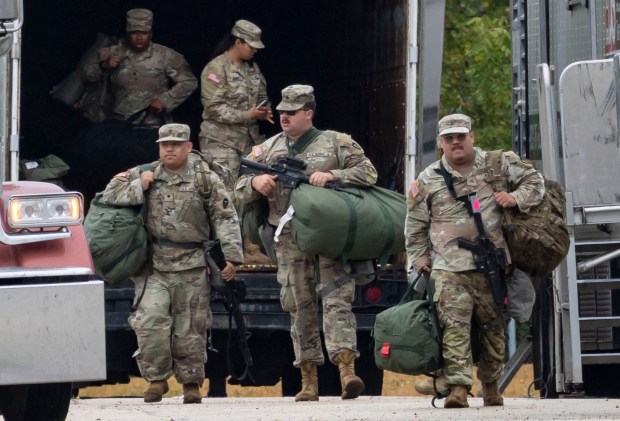
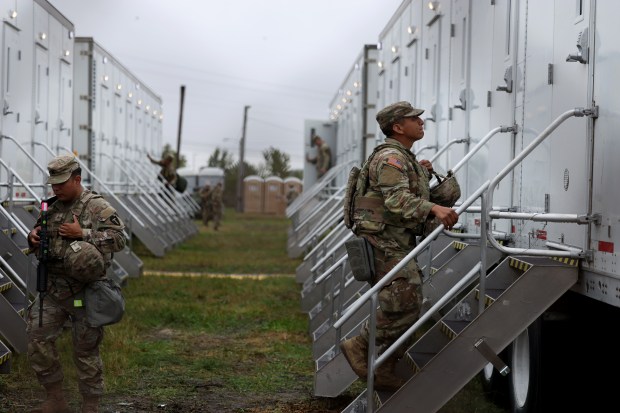

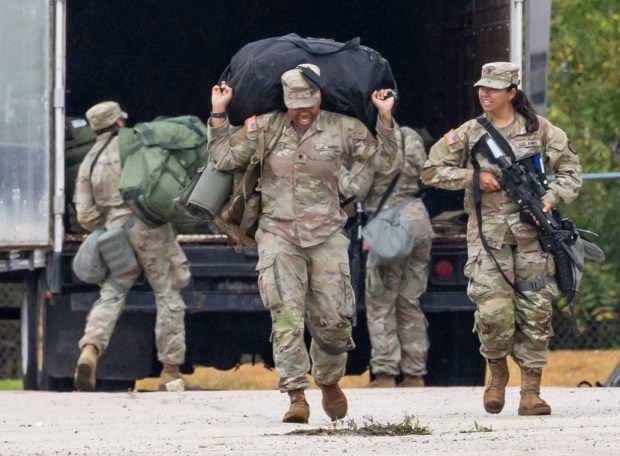
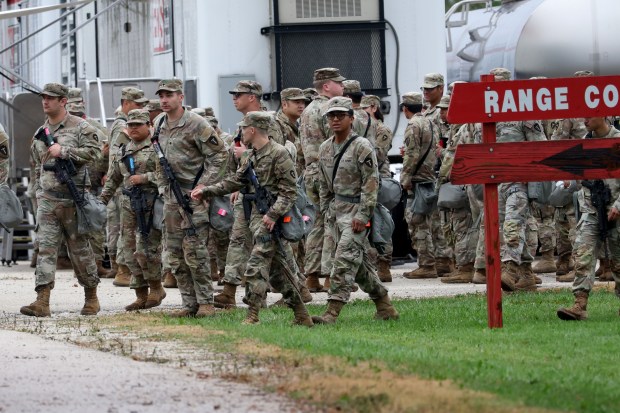
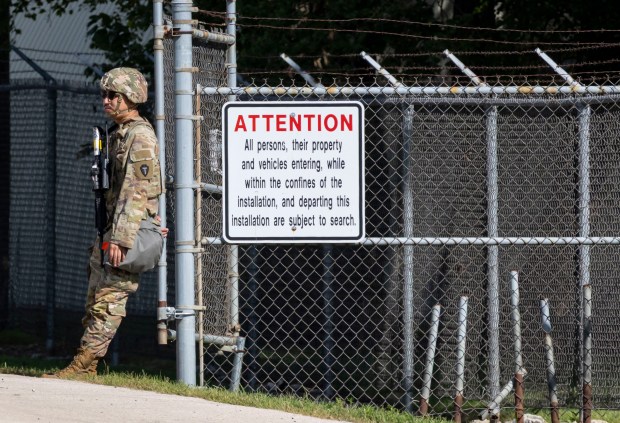


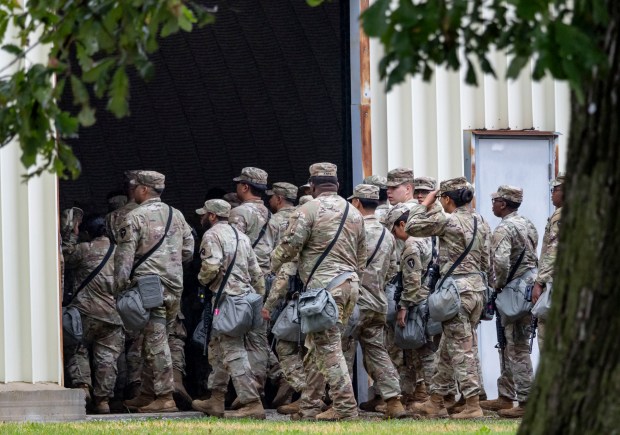


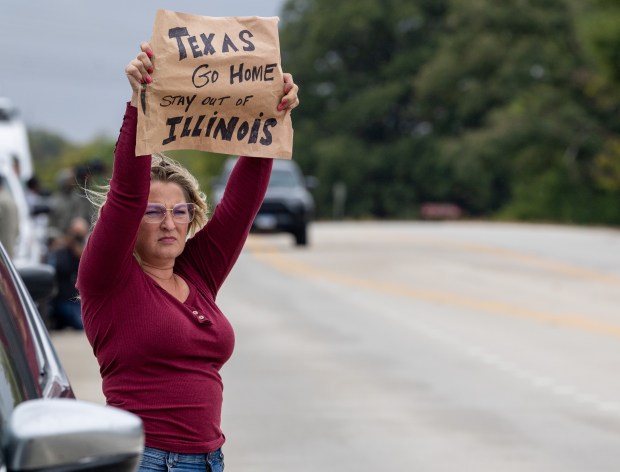

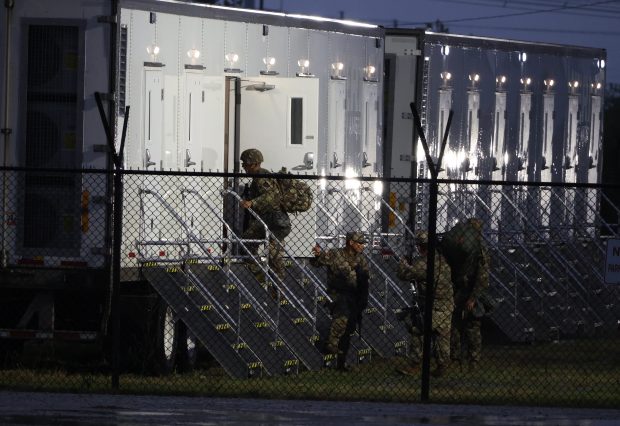

Nearly seven months after federal troops were preparing to deploy to Chicago during Operation Midway Blitz, a federal judge on Monday granted a motion to dismiss the state’s lawsuit over the mobilization amid assurances that the presidential orders have been rescinded.
In making her ruling, U.S. District Judge April Perry said that even though President Donald Trump had threatened on social media to “come back” to Chicago with troops eventually, she cannot issue “advisory opinions” about hypothetical orders might happen in the future.
The judge also noted that the “facts on the ground have changed substanitially” since last fall, when hundreds of federalized troops were poised to help protect federal agents as they carried out deportation operations in the Chicago area.
“Things in Chicago are calm,” Perry said. “They have been calm for many many months, and while that certainly could change in the future, there is no threat of that happening anytime soon.”
The decision ends litigation that made national headlines in early October at the height of Operation Midway Blitz. After the Illinois Attorney General and city of Chicago filed suit, Perry held a daylong, emotionally charged hearing on Oct. 9 that ended with her issuing a historic restraining order blocking the deployment.
Months later, the U.S. Supreme Court denied a request from the Trump administration to allow the Republican president to deploy troops to Illinois streets while the court battle played out, saying they had “failed to identify a source of authority that would allow the military to execute the laws in Illinois.”
On Monday, attorney Christopher Wells, who represents the state, argued that even though the original deployment orders have been revoked, Illinois was “still under threat” and subject to the whims of the president and Secretary of Defense Pete Hegseth.
“The president has not not rescinded the memoranda and has said he will come back,” Wells said, referring to a post Trump made on Truth Social in December. “They have never fully disavowed or stepped away from the course of conduct that gave rise to this case.”
Stephen Tagert, an attorney for the Department of Justice, said the lawsuit should not proceed to a final permanent injunction since the orders authorizing the National Guard deployment “will not be used again” given the Supreme Court’s decision.
“These orders are no longer operative,” Tagert said. “The National Guard is completely gone, and the case is moot.”
After the ruling, Attorney General Kwame Raoul said in a written statement he was “pleased” the court declared the Trump administration’s “unlawful orders defunct.”
“The American people, regardless of the city or state in which they reside, should not live under threat of military occupation simply because they live in a jurisdiction that has fallen out of a president’s political favor,” Raoul said. “I am proud of the attorneys from my office who diligently fought to uphold the rule of law, because in Illinois, we recognize that the Constitution is not merely a suggestion.”
jmeisner@chicagotribune.com