
There isn’t much in the Middle East to celebrate these days. The two-week ceasefire between the United States and Iran, which provided some respite from weeks of bombing and missile attacks, is set to expire this Wednesday if the parties don’t find a way to extend it. The Gulf Arab states, which have gotten used to being an oasis of tranquility in an unstable region, are now on the front lines of a conflict that has exposed its many vulnerabilities. Gaza remains in a state of purgatory, with millions of Palestinians still dealing with a humanitarian crisis and the future of the territory very much in doubt.
So when President Donald Trump’s administration announced a 10-day ceasefire last Thursday to stop the fighting in Lebanon, it was understandable why many had smiles on their faces. The cessation of hostilities, the product of the most senior-level meeting between Israeli and Lebanese officials in over 40 years, is designed to provide both countries with an opportunity to establish a durable diplomatic process that, one hopes, results in a formal peace agreement and an official demarcation of their disputed border. According to the terms, the ceasefire can be extended if Israel and Lebanon agree and enough progress is made by the Lebanese government in asserting its sovereignty against Hezbollah, the nonstate militia that resumed its war against Israel days after Iranian Supreme Leader Ayatollah Ali Khamenei was killed in an Israeli airstrike.
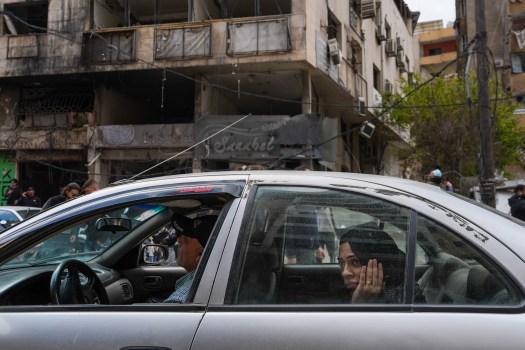
Unlike the war in Iran, in which Trump has equivocated between negotiating a settlement and threatening to annihilate Iranian civilization, it appears that the White House wants to see the ceasefire in Lebanon survive. Israeli and Lebanese officials are scheduled for another meeting in Washington later this week. Trump went so far as to write on his Truth Social page that, from now on, he’s prohibiting Israel from striking Lebanese territory, a warning that Israeli Prime Minister Benjamin Netanyahu was so irked by that he asked his ambassador in Washington to register complaints to the White House about the tone of Trump’s message. Lebanese civilians are hopeful that the Israel-Hezbollah war is closer to being over for good. Some of the hundreds of thousands of people who were displaced from Lebanon’s south are now returning to their homes despite Israeli warnings against doing so.
Despite the hope, however, it’s wise to remember that positive vibes in the Middle East are often snuffed out by spoilers and competing agendas. Lebanon is no different. U.S. officials should hope for the best but prepare for the worst.
Indeed, we’ve been here before. In November 2024, after more than a year of Israeli airstrikes in Lebanon and Hezbollah rocket attacks on Israel’s northern communities, the two were pushed into a ceasefire accord that was also supposed to bring a comprehensive peace. Israeli troops were expected to withdraw from the Lebanese territory they occupied; the Lebanese army would replace those troops by deploying 10,000 of its own soldiers into the area; and the Lebanese state would go to work on disarming Hezbollah. Southern Lebanon, a portion of the country where the Lebanese state’s presence was historically thin, would finally rejoin the country.
But it didn’t turn out that way. Israeli forces, who dealt Hezbollah’s leadership a serious blow, were never enthralled with the truce and doubted the Lebanese government could disarm Hezbollah even if it wanted to. Israeli troops withdrew from some Lebanese territory but remained stationed along five points inside the country, arguing that it was a national security necessity as long as Hezbollah remained a threat. The Lebanese government called Israel’s continued presence a violation of the deal and argued that it was upholding its end by bringing Hezbollah’s weapons caches under the state’s control. The war never really ended either because Israel continued striking Hezbollah positions. Every Israeli strike sparked more anger in Lebanon that Netanyahu was going back on his commitments. Meanwhile, the only party served by these developments was Hezbollah, which argued that Israel’s military action showed why Lebanon needed an organization like it to resist Israeli aggression.
The November 2024 ceasefire was the best possible alternative at the time — certainly better than more war. But it was also an imperfect arrangement meant to be a holding pattern for bigger and brighter things: Hezbollah decommissioned, Israeli troops out of Lebanon and the Lebanese government finally having a writ over the entire country. As we know, reality had something else in mind. The Lebanese army made some progress, yet not enough for Israel to fully withdraw. Hezbollah spent the time between November 2024 and early March this year rebuilding its missile capability for another round of conflict. And despite the Trump administration’s attempts to pressure both sides to fulfill their obligations on schedule, Israel and Hezbollah assumed more war was an inevitability.
Unfortunately, those assumptions proved correct. On March 2, the fighting resumed after Hezbollah sent rockets into Israel in solidarity with Iran. Far from treating this attack as a symbolic one-off, Netanyahu viewed it as a golden opportunity to throw the previous diplomatic arrangements into the paper shredder and authorized yet another Israeli ground invasion of southern Lebanon. Israel’s current air and ground campaign is more extensive than it was in 2024, with the Lebanese capital of Beirut a frequent target and senior Israeli officials now talking about essentially keeping a swath of Lebanon under Israeli occupation for the long haul. If the goal of Hezbollah’s renewed attacks was to demonstrate to Tehran that it wasn’t sitting still, it merely made its situation worse.
The phrase “History doesn’t repeat itself, but it often rhymes” is used so often that it has become a cliche. In Lebanon and the Middle East, it couldn’t be closer to the truth.
Daniel DePetris is a fellow at Defense Priorities and a foreign affairs columnist for the Chicago Tribune.
Submit a letter, of no more than 400 words, to the editor here or email letters@chicagotribune.com.