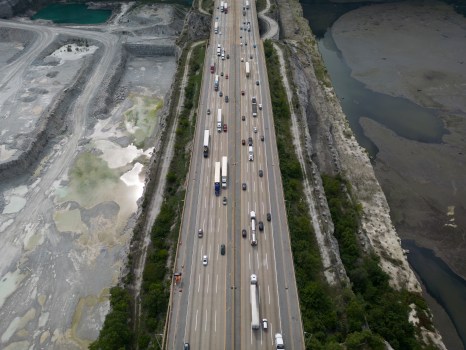
After a couple of weeks of relentless downpours, it was inevitable that a swollen Des Plaines River was going to overspill its banks, creating havoc for drivers and a few homeowners.
Despite some flood-covered thoroughfares, overall damage has been minimal in Gurnee and Lincolnshire.
It’s been the wettest start to a meteorological spring on record, weather folks tell us, with 10.6 inches of rain drenching the area, and the rainiest April since 2013. The flat, low-lying land along the “Aux Plaine” allows high water to spread quickly, causing minor and moderate flooding in Gurnee and threatening the handful of remaining businesses along Old Grand Avenue.
As it did this month with the river cresting in Gurnee at 10.9 feet last weekend. The National Weather Service predicts the Des Plaines will continue to fall this week, close to its 7-foot flood stage, while the Fox River, too, will level off with flood warnings expected to end by Saturday. Previously water-logged Grand Avenue was reopened Tuesday afternoon between Route 21 and O’Plaine Road, police reported.
Tropical-style storms — as meteorologists warn us are becoming more frequent due to climate change — can cause the county’s usually docile rivers to become raging waterways. With a watershed beginning in Union Grove, Wisconsin, and 235 square miles of drainage upstream, the Des Plaines has flooded frequently.
That would be in 1938, 1960, 1979, 1986, 1993, 2000, 2004, 2017 and 2020. On average, the river has left its banks in Gurnee once every decade.
For Gurnee, the “Great Flood” of ‘86 remains the benchmark water event. The historic flood in September caused $9 million in damage in last-century dollars, including flooding at Gurnee Grade and Viking Junior High schools, which cost more than $1.2 million.
More than 100 single-family homes and businesses in Lake County were affected as residents along the Des Plaines worked to check the torrent’s advance with 250,000 sandbags and water pumps provided by the Army Corps of Engineers. The river crested at over 11 feet.
The county was declared a disaster area by state officials and President Ronald Reagan. Since then, two factors have kept major floodwaters at bay.
First, village officials have methodically carried out disaster mitigation plans by purchasing flood-prone properties when homeowners want to sell and when funding is available. While many grouse about spending and government intervention, here is a program that benefits a community.
In Gurnee, three houses remain along Kilbourne Road, a major commuter cut-through from Route 41 to Grand Avenue. At one time, nearly a dozen residences whose yards backed up to the Des Plaines graced the street, which has been underwater for the past week.
The purchased properties also included homes along Emerald Avenue, which runs from Old Grand to Kilbourne, along with some former businesses on Old Grand. They, too, have been left empty with grass growing, allowing floodwaters to soak into what have become passive recreation sites.
The village, using various state and federal funding over the years, has purchased and razed some 50 floodplain properties. The mitigation project also included the old Gurnee Grade School, which once resided along Kilbourne Road and was heavily damaged in ‘86.
The second factor has been the Lake County Forest Preserves District’s “giant sponge” of open spaces and wetlands north of Gurnee. The area running mainly parallel to Route 41 has been gathering and holding floodwaters from impacting downstream communities since the big ’86 flood.
Forest commissioners made it a priority to maintain open space along the upper Des Plaines floodplain since the district’s first forest preserve, Van Patten off Route 173 east of Route 41, was dedicated in 1961. Acreage purchased along the Des Plaines has kept riverside development at bay.
Once again using federal, state and local funding along with government grants, the network of one-time fields, prairies and woodlands has become a wetlands ecosystem and a major portion of the Forest Preserves’ Des Plaines River Trail. The hiking, biking and riding trail runs south along the river from Sterling Lake Forest Preserve to the Cook County line.
Also drastically cutting down on Des Plaines River flooding has been the county-backed levee and flood-control system surrounding Libertyville Estates in unincorporated Libertyville Township. For decades, the community suffered the whims of nature when heavy rains saturated the area.
River flooding remains a fact of life among communities that straddle the Des Plaines and Fox rivers. Efforts begun nearly 40 years ago along the Des Plaines have lessened the magnitude of flooding and reduced property damage.
The ’86 flood was a wake-up call for officials to undertake long-term planning for flood preparedness. So far, it’s been mostly working.
Charles Selle is a former News-Sun reporter, political editor and editor. sellenews@gmail.com. X @sellenews.