
Once upon a time, Britain (technically the United Kingdom, which includes Northern Ireland) was characterized predictably by the dominance of the two major political parties.
That system is being upended. Municipal and regional elections held on May 7 confirm, dramatically and undeniably, that the previously established system is ending. Two-party dominance is dead.
The governing Labour Party of Prime Minister Keir Starmer lost heavily, as did the opposition Conservatives.
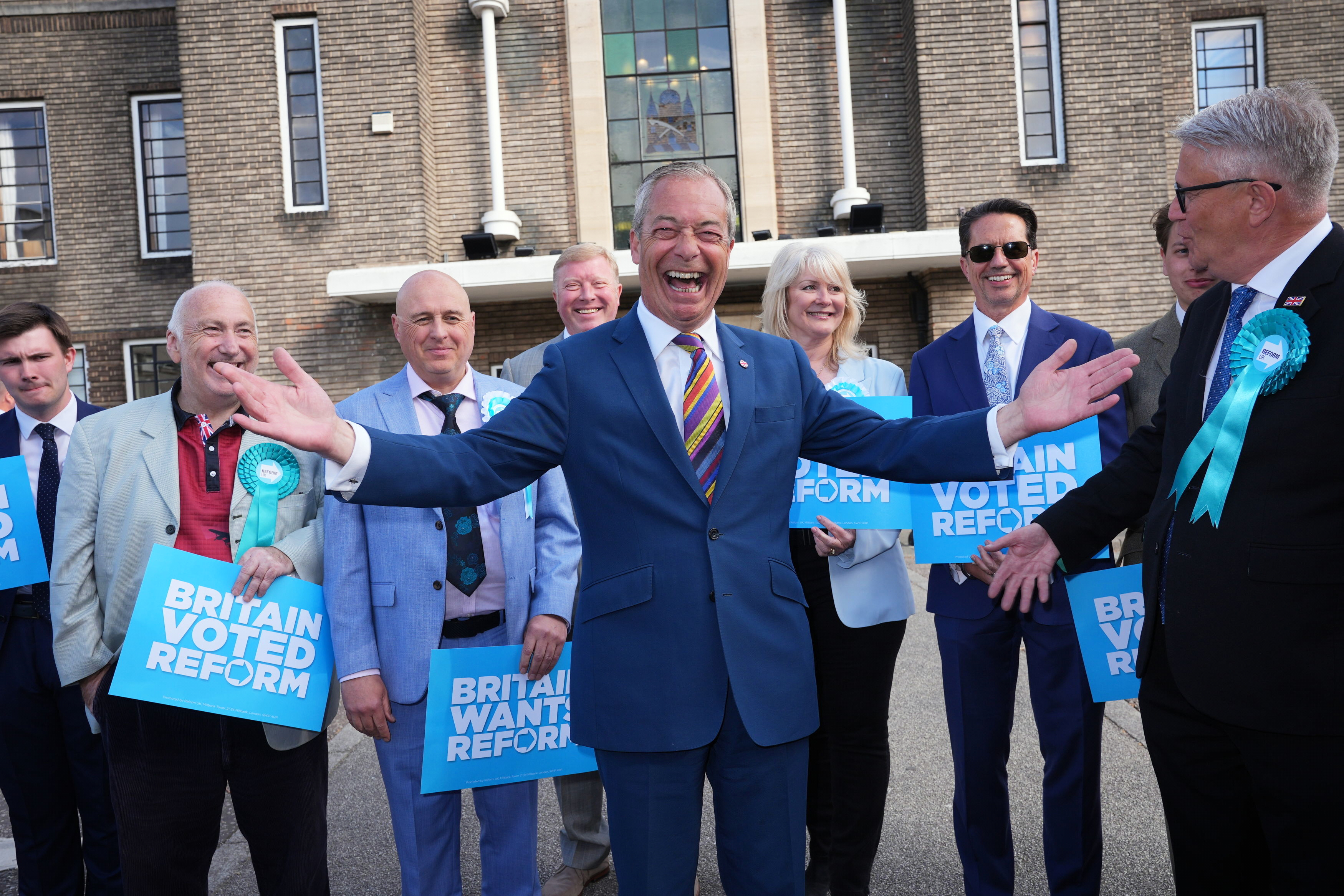
The big winners were Reform UK, led by colorful and controversial Nigel Farage, along with the Green Party and the Liberal Democrats. Approximately 5,000 seats were contested across England, Scotland and Wales. Labour lost more than 1,100 seats and the Conservatives more than 500. Reform UK gained more than 1,400, the Greens over 300, and the Liberal Democrats over 150.
Approximately one-third of the local government seats in the nation were decided in this election, so the results technically are not an overwhelming defeat of Labour. Nonetheless, the results are part of a larger trend showing Starmer and Labour are in trouble.
Labour was also decimated in voting for regional parliaments. The governing Scottish National Party (SNP) lost two seats in the Scottish Parliament, and in Wales, separatist Plaid Cymru for the first time captured a plurality of the seats in the Senedd Cymru or Welsh Parliament. Rhun ap lorwerth, leader of Plaid Cymru, has announced he plans to establish a minority government, in cooperation with other parties.
The two regional parliaments were created in 1999 during the tenure of long-term Labour Prime Minister Tony Blair. Historically, the Labour Party was dominant in these regions, while the Conservatives generally held sway in England.
The last half of the 20th century witnessed the rise of Scottish and Welsh nationalist parties, the revival of the once-dominant Liberal Party, and the growth of support for the successor Liberal Democrats. Single-issue parties also appeared. Farage’s earlier Brexit Party and the Greens focused respectively on exiting the European Union (EU) and promoting environmental concerns.
Conservative Prime Minister Theresa May succeeded David Cameron in 2016, after the surprise defeat of his referendum aimed at remaining in the EU and rejecting Brexit. Instead, British voters opted to withdraw from the EU, though narrowly. May negotiated withdrawal accords with the Eurocrats in Brussels, only to be rejected three times in Parliament.
Finally, Good Citizen May was replaced by Bombastic Boris Johnson, who rushed through general leave-Europe legislation, postponing details. The eventual cost included renewed unrest in Northern Ireland, but Britain left the EU.
On May 2, 2019, local government elections in England and Northern Ireland saw losses for both Conservatives and Labour. Liberal Democrats and Greens made notable gains. In 2020, the pandemic postponed local elections. In 2021, the Scottish National Party made significant gains, along with again Greens and Liberal Democrats.
Significant numbers of people back the Liberal Democrats precisely because they are not part of the traditional Conservative/Labour establishment. Many such partisans viewed joining Conservatives in coalition government 2010-2015 as a form of treason, and the Liberal Democrats consequently suffered severe reversals at the polls.
Professor John Curtice of Strathclyde University in Scotland is insightful and influential. His media commentaries and analyses are especially useful in understanding these trends.
Decades ago, Professor Samuel H. Beer provided brilliant insights. His approach accommodates the decline of two-party dominance.
Today, as in the past, Britain combines intense party competition with stability. Today, British voters are also departing from past loyalties.
Learn More: Samuel H. Beer, “British Politics in the Collectivist Age.”
Arthur I. Cyr is author of “After the Cold War” and “Liberal Politics in Britain.” Contact acyr@carthage.edu