
Illinois Gov. JB Pritzker blames the administration of President Donald Trump for the high gasoline prices we find as we fill up. He’s not wrong.
But the governor can take some of the sting from Illinoisans by declaring a gas-tax holiday until fuel costs return to at least last year’s pump prices. Fellow governors in Indiana and Kentucky have already done so as the cost of gasoline and diesel has nearly doubled in price since the Iran air war began in late February.
Even Pritzker’s nemesis, Trump, has hinted at a drop in the federal gas tax.
We’re now at a four-year high at the national level for fuel. March gas prices rose about 25%, according to government consumer price data, and have been climbing ever since.
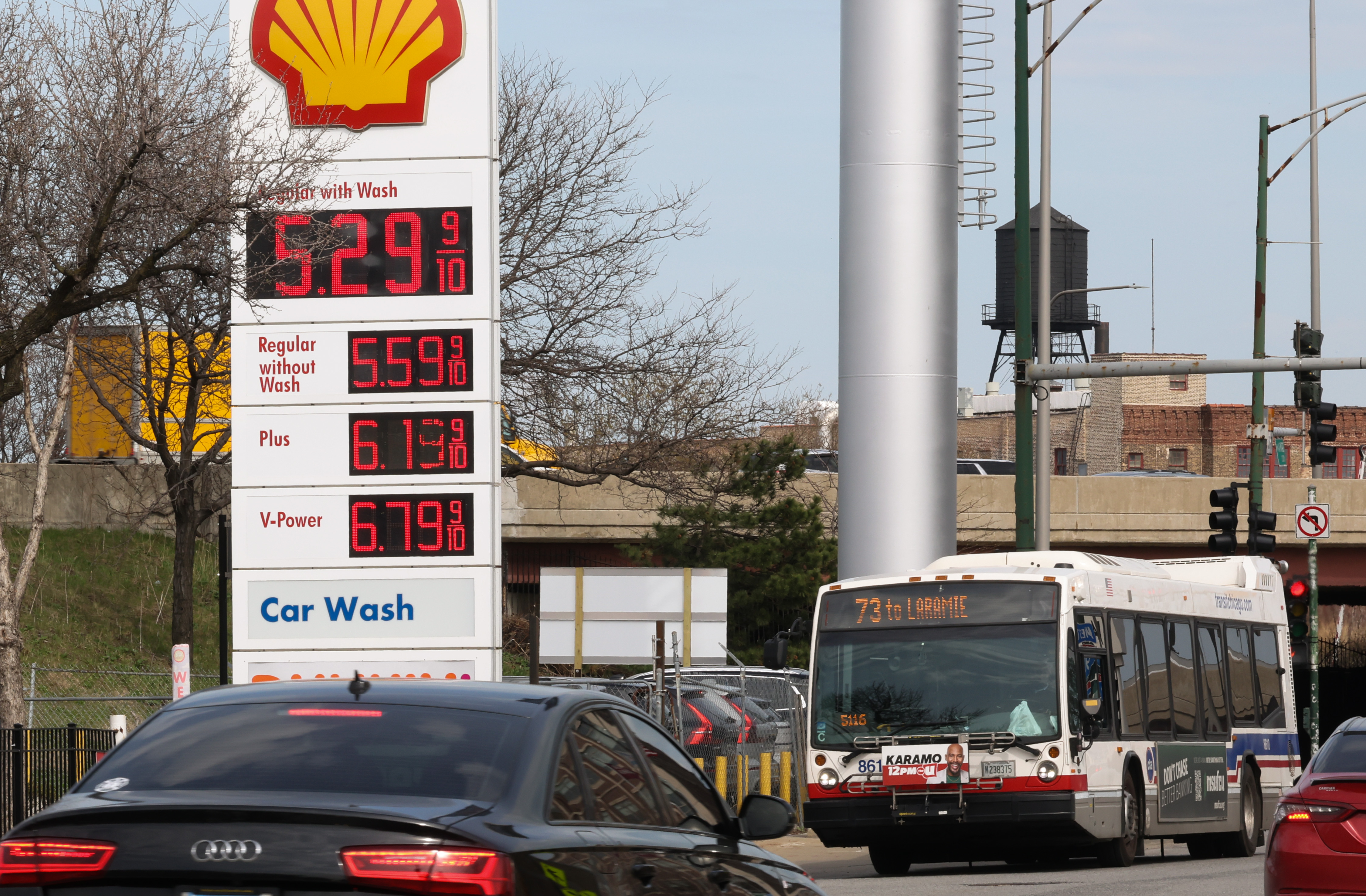
Gasoline costs have inched upward in Illinois and in Lake County to just below $5 a gallon. At least one county location last week had the pump price listed at over $5 a gallon, including state and federal motor fuel taxes, for those who pay with credit cards. Premium gas is about $1 more, as is diesel.
One of the reasons for prices higher than neighboring states is the Illinois practice of applying sales taxes to the cost of gasoline after the motor fuel tax is charged to motorists. Sounds like regressive double taxation, right?
The average price in Illinois for regular gasoline on Monday was $4.97 a gallon, according to AAA; the national average was $4.52. Remember that much of what’s raised with Illinois gas-tax money is going to bail out our regional mass transit agencies.
In Kentucky, Gov. Andy Beshear, a fellow Democrat and, like Pritzker, a possible contender for his party’s 2028 presidential nomination, last week not only froze the gas tax in the Blue Grass State, but he also moved to reduce the levy by 10 cents. Kentucky’s gas tax is at a paltry 26.4 cents per gallon and is to increase to 27 cents per gallon on July 1.
Also last week, Indiana Gov. Mike Braun extended his state’s gas tax holiday past Memorial Day and into June. The Republican also suspended the state’s gas excise tax. The gas sales tax in the Hoosier State is set at 23 cents a gallon; the excise tax rate is 36 cents per gallon.
Surely, drivers close to Indiana in the southern Cook County suburbs and South Siders in Chicago, along with Downstaters near Kentucky, are running for the borders to fill up. Who can blame them as we continue to feel the pinch at the pump?
Illinois motorists pay the third-highest gas taxes in the nation, at 85 cents a gallon. The national average is 52 cents, according to the U.S. Energy Information Administration.
The state gas levy is 48.3 cents, and another annual automatic increase is due on July 1. That amount undoubtedly will take the price of Illinois gasoline over the $5 threshold if costs remain as they are today.
Most of us know we’re paying at the pump for the costs of a poorly planned and poorly received military action in the Middle East. Daily, we get mixed messages coming from President Trump and his cadre of advisers as the Strait of Hormuz stalemate continues. Rising fuel prices are increasingly affecting the economy.
A clutch of the dwindling number of Republicans in the Illinois legislature has called on the governor to suspend the sales tax on gasoline. They propose a fuel-tax pause through Dec. 31. Drivers shouldn’t get their hopes up with a state government controlled by Democrats and their fancy for raising taxes and fees.
Despite the rise in fuel prices, it’s difficult for Illinoisans to reduce their consumption. They still need to commute and engage in vehicle traffic for dozens of reasons.
Being hit the hardest with rising pump costs are poor and middle-class households. The president, however, said prices will come down. He just hasn’t predicted exactly when that will happen.
While lower-income Americans, those earning $40,000 and less, have reduced their gas consumption, according to federal data, higher prices have forced them to spend more at the pump. That leads to economic disparities for higher-income households — those earning $125,000 a year or above — who have increased their spending on gas.
Indeed, the University of Michigan’s latest consumer survey, published late last week, showed a gloomy consumer sentiment because of gas prices. It’s the lowest on record, and that goes back to 1952 and the Eisenhower administration. It’s lower than during the Great Recession, the start of the Russo-Ukraine War and the COVID-19 pandemic, according to The Associated Press.
Considering that two-thirds of the U.S. economy is consumer-driven, that doesn’t bode well for the remainder of the economic year. Gov. Pritzker needs to take into account the hits state residents are feeling at the pump and endorse a gas-tax holiday.
Charles Selle is a former News-Sun reporter, political editor and editor. sellenews@gmail.com. X @sellenews