
We’re blessed in Cook County with a chief prosecutor who views her job primarily as prosecuting those charged with serious crimes.
Such a view seems like common sense, but there’s a sizable contingent of folks here — activists, certain lawyers and progressive politicians among them — who don’t like that emphasis. Not at all.
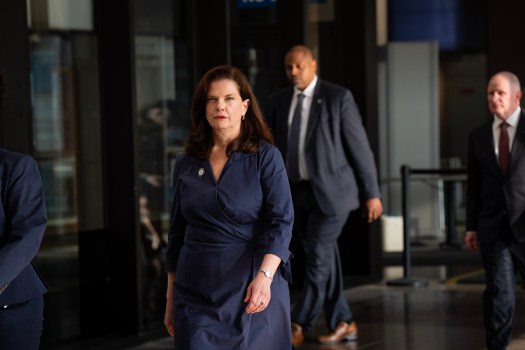
For them, Cook County State’s Attorney Eileen O’Neill Burke is someone of whom to be suspicious. Case in point: a petition spearheaded by Loevy & Loevy, a local law firm that has made something of a cottage industry out of suing the city of Chicago over alleged police misconduct. Arguing that O’Neill Burke has been lax in investigating and potentially charging federal immigration agents for their actions during last year’s Operation Midway Blitz, the firm has asked a Cook County judge to appoint a special prosecutor to do that job instead.
O’Neill Burke opposes the move; a hearing on the matter is set for Friday before Cook County Circuit Court Judge Erica Reddick.
O’Neill Burke argues that the effort is frivolous and that the petitioners haven’t met the burden in state law for appointing a special prosecutor. That burden is relatively straightforward. Elected prosecutors like O’Neill Burke must be shown to have an “actual conflict of interest” in a matter before them for a special-prosecutor bid to succeed.
Essentially, O’Neill Burke’s detractors argue that the fact she hasn’t launched a specific investigation into the behavior of agents during Midway Blitz despite public pressure to do so is evidence that she’s conflicted. Their key piece of evidence? An email last August — about a month before Midway Blitz began — in which O’Neill Burke’s then-spokesperson Matt McGrath explained his boss’ decision not to sign a statement being put together at the time by Cook County Board President Toni Preckwinkle criticizing the “recent actions and rhetoric” of the Trump administration.
While saying O’Neill Burke shared concerns about Trump’s “actions, rhetoric and bluster,” McGrath wrote that her top priority back then was combating illegal guns and that the cooperation of the federal Bureau of Alcohol, Tobacco, Firearms and Explosives, as well as other federal agencies, was key in that effort.
We believe a majority of Chicagoans a month before Midway Blitz absolutely would have agreed that gun violence was the top public-safety threat in Chicago and would have applauded O’Neill Burke for focusing her attention there. To posit this email as some sort of smoking gun showing O’Neill Burke to be in the tank for the Trump administration frankly is laughable.
It’s not as if O’Neill Burke believes federal agents are immune from prosecution if they break the law. Earlier this year, she issued a broad protocol for bringing criminal charges against agents when warranted and backed by evidence. She made clear she wouldn’t hesitate to do just that.
Having met several times with the no-nonsense O’Neill Burke since she took office in late 2024, we don’t doubt for a second that she would bring such charges if she had the goods and could do so within the confines of state law.
The petitioners, she said in a March court filing, simply “would prefer that she make those decisions based on public sentiment, political pressure, the urging of elected officials, and information gleaned from newspaper articles and civil pleadings rather than a criminal investigation conducted by law enforcement officers with access to evidence that has been properly collected and documented.”
We strongly criticized the conduct of Border Patrol and Immigration and Customs Enforcement agents in Chicago during their six weeks here. But that federal surge is long gone now.
In the absence of compelling evidence of federal law-breaking during Midway Blitz, we want our state’s attorney laser-focused on making Chicagoans safer in the here and now. That means prosecuting the violent criminals who continue to terrorize this city today.
Submit a letter, of no more than 400 words, to the editor here or email letters@chicagotribune.com.