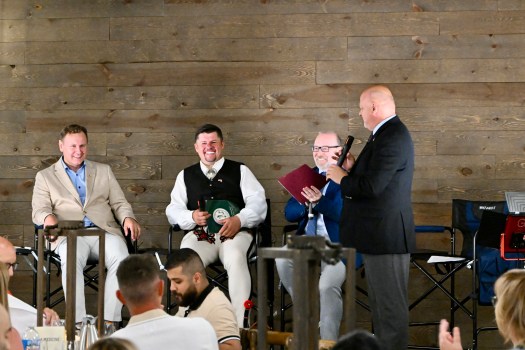

Tears of grief and pride trickled down the face of Pam Oliver. She had just been asked what she thought her late daughter would say about how the annual blood drive her family launched in her memory has continued and expanded.
She would be pleased and focused on ways to bring it to more communities, Pam Oliver said Saturday at the Sixth Annual Kristin Arielle Oliver Memorial Blood Drive at Sgt. Means Park in Olympia Fields.
Kristin Arielle Oliver passed away in June 2020 at the age of 31 after battling a rare heart cancer that required many blood transfusions. Since her death, what her family began as a blood drive has evolved into an annual health and community event.
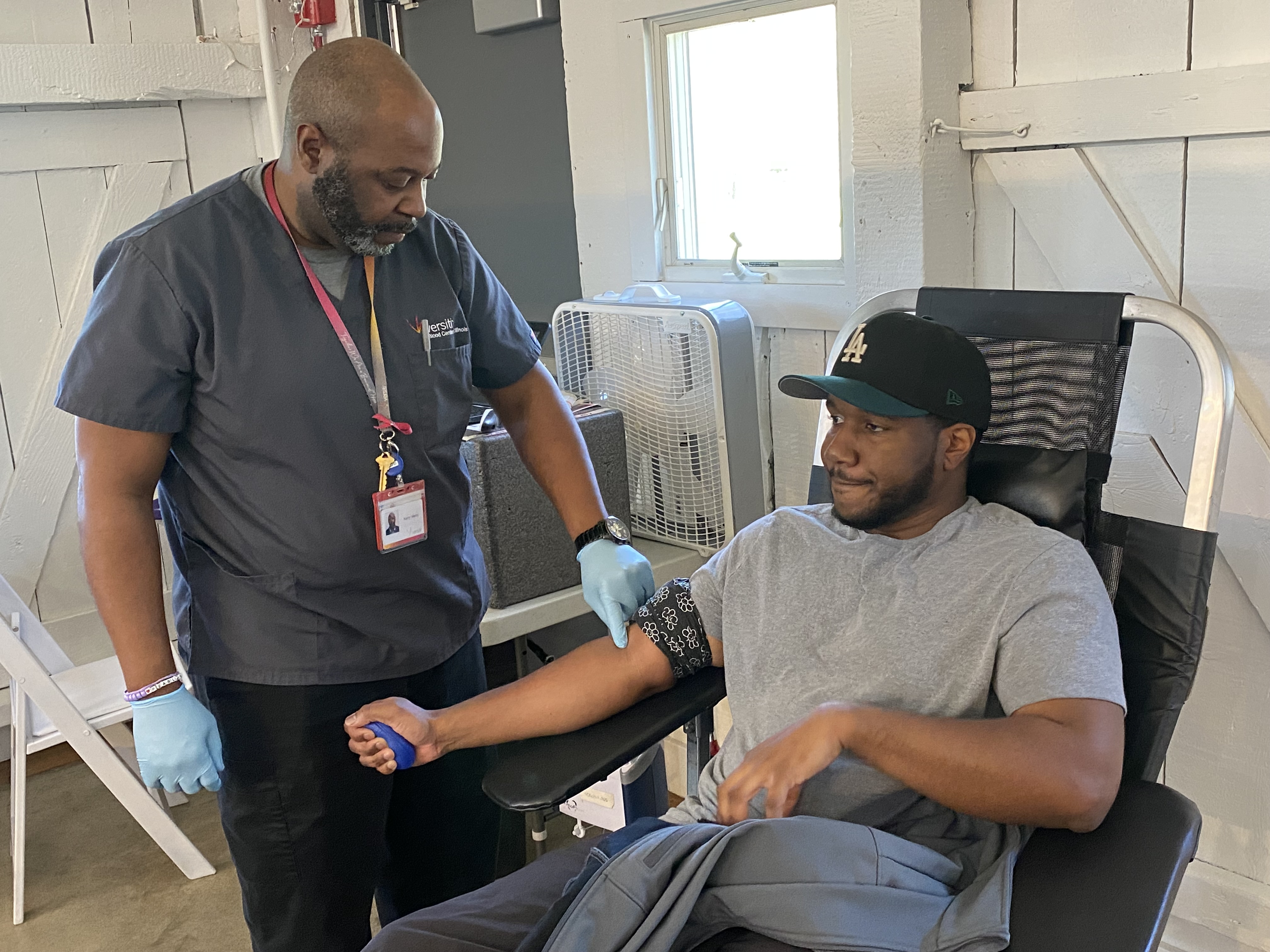
Attendees donated blood and were provided free blood pressure readings, glucose screenings, rapid HIV testing and information on health and other resources available in the community. The event also raised funds for the Center for Food Equity in Medicine, a nonprofit addressing food insecurity among individuals with cancer and other life-altering illnesses.
Representatives from Cook County Health, the Sickle Cell Disease Association of Illinois, Rich Township and the Top Ladies of Distinction South Suburban Chicago Chapter were among supporters and participants.
“This is something Kristin would do,” said Pam Oliver.
She shared how Kristin once bought coats for a mother who couldn’t afford them for her three children and donated blood for a young boy with leukemia.
A woman of faith, Pam Oliver reflected on Kristin’s legacy and stressed the event is not just about honoring her, but is a way to help save lives and support families in real time. She believes her family is doing what God wants them to do.
“Through our efforts we are striving to build healthier and more informed communities,” she said. “We can all make a difference.”
Versiti Blood Center of Illinois, a nonprofit blood health organization, collected blood donations. The need for blood donations is ongoing, said Versiti’s Ignacio Ramos, and the need is particularly high during the summer, when donations often fall as people take vacations.

Blood donations are essential for surgeries, medical treatments, traumatic injuries, blood disorders and other illnesses. Every two seconds, someone in the United States needs blood, and one donation may help save up to three lives, according to the American Red Cross.
“I try to donate as often as I can,” said Tinley Park resident Geneva Barnes, as she gave blood Saturday. Barnes, a member of Matteson-based New Faith Baptist Church International, joined other church members who volunteered conducting blood pressure readings and glucose screenings.
“I think it’s a beautiful thing,” she said. “It is so needed for a whole lot of people, not only for cancer survivors but for others. This is a beautiful way of giving back to the community.”
Pamela Al-Amin, an executive assistant with Rich Township, showcased the township’s food assistance, transportation and senior programs. While at the event, Al-Amin received a call from her family telling her her brother had to be rushed to the hospital where he received a blood transfusion, she said. The experience helped further drive home the importance of blood donations.

“They look forward to doing this every year, and we’re here to support them as they do so much for the community,” Rich Township Supervisor Calvin Jordan said. “It’s making a difference.”
Bridget Reynolds, coordinator with the Sickle Cell Disease Association of Illinois, welcomed the opportunity.
“We’re here to raise awareness about sickle cell disease,” said Reynolds. “People need to know their status” as to whether they have the sickle cell trait and can potentially pass the trait or disease on to their children, she said. They also need to be educated on new treatment options, she said.
Sickle cell disease is the most common inherited blood disorder in the United States. It affects one in every 365 African American newborns, according to the U.S. Centers for Disease Control and Prevention. But other races also have the illness. Hispanics are the second largest group behind African Americans to have the disease in the U.S., said Reynolds.
“A lot of people think they don’t have sickle cell disease in their family,” Reynolds said. “They call us after they have a child with sickle cell disease, and they are shocked because they didn’t know anything about their status.”
The event provided an opportunity to educate the community on the need for a diverse blood supply, Oliver said. That is particularly important for individuals with illnesses like sickle cell anemia. Many patients with the disease require blood transfusions throughout their lifetime, according to the CDC and the American Red Cross.

Blood donors who are Black are almost three times more likely to be a match for sickle cell disease patients compared to other donors, and patients with sickle cell disease undergoing stem cell or gene therapy treatments can have better outcomes and avoid transfusion-related complications when blood and platelets are more closely matched, the American Red Cross notes.
Oliver said the event helps stress the importance of getting annual physicals, knowing one’s blood pressure readings and glucose levels, getting early diagnoses and keeping illnesses under control. It’s about connection to resources, conversation and community, she said.
Regarding Kristin, she shared as she smiled, “I think we’re still connected and this is one of those ways that we stay connected.”
Francine Knowles at Fknowles.writer@gmail.com is a freelance columnist for the Daily Southtown.