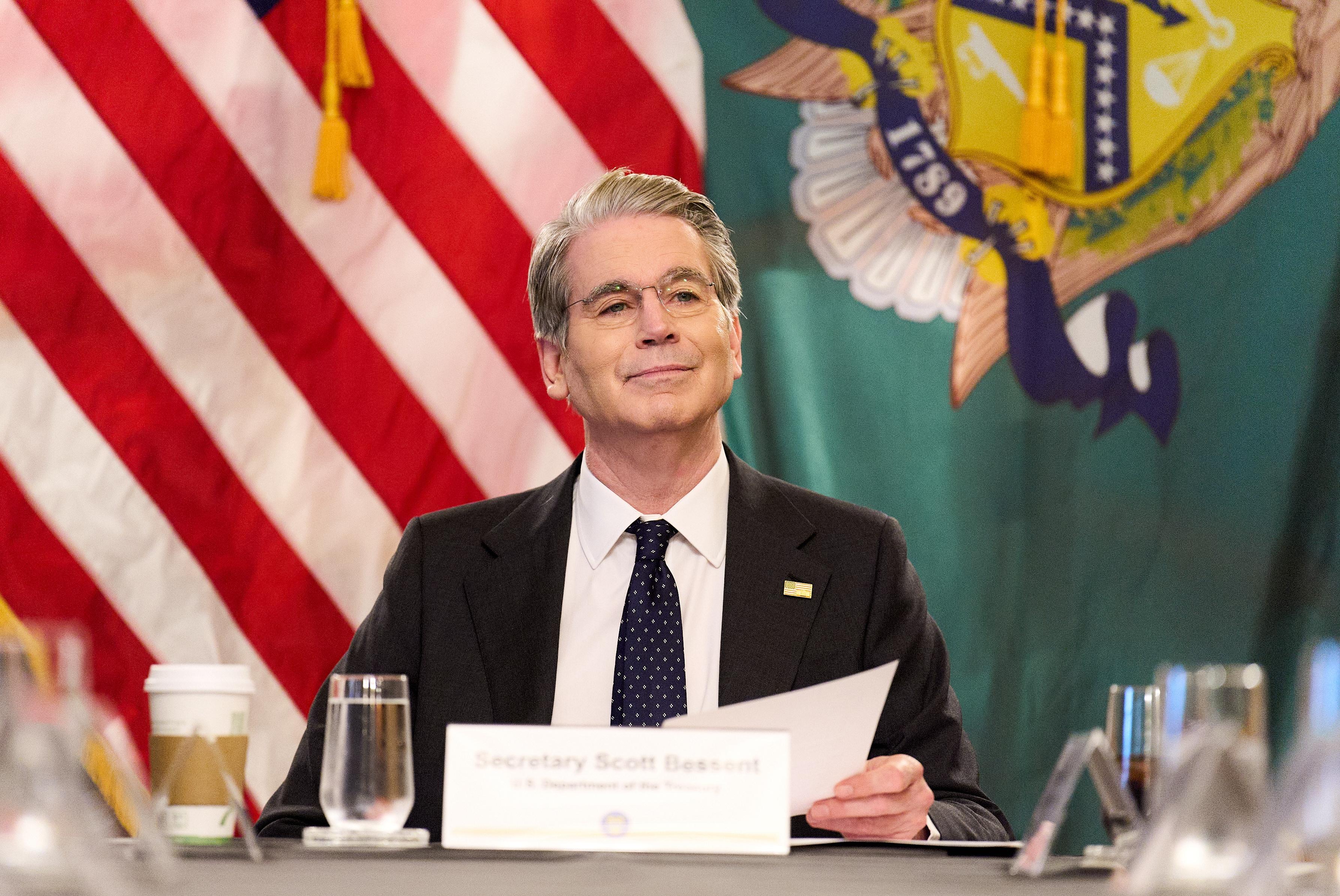
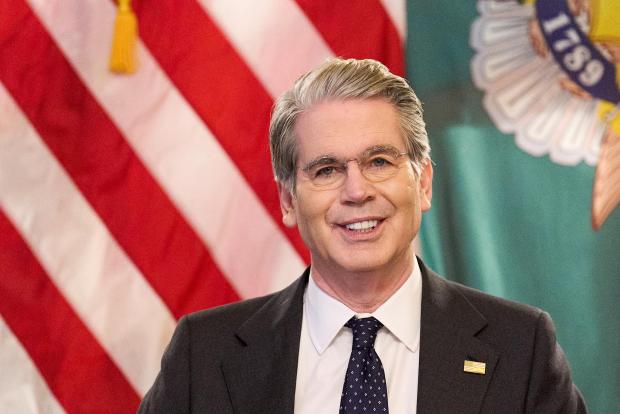
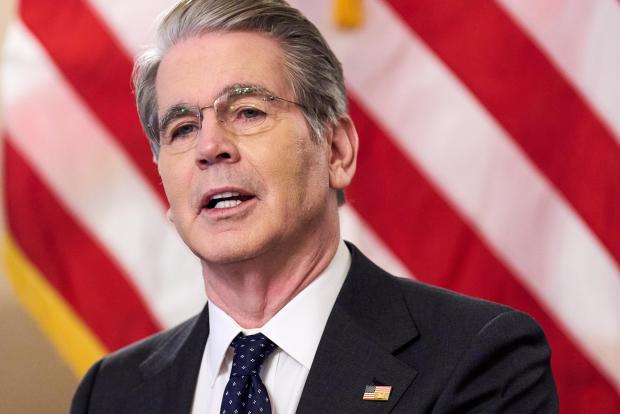

WASHINGTON — Treasury Secretary Scott Bessent winces at the allure of easy money — whether it’s lottery tickets, buy now, pay later loans or the promise of a crypto windfall — warning that the get-rich-quick mindset often leads Americans farther from financial stability, not closer to it.
“There are a lot of young people, mostly young men, going to blue-collar construction jobs, playing the lottery. It drives me crazy,” Bessent said in an interview.
”The best thing you can do is not play the lottery,” he said — rather, people should invest and “then watch it grow.”
Bessent spoke to The Associated Press about the basics of building a workable budget and saving for the future at the tail end of Financial Literacy Month, an initiative the billionaire hedge fund manager has made a priority since joining President Donald Trump’s administration, driven by a childhood marred by poverty.
Former Treasury Secretaries Hank Paulson and Tim Geithner were known for helping navigate the U.S. out of the global financial crisis. Steven Mnuchin made his mark designing and promoting the Tax Cuts and Jobs Act of 2017, and Janet Yellen was the only person to also head the Federal Reserve and the Council of Economic Advisers. But Bessent’s passion for meeting with community bankers, retirees and schoolchildren to talk about how to budget, save and manage debt is what he hopes, in part, defines his legacy.
His push to promote financial literacy comes as Americans grapple with the cost of housing, groceries, energy and everyday items and are skeptical about the Republican administration’s performance on the issue. The latest AP-NORC poll data shows Trump’s approval rating on the economy dropped from 38% in March to 30% in April.
The nation is enmeshed in record levels of debt, which surpassed $39 trillion in March, and critics wonder how Bessent can persuade Americans to save for their futures when the government itself is drowning in debt.
“The Trump administration in particular has a problematic record on cutting taxes without offsets and growing spending,” said Maya MacGuineas, president of the Committee for a Responsible Federal Budget.
A billionaire with humble beginnings
Bessent, 63, made his money through a long career in hedge funds, including working with George Soros, a financier and philanthropist whom Trump and other Republicans have vilified. Bessent was famously involved in the Soros firm’s 1992 currency speculation against the British pound tied to Black Wednesday, which generated massive profits. Bessent later launched his own hedge fund called the Key Square Group.
But he often talks about his humble beginnings in rural South Carolina, not far from Myrtle Beach, where at the age of 9 he got his first jobs as a busboy at a cafeteria and hustling to set up chairs and umbrellas on the beach. His father, a real estate developer, had lost generations of Bessent family wealth by overleveraging his obligations.
Bessent wanted to attend the U.S. Naval Academy in 1979 but was barred as an openly gay applicant. That also shut the door to joining the foreign service.
He went to Yale University, where his former professor David Darst recalled teaching him about new financial instruments in capital markets. Darst described Bessent as a “guy who’s working at the highest levels, but he’s interested in people learning the ABCs of finance.”
In 2025, Bessent became the nation’s first openly gay treasury secretary. “I sit here knowing that President Trump chose me because he believes I’m the best candidate, not because of my sexual preference, not because treasury secretaries with green eyes do better,” Bessent said at his confirmation hearing.
After reaching public office, one of Bessent’s first actions was relaunching Financial Literacy Month at the agency.
“Wall Street has grown wealthier than ever before, and it can continue to grow and do well,” Bessent has peppered into various speeches over the past year, insisting that his work in the Trump administration is “focused on Main Street.”
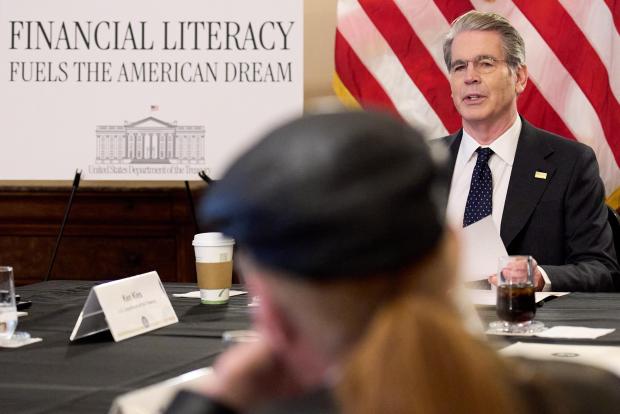
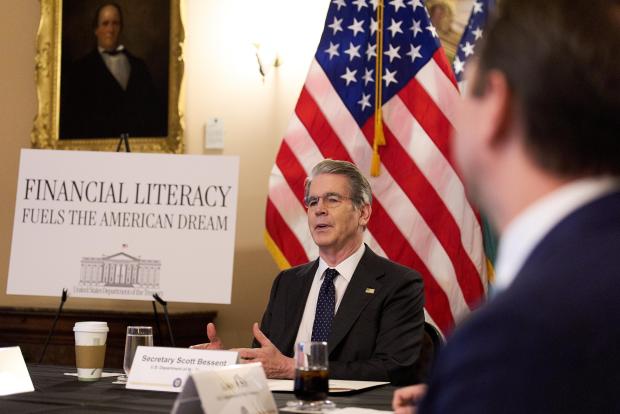
During a roundtable with community financial institutions at the department — one of several such events Bessent hosted last month — he listened to bankers express concerns about the a surge in sophisticated fraud schemes targeting customers and their efforts to get high schoolers interested in saving.
“It could be as simple as a 14-year-old starting a savings account and watching interest compound at 4% a year,” said Thomas Fraser, CEO of First Mutual Holding Co. in Lakewood, Ohio, who attended that roundtable.
Promoting financial literacy to young people
Bessent is not a newcomer to preaching financial literacy. Geoff Canada, president of Harlem Children’s Zone, has known Bessent for 30 years and said the treasury secretary has mentored one of the program’s scholars for more than a decade. Canada said Bessent has a “deep understanding that financial literacy is essential for fostering real social and economic mobility for America’s children.”
He said Bessent “has championed this issue long before joining the administration, and I know it remains a top priority.”
A conversation with Bessent about financial literacy inevitably turns to Trump Accounts — the financial vehicle meant to give $1,000 to babies born during the Trump administration. That money is then invested in the stock market by private firms, and the children can access the money when they turn 18.
Bessent said he thinks it will encourage a generation of young people to care more about investing as it shows them “the power of compounding, because that money is locked up for 18 years.”
But Bessent said people of all ages and income brackets could be better at managing their money. “There’s a narrative that doctors are famously terrible at finance,” Bessent said.
Critics of the treasury secretary’s approach argue that the problem is less about Americans not knowing how to invest and more about people not having enough spare income to do so, as the cost of living has steadily increased and the war in Iran has driven energy prices higher.
“You cannot preach penny-pinching while making it harder for Americans to pay their grocery, utility and healthcare bills,” said Emily DiVito, senior adviser for economic policy at the left-leaning Groundwork Collaborative. “If Secretary Bessent is serious about advancing financial literacy, he should focus on lowering the cost of living for working families.”
Rising debt in the foreground
Bessent’s desire to see Americans invest wisely comes as the U.S. debt has reached record levels — and the trajectory of those increases is a cause for concern for budgeting experts.
The U.S. national debt hit $37 trillion in August and then $38 trillion just two months later. Now, it’s at $39 trillion and has surpassed the size of the economy.
Budget advocate MacGuineas warned that the long-term trend of borrowing more and paying more in interest will force Americans to face tougher fiscal tradeoffs ahead.
She praised Bessent for having the goal to cut deficits in half and bring them down to 3% of gross domestic product but said ”it’s going to take a combination of spending reductions, revenue increases and economic growth” to get there.
The Treasury argues that the federal deficit decreased during Trump’s first year back in office and that the provisions in Republicans’ tax cuts law have put money back in Americans’ pockets.
“It’s hard to disagree with the fact that we need more financial literacy in this country,” MacGuineas said. “The bigger picture, of course, is that we should also probably give a financial literacy class to our lawmakers.”