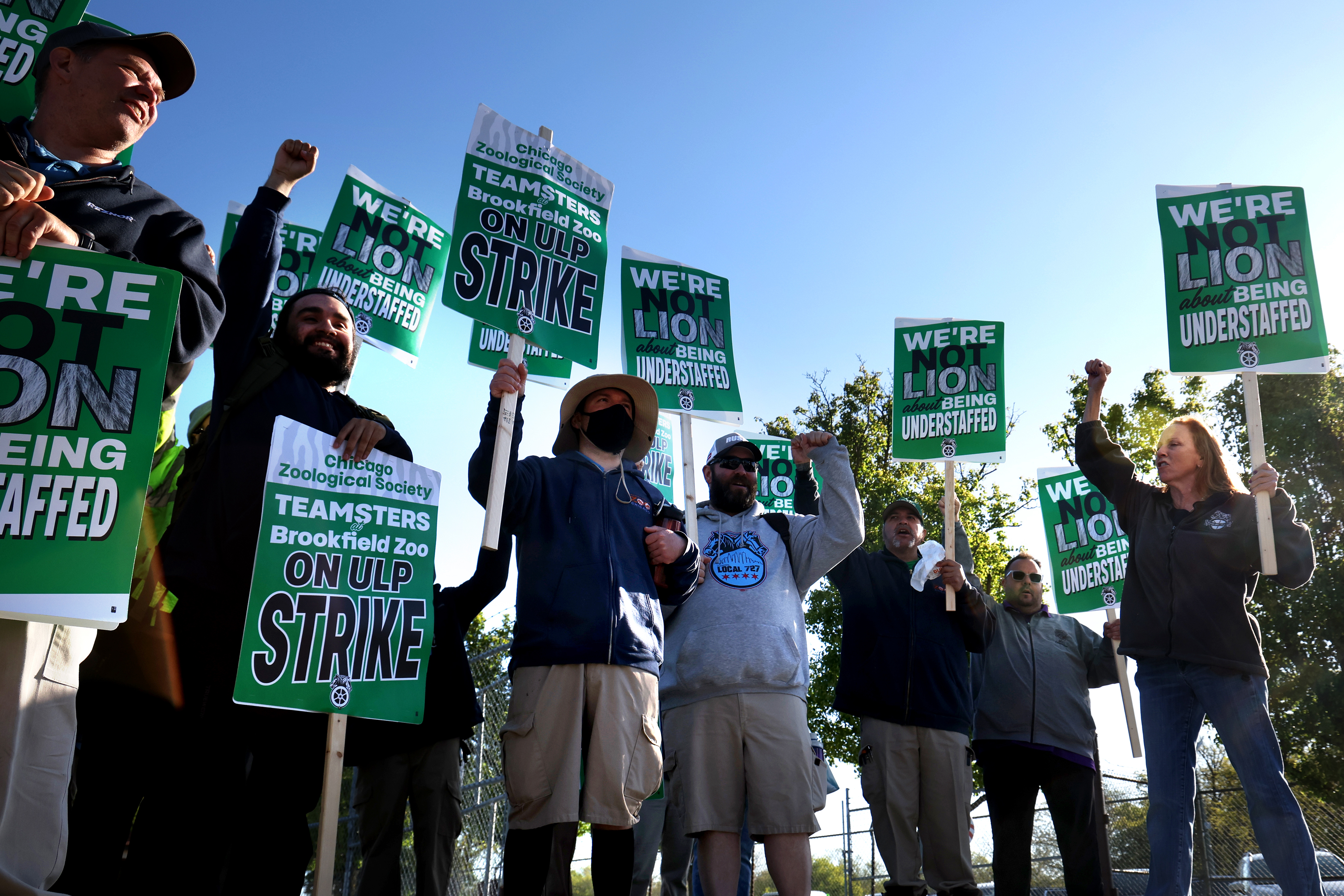

Some workers at the Brookfield Zoo walked off the job Monday after labor contract negotiations fell apart, according to their union, the International Brotherhood of Teamsters Local 727.
The Teamsters said all members of the zoo union, excluding those who specialize in caring for the zoo animals, went on strike. The animal care staff will join the strike once an “essential care plan” for the zoo critters has been finalized, the Teamsters said.
The zoo remains open to the public, according to a statement posted to its website Monday, though the Teamsters are urging the public not to cross the picket line.
The union says it’s striking over a litany of unfair labor practice charges filed with the National Labor Relations Board, including allegations of bad faith bargaining on the part of zoo management. The zoo disputes those allegations, saying it has “continually bargained in good faith” with the union.
More than 100 zoo workers are currently on strike, the Teamsters said, including groundskeepers and custodial staff. Sticking points in contract negotiations included healthcare, raises and staffing levels, said John Coli Jr., the local’s secretary-treasurer. “The zoo is looking to skimp everywhere it can,” he said.
In a statement posted online, the zoo described the strike as “disappointing.”
“A strike is neither necessary nor inevitable, and our focus remains on reaching a fair and responsible contract — one that supports our employees while protecting the Zoo’s long-term sustainability and mission,” the zoo said.
Workers on strike Monday included senior groundskeeper Carrie Sapienza, who said she’d worked at the zoo for more than three decades but had never been on strike before. “We don’t have a fair and equitable contract at this point,” said Sapienza, who is also a union steward with Local 727.
“We need healthcare. We need increased wages because of the cost of living,” the groundskeeper said, pointing to the rising cost of gas and groceries.
Sapienza said the groundskeeping team maintains zoo lawns, flower beds and zoo equipment.
“If the bear-keepers need a bear crate, they need a bear moved, we do that. They need a seal moved, we do that,” Sapienza said.
The Teamsters warned a degraded zoo experience would await visitors who crossed the picket line, suggesting that certain programs such as dolphin shows would be canceled due to the strike. In its online statement, the zoo said it was operating as normal and that guests could “continue to visit and expect a safe, welcoming, and high-quality experience.”
“While some experience offerings may be altered or rescheduled, the Zoo will continue to provide experiences including animals being on-habitat,” a zoo representative said in response to questions from the Tribune.
Zoo workers voted to authorize a strike last week and then walked off the job after an extension to their existing labor contract expired Friday, according to the Teamsters.

The zoo had offered union members raises of 14.5% over the course of the four-year contract — or an average of about 3.6% per year — Coli said, while the Teamsters asked for raises of 21% — or an average of 5.25% per year — over the same period.
The zoo has described its proposed wage increases as “competitive” and said last week that proposals from the Teamsters would have required it to consider significant increases to admissions prices. The zoo defended its current staffing levels and said it had offered to increase them in some areas.
The zoo and union representatives alike assured the public that the well-being of the zoo animals would not be affected by the strike. “Animal care continues without interruption under the supervision of our experienced team, including veterinarians, curators, and trained specialists who uphold the highest standards of welfare every day,” the zoo said.
“This is not a job. This is a career,” said Sapienza. “We would never, ever put the lives of these animals in jeopardy.”