During Chicago’s bitter winter of 2013-2014, the Humboldt Park Lagoon froze over, and snow piled on top of the thick layer of ice, plunging vegetation into a deadly darkness. This caused a large fish kill, a blow to the ecosystem and the thriving angler community.
“Oh my God, it was terrible,” recalled Larry Green, who founded the Humboldt Park Fishing Society in 2010 as he spent more time in the park after being diagnosed with kidney disease. “It killed off all the largemouth bass. The bluegill population was decimated. There were seagulls flying all over the place, picking up fish.”
The group had to do something about it, Green said, so its members began fundraising to restock the lagoon with game fish in 2015 and 2016, efforts he said were widely supported by the community.
Now, the society once again finds itself in a similar position just as fishing season, from spring through October, takes off.
After rebounding from harsh weather and invasive species, members point to population decline, expected after a decade of bass and bluegill fishing, and a new ecosystem threat: the park’s fleet of 15 swan boats, which have been a staple since 2018 and returned for the summer a week ago.
“Lately, the fishing hasn’t been the same … and we want to change that,” Alex Oquendo, a member of the society, wrote on a GoFundMe page.
Disturbances to the water from the pedal boats make it murky and cloudy, which can impair fish’s vision, disorient them and hinder their feeding, as well as cause them physical stress as they swim in strong currents.
Most detrimental to the ecosystem, the boats’ spinning pedals rip up the vegetation that is growing under the water and floating to the surface, anglers say, causing ripple effects on the fish that use the plants as shelter and a food source.
“It’s like someone taking away your grocery store and going, ‘Well, good luck!'” Green said.
Wheel Fun Rentals, the California-based company that owns the swan boats, didn’t make them available at the park last summer due to declining rentals and inconsistent restroom access, said Rodney Knight, managing partner of Wheel Fun. But the company hopes a new restaurant set to open in the boathouse at 1301 N. Humboldt Park Drive will increase business and solve the restroom issue, he said.
Now, the fishing complaints have raised new challenges.
“This kind of just developed in the last couple months,” Knight said, referring to discussions about the boats’ ecosystem impacts. “And so, you know, we’re still doing a little bit of navigating as well.”
According to the Chicago Park District, the boats are restricted to the launch and water only and are not being landed or pedaled along the shoreline, where a lot of vegetation is concentrated. A spokesperson said that “the ecological health of the site has not been affected” when the swan boats have been active, based on observations from the natural resources team.
But the lagoon is not that deep, and the vegetation in the middle suffers from the boats, the anglers say. For instance, water lilies can grow as tall as 6 feet underwater. According to park district records, its average depth is 4.5 feet, with some areas slightly exceeding 5 or 6 feet, Green said.
“These pedal mechanisms on the bottom, the way they turn, that yanks and pulls the plants in the shallow water,” said Amy Vega, president of the Humboldt Park Advisory Council.
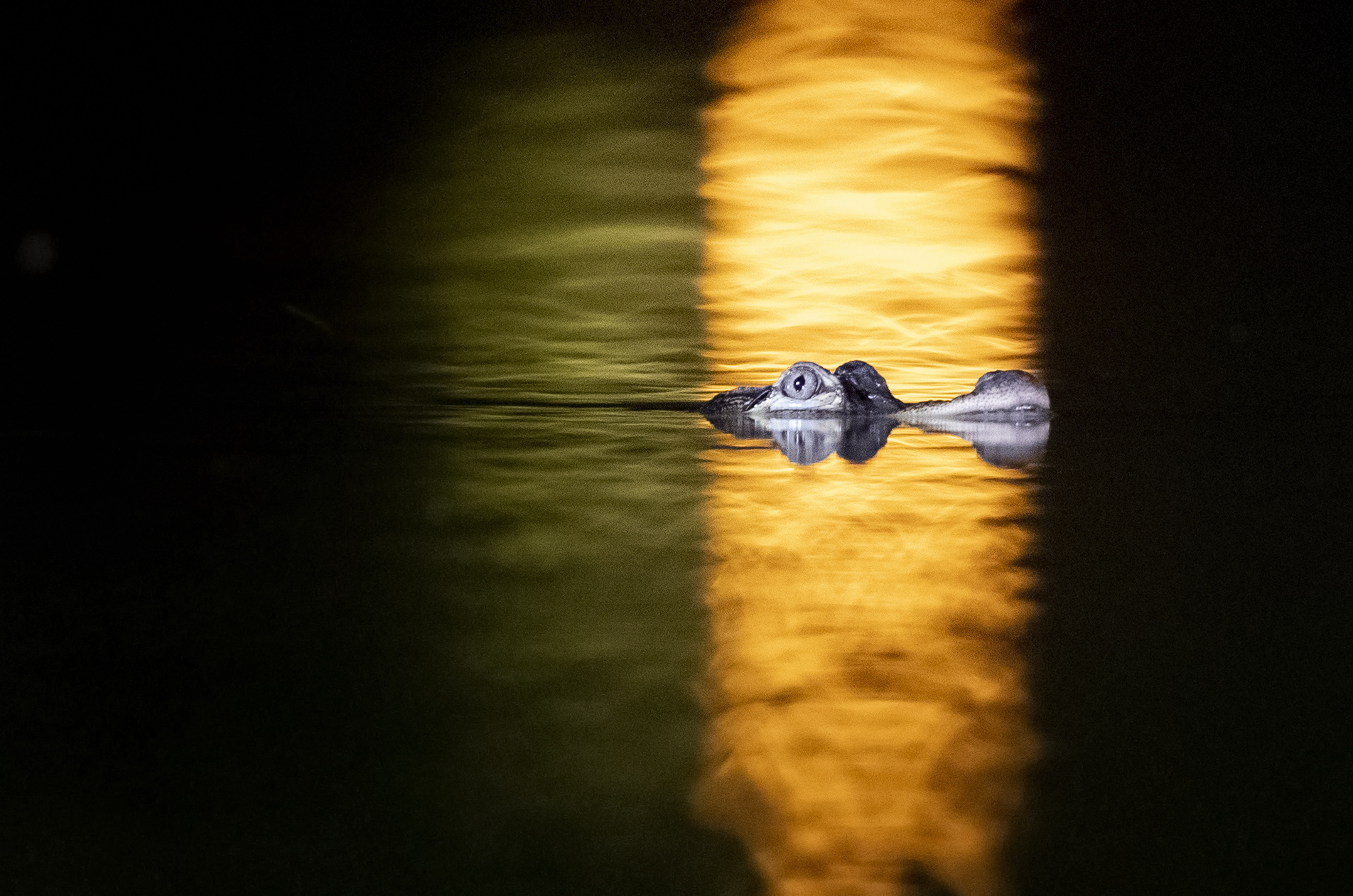
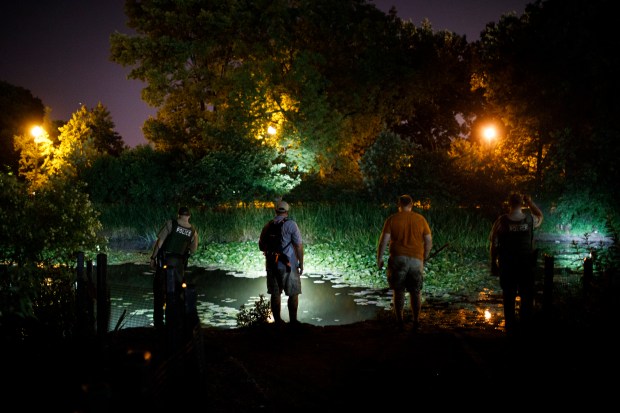
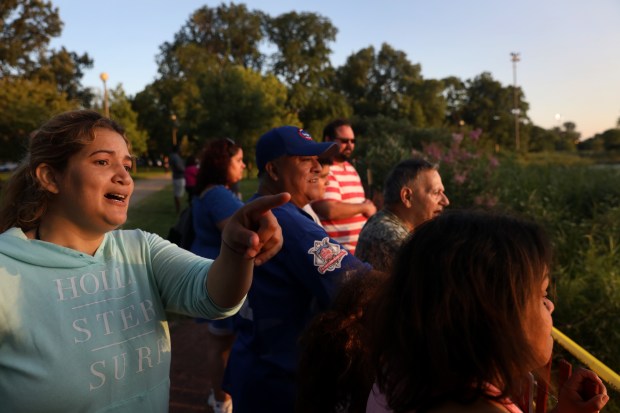
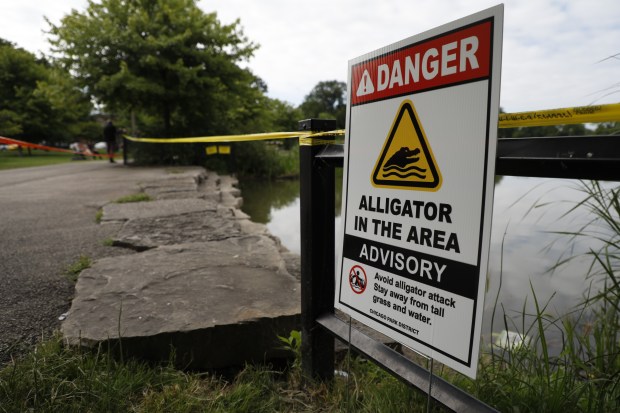
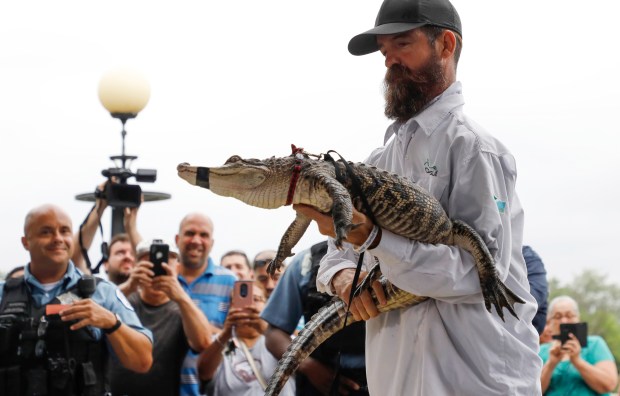
Located in a 197-acre urban oasis, the lagoon has experienced plenty of pressures from human intervention, including the dumping of pets, such as domestic ducks, reptiles and fish. In 2019, a 5-foot-3 alligator, presumed to have been an abandoned exotic pet and later dubbed Chance the Snapper, was caught in the lagoon after evading capture for a week.
The Illinois Department of Natural Resources caught three bighead carp in the lagoon in 2012.
“Sometimes, you’d be walking on the bank, and you’d be looking in the water. You’d go, ‘What the heck is that thing?’ A big, submarine-type silhouette,” Green said. “‘What is that? Holy crap!'”
Dubbed the Big Three, each weighing around 50 pounds, the fish found a new home at the Shedd Aquarium‘s Great Lakes exhibit. But just a few years ago, an urban angler caught a bighead carp weighing in at 72 pounds.
Bighead carp is considered an invasive species in the United States, where it was introduced in the second half of the 20th century to improve water quality in Arkansas aquaculture facilities and sewage ponds. After extreme flooding events in the 1980s and 1990s, the fish escaped into the Mississippi River basin, and, alongside silver carp, bighead remain the most detrimental to aquatic environments. A voracious eater, bighead carp outcompetes native species for food, and can regularly reach 40 pounds and top 100 pounds.
Before the waterfowl-shaped vessels moved to the West Side neighborhood in 2018, they operated on the Lincoln Park South Pond from the end of the 19th century until a zoo-led restoration project began in 2008. Staff told the Tribune that the boats were removed so as not to hinder new plants that needed several years to regrow and stabilize.
“A lot of the species that live kind of at the water’s edge, that are partially submerged, or are sometimes underwater and sometimes above, can be very fragile,” said Seth Magle, senior director of the Lincoln Park Zoo Urban Wildlife Institute. “I can imagine that if you had swan boats going in and out of the water all the time, sort of churning up the water there on the banks, it could potentially be harmful to those species.”
While he only joined the zoo in 2009, Magle said it has been gratifying to see the area transform from “being a dirt pit to this incredible oasis.” The 12 acres, which people can enjoy from Lincoln Park’s Nature Boardwalk, are abundant with native prairie and wetland plants that replaced the concrete edge of the pond, which the zoo stocked with three fish species: bluegills, smallmouth bass and pumpkinseed.
The South Pond was also stocked with painted turtles, but nowadays, there are at least six other species, including snapping turtles, spiny turtles and softshell turtles. Hundreds of migratory birds, including a wild nesting population of state-endangered black-crowned night herons at the zoo, use the pond to find food.
“The swan boats were really part of an aesthetic,” Magle said, “or part of a philosophy that was more kind of people just using nature, just recreating in nature for their own benefit, not really thinking about the impacts on the plants and the animals.”
The pond was reimagined with native plants, with most space surrounding the nature boardwalk intended primarily for wildlife, he said.
Green wants similar attention paid to the lagoon.
“They got kicked out of Lincoln Park because they messed up their ecosystem,” Green said. “So what do they do? They throw them in Humboldt Park.”


Vega, of the park’s advisory council, said the fishing and boating priorities can be resolved with proper collaboration.
“Let’s get everybody to the table, because if they’re able to communicate and collaborate effectively, this can be something that’s a model for when they do this in other areas,” she said. “Here’s how we fixed it, here’s what we did.”
The anglers say they are fine with the swan boats being used on the east side of the lagoon, which is separated from the rest of the lagoon by the North Humboldt Drive bridge. A few years ago, the Park District put up a chain under the bridge to rope off access to the west part of the lagoon — a measure anglers hope can be reinstated and enforced more intentionally as restocking occurs.
“That’s where we want to put the fish in, so that way they have a chance to nest and be safe,” Green said, referring to the west side of the lagoon.
Other suggestions, Vega said, include establishing better signage around the lagoon and ensuring guidance from the vendor to customers, “Like, letting people know there are fishers in the area, please keep an eye out for lines — and also don’t go past a certain area.”
Knight said Wheel Fun is eager to cooperate.

“All of those things are back on the table,” said Knight. “I mean, we’ll do whatever we have to do to help the fishing community there, because that is a big deal.”
Wheel Fun Rentals, which offers a variety of rental experiences in water bodies across the country, has previously had to balance ecological needs with its recreation offerings. In 2018, the Minnesota Department of Natural Resources confirmed invasive zebra mussels were present in a Minneapolis lake, Bde Maka Ska, where Wheel Fun Rentals offers swan boats and kayaks.
The invasive mussels filter plankton from the water, essentially eliminating the base of the food chain and causing a food shortage for native fish. In Bde Maka Ska, those fish include bluegill, crappies, muskies, northern pike, largemouth bass and walleye, which also support a strong urban fishing community.
Once the zebra mussels become established in a new body of water, it is “nearly impossible to eliminate,” according to state officials, meaning the best way to limit their negative effects is to prevent their spread, which often occurs as they hitchhike on the bottom of recreational boats.
Knight said the state had determined the swan boats were the likeliest to spread the mussels across the lake, so the rental company adjusted its guidelines.
“We did a similar thing as in Humboldt (Park), where the people had to stay on a certain part of the body of water, to not go under a bridge, and there was a fine involved if they did,” he said. “And that’s been successful.”
As of Sunday, the fishing society had raised over $1,500 — almost twice as much as 10 years ago — and plans to restock the lagoon in May.
The group is eyeing a $1,200 package from a local hatchery that includes hundreds of minnows and bluegills, and at least 80 bass, numbers that would allow the food system to sustain itself. The group is most interested in the latter as game fish that can be caught and released.
“The bluegill would feed on the minnows, and the bass would feed on the bluegills, and help that population grow,” Oquendo said.

According to the Park District, the IDNR restocks its ponds and lagoons across the city, and the species, quantity and frequency vary each year. According to an agency spokesperson, the primary game species restocked in the Humboldt Park Lagoon, as part of the state’s Urban and Community Fishing Program, are channel catfish and hybrid sunfish, the latter usually a crossbreed between bluegill and green sunfish that doesn’t reproduce fast enough to sustain its population. The spokesperson did not say whether they stock other game fish, like bass, or non-game fish.
But stocking, the agency says, tends to happen periodically rather than on a fixed annual schedule.
The decisions on what to stock, how much and how often are made based on periodic lagoon and angler surveys to understand the abundance of fish and the pressures a population is experiencing in a given body of water.
“Using this information, biologists determine appropriate stocking rates that help maintain a stable and sustainable fish population, while also supporting a consistent and enjoyable fishing experience for the public,” the department spokesperson said.
Green said he sees helping reestablish the game fish population of the lagoon as a legacy he can leave the park.
“I’m not getting younger. With my illness here, I’m thinking, you know, I got to get this going again,” the septuagenarian said. “We’re very fortunate to have these waters.”
Oquendo recalled being incredulous when he first learned some years ago about the opportunities for recreational fishing at the lagoon. “Are you serious?” he asked his friend back then.
Recreation on the Humboldt Park Lagoon — whether fishing for smallmouth bass or pedaling swan boats — allows people to connect with nature.
“People want to engage in the water,” Knight said, and the swan boats offer stable, safe recreation for users of all ages. “We do a lot of kayak, paddle board rentals, but the pedal boats, specifically — grandpa, grandma, the more mature crowd feels more comfortable with them, and they can take grandkids with.”
Some hope offering family friendly recreation on the water can help dispel preconceptions about crime and public safety in the park.
“Two, three decades ago, the park kind of had a bad stigma,” Oquendo said. “So, you know, bringing the people over and getting more people involved at the park and hanging out, gives it a better reputation and makes it a nicer environment. People know that, hey, you can bring your kids here. You don’t have to worry about anything.”