Kumiko, the award-winning Japanese dining bar in Chicago’s West Loop, reclaims its culture with comfort and conviction under chef Julia Momosé.

Momosé, the critically acclaimed bartender who opened the business as partner and creative director, has proven herself a visionary Renaissance woman. She published a manifesto championing her singular term “spiritfree” and nonalcoholic drinks in 2017. Paradoxical perhaps at the time for someone who made their living mixing cocktails, but prescient nearly a decade later, with alcohol consumption declining to record lows.
We last reviewed Kumiko shortly after its opening in the winter of 2018. Chef Josh Mummert launched the tasting menu in 2023, and Michelin awarded him their Young Chef Award the following December. Mummert, who’s been living with Loeys-Dietz syndrome, left the kitchen to focus on his health later that month.
So Momosé stepped into the kitchen as chef in the final days of 2024. And Kumiko won the James Beard Award for Outstanding Bar just last year.
“I’ve been involved with the food since Kumiko opened,” said Momosé, who’s soft-spoken yet clear. “Kumiko is very much me.”
The chef wants to bring her sense of nostalgia growing up with Japanese food, but excitement too.
That’s evident with their mainstay truffle milk toast, which she credits to a collaboration. It was based on toast from her time working at a little cafe when she was in high school in Japan.
“You’d get thick-cut shokupan, Japanese milk bread, which gets toasted,” she added. Her teenage toast was typically finished with butter, cinnamon sugar and whipped cream or ice cream. “That was the initial inspiration of the dish.”
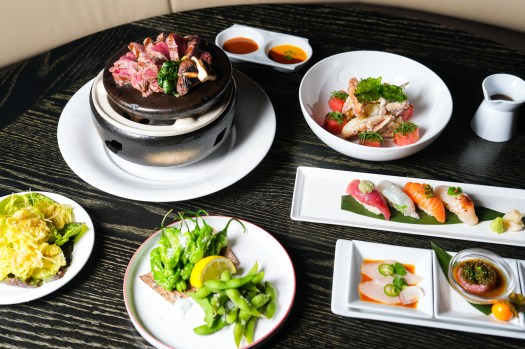
At Kumiko, the thick-cut milk bread is still toasted and topped with fermented honey ice cream and Périgord black truffle. But I did not order what’s remained their bestselling dish, or her beguiling Sea Flower cocktail with its rim of ocean dust. Instead, I focused on the new chef’s shunbun, or spring equinox, tasting menu with spirit-free pairings and seasonal à la carte specials.
The chawanmushi is a newer nostalgic dish by Momosé and perhaps her most emblematic at the moment. The savory steamed egg custard is available à la carte and on the tasting menu. I had it as the sixth of eleven memorable courses with her imperative spirit-free pairing.
“I think of chawanmushi as a Japanese kid,” said the chef. “This is to celebrate dashi, and celebrate the prawn.”

They begin with their base dashi of kombu and katsuobushi. It’s seasoned with shio kōji for umami, and mirin for soft sweetness. Then they whisk in an extra yolk for every three whole eggs.
“We take New Caledonian blue prawns and then very quickly and lightly poach them,” said Momosé. “Then we muddle them down to bring out all those beautiful juices.”
They finish with ankake, a delicately thickened sauce of enriched broth and potato starch.
“Then a gentle green garnish,” said the chef. “Maybe micro shiso or baby tatsoi.”
Silky and studded with prawns, spooning deep into the lovely little bowl, I discovered my own nostalgia for steamed eggs as a Chinese American kid, and the delicious depths of an undersea universe suspended with impressive technique.
A kareraisu expands that wondrous world into an earthly realm with a Japanese-style curry rice available à la carte by the big bowl or as a teishoku. I ordered the latter set meal with tofu, one of several options including karaage, tonkatsu and wagyukatsu.
“We’ve had curry on the menu since the pandemic,” said Momosé. “I think that was a time of seeking comfort and then wanting to share what comfort I could find with others.”
She shifted the menu into Japanese comfort foods, leaning into homestyle dishes that she grew up eating and making with her mother, Nancy Momosé.
“When I stepped into the kitchen, I started really tasting through everything again,” said the chef. “I was like, this is good, but in my brain, a little trigger of nostalgia wasn’t going off.”
She was seeking kokumi, that umami flavor with a fleeting physical sensation.
“So I went back to the drawing board and reworked the curry spice blend,” she added. Sanshō pepper was a key element, as well as green cardamom, black peppercorn, cumin, coriander and fennel seed. “Then fenugreek brought a richer maple note, and bay leaf, clove, ginger and turmeric, bringing beautiful color and earthiness.”
She also reconsidered the caramelized onions, and how far they were taking them for sweetness.
Velvety and layered, I found refined and fond memories of instant comfort and curry rice. But the crispy fried tofu was unexpectedly extraordinary. The pearlescent nuggets were so satisfyingly seasoned with smoked black pepper and a touch of MSG.

I should note that the curry rice alone, with seasonal vegetables and a traditional crunchy fukujinzuke condiment, seems like a steal at $22. But the set meal, with a seasonal miso soup plus pickles or baby potato salad, is listed at market price, from $50 to $60. That seems like a steep price difference, even if the experience is entirely delightful.
The tasting menu opens with a course they call Dashi, which is part of an artful presentation of ingredients to come. While I appreciated the importance of the foundational stock, even mixed with miso and sanshō pepper, I’m not sure that the subtle soup evoked the exhilarating flavors that actually followed, and it had me worried about the next three hours. But time flew by, especially with the warm and engaging service.
The second course far better defined the vibe of the exquisite tasting menu. Umeboshi, a spirited spirit-free drink, played mouthpuckering pickled plum and light lemon togarashi heat against sweet clover honey and sparkling ume. The Oyster dish offered a trio of BeauSoleil oysters, starting with one stunning slurp dotted by more umeboshi, maple syrup and olive oil; then topped with pristine popping ikura; and finally with a hint of head-clearing horseradish and lemon.
A drink called Bright One features fragrant yuzu juice and woodsy Seedlip Spice 94 for the Iwana dish, supple arctic char cured with herbal chamomile, and the rosette of fish garnished with my favorite puny arare rice cracker pearls.

The sparkling Fields of Green, with grassy sencha and a botanical Seedlip Garden 108, pairs perfectly with the Madai and Arajiru served together. The prized matsukasa-age, or pinecone fried sea bream, spotlights coveted crispy fish scales, simply seasoned with lime zest and sea salt. The accompanying fish bone broth with kombu and citrus reveals understated flavor and meaning, what I wish the first course had been.
“This is just such a staple for us,” said Momosé about the traditional soup representing mottainai or the philosophy of regret over waste. “It is so important to me, using the entirety of the fish.”
And Verve, a sanshō pepper and floral kinmokusei drink, seemed somehow destined for the chawanmushi. Together they achieve their destiny, with sips of osmanthus blossoming around glints of kumquat hidden in the custard.
The Maple Blues with nutty mugicha, Japanese seven-spiced lemon cordial and amber maple syrup is the ideal drink to usher us through the mercurial days of spring, and matches magically with the itameshi-inspired Kinkoko dish. The Italian Japanese mushrooms with wood ear and trumpets plus parmesan conceals teuchi or handmade udon so light and fluffy that they reminded me more of glass noodles, but a touch too sticky.
A Hoji-Hi, named for its smoky hōjicha tea and highball glass, heralds the arrival of the Wagyu. And not just any beef, but the incredibly buttery A5 Miyazaki-gyu. The marbled and melting meat is cooked absolutely correctly and served sliced from the kitchen to savor with more mushrooms, this time caramelized in beef tallow.
Then Genmai, an effervescent genmaicha drink, retains its roasted brown rice essence. The pairing precedes the last savory dish, or collection of dishes. The Unagidon features a classic grilled freshwater eel rice bowl presented as a teishoku with pickles and a petite salad.
“That final course for me is an homage to gohan — to rice,” said Momosé. “It’s something that will leave people feeling really satisfied.”
And it feels especially generous given the pricing of the curry rice bowl. I love unagi, with its distinctive sweet and savory char, but we have loved it so much that it’s long been on the Seafood Watch avoid list. The good thing is that nearly every other seafood on the tasting menu has been a sustainable choice.
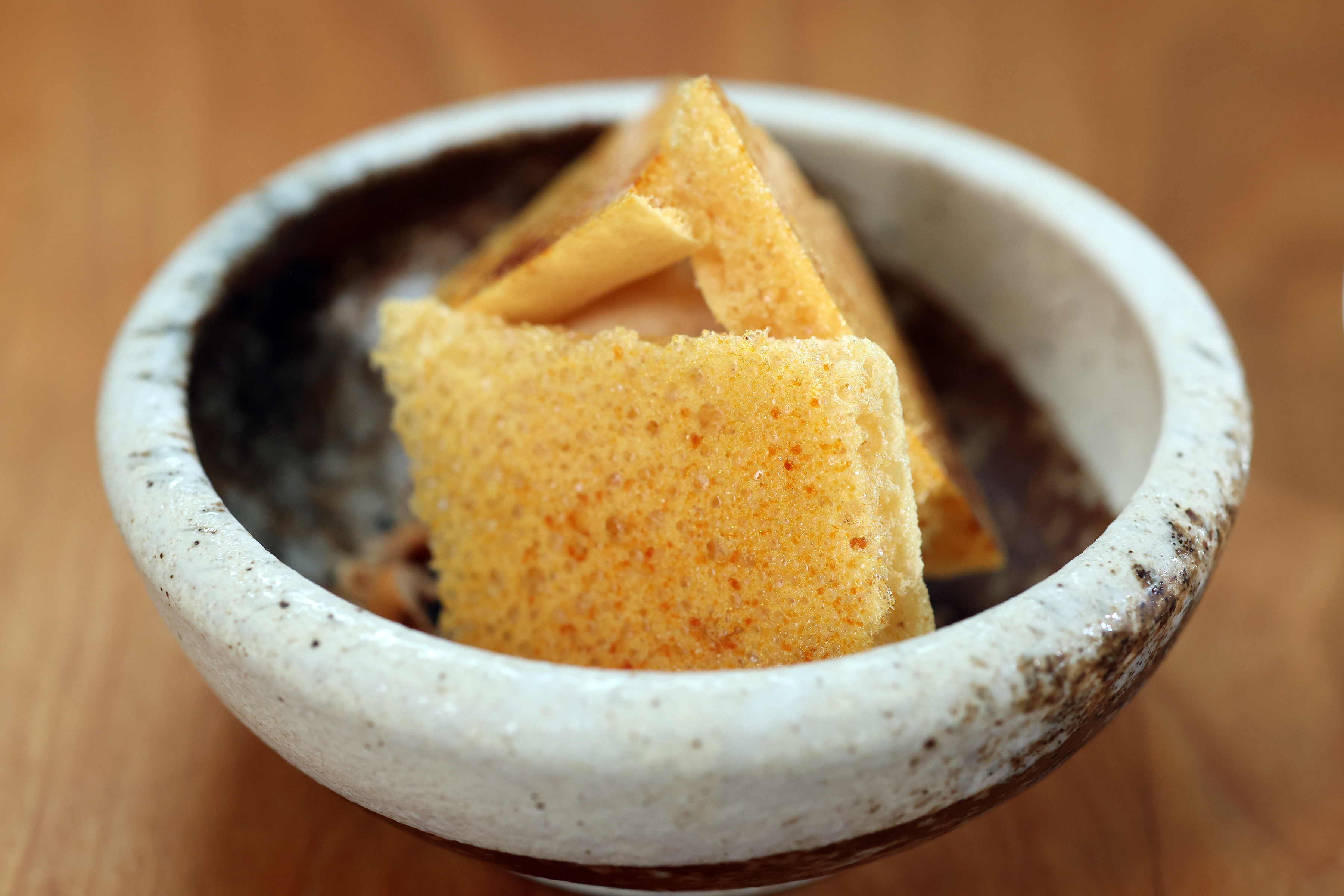
But that’s not the last course. Both the drink and dish showcase koshian, Japanese red bean paste. The Protea drink mixes koshian with Fusion verjus rouge and the woody Spice 94 again. And the Koshian dish emulates jiggly and airy Japanese soufflé-style cheesecake.
“This is a dish that Drew came up with,” said Momosé about chef de cuisine Andrew Mainor, who took it to another level of lightness by aerating the red bean cheesecake then piping it over the top. “There’s the butter pecan brittle as the crust at the bottom of the bowl.”

Lemon zest finishes Mainor’s terrific textured dessert that earns my highest Asian compliment: it’s not too sweet.
The actual last course was the wonderful Wagashi with a vibrant and vegetal matcha, paired with dainty Deglet Noor dates stuffed with shichimi-spiked lavender honey butter for a subtly sweet, spiced and contemplative finale.
Stellar service started before my visits. Host Gabriela Calderon answered when I called to ask about changing my reservations, and patiently found what worked better. When I finally arrived, the familiar vintage Chicago corner opened into an airy dining room leading to the main bar in back with a slatted kumiko wooden screen behind, lending glimpses into the kitchen. Downstairs, a weekend whiskey and shōchū bar hides behind sliding doors. Server Nathaniel Lebron amiably guided me through the tasting menu on a weeknight buzzing with first dates, friend groups and a ladies’ night out. And bartender Sammy Faze mindfully mixed drinks and managed food orders for those of us seated at the bar on a quiet weekend.

We all ordered the new Kumiko cheeseburger, a Sunday-only special by the chef de cuisine. It’s wagyu beef, with a bit of A5 Miyazaki-gyu trim, duck confit skin, Havarti cheese and fermented habanada pepper aioli on a toasted house-made shokupan bun that’s baked by Mainor too. It’s extravagant and expensive at $30, but blissfully beefy and cheesy. The prettiest pink seasonal Pastel cocktail, highlighting tart rhubarb from Seedling Farms with refreshing Kitaya gyokuro shōchū and smooth Haku Japanese vodka, cut through all that richness.
And let’s hope a toasted black sesame and coconut swirl ice cream dessert special becomes a mainstay, with its shard of malted meringue shattering over the dramatic bittersweet scoop, at the destination dining bar with the Renaissance chef.
Kumiko
630 W. Lake St.
312-285-2912
Open: Wednesday to Sunday, 5:30 to midnight (closed Monday and Tuesday)
Prices: $185 (tasting menu), $90 (nonalcoholic spirit free beverage pairing), $60 (kareraisu / curry rice with tofu as teishoku / set meal), $30 (Kumiko cheeseburger), $16 (black sesame swirl dessert special), $23 (Pastel cocktail special)
Sound: OK (60 to 75 dB)
Accessibility: Wheelchair accessible with ramp available upon request to back entrance off Desplaines Street.
Tribune rating: Excellent to outstanding, three and a half stars
Ratings key: Four stars, outstanding; three stars, excellent; two stars, very good; one star, good; zero stars, unsatisfactory.
Meals are paid for by the Tribune.
Big screen or home stream, takeout or dine-in, Tribune writers are here to steer you toward your next great experience. Sign up for your free weekly Eat. Watch. Do. newsletter here.