Elk Grove Village Mayor Craig Johnson delivered a sharp defense of data centers at a packed community meeting on Wednesday, responding to questions from residents worried that massive new facilities dedicated to artificial intelligence could suck up the village’s water or increase their utility bills.
Johnson said the village had been a national leader in data center construction for about 25 years, but fears about data centers only popped up in the past two years, largely driven by internet rumors.
“All you hear is negative, negative, negative; tonight you’re going to hear facts, facts, facts,” he said. “A lot of this negative stuff comes from Facebook.”
The village now has 20 data centers, occupying about 4.5 million square feet and all located within the Elk Grove Village Business Park, a 66-million-square-foot industrial campus on the village’s eastern edge near O’Hare Airport, he said. Several more are under construction or in the planning stages.
The facilities generate tens of million in tax revenue each year, generate little or no truck traffic, and keep the business park, one of the largest in North America, on the cutting edge of technology, Johnson added.
“We never heard one complaint in 20 years,” he said. “For some reason, over the past two years data centers have become the evil empire.”
Data centers power the internet, and they started popping up more frequently across the Chicago region as cloud computing and streaming services such as Netflix became more popular. But as planned data centers grew bigger, public opposition swelled, and many Elk Grove Village residents said they worried about the possible impact of newer, more modern facilities.
Several residents mentioned recent plans by “Shark Tank” investor Kevin O’Leary to develop a 40,000-acre data center in rural Utah, projected to use more power than what is used in the entire state and possibly including its own natural gas plant.
“Of the 20 data centers that we have in Elk Grove, how many are accelerated data centers, or built for AI, and how many of them are traditional data centers?” asked village resident James Arthurs. “AI data centers use ten times the water and ten times the power.”
Johnson said Elk Grove Village did not have any data centers on that scale, and none are planned.
“Those are going on bigger campuses, which we do not have,” he said. “Could it come in the future? I can’t say yes or no.”
A typical Elk Grove Village data center of 200,000 square feet uses about 500,000 gallons of water per year to cool down computers and servers, while a village car wash uses four times as much, Johnson said. Despite the construction of 20 data centers, total water usage in the village decreased from about seven million gallons per day in 1998 to about five million today, according to village data.
Other suburbs are grappling with the issue.
Naperville City Council members voted 6-1 in January to reject a proposed data center, even though the developer had earlier agreed to scale back its project. Neighboring property owners packed the council meeting. Many complained the 145,000-square-foot center was too close to their homes, and could pose a health hazard or generate noise.
The Joliet City Council went the opposite way in March, approving a 24-building, 795-acre data center project by an 8-1 vote. Hundreds of residents came out to protest, but developer Hillwood Investment Properties, a Dallas-based company founded by billionaire Ross Perot, promised up to 10,000 construction jobs and more than $2 billion in property taxes paid over the next 30 years.
Concerns have been raised in Springfield that the rapid expansion of data centers will raise energy costs for all Illinois residents. Gov. JB Pritzker proposed suspending state tax incentives for new data centers for two years in his February budget address. Other state lawmakers introduced the POWER Act, which would regulate data centers’ water and power use. Both initiatives still need legislative approval.
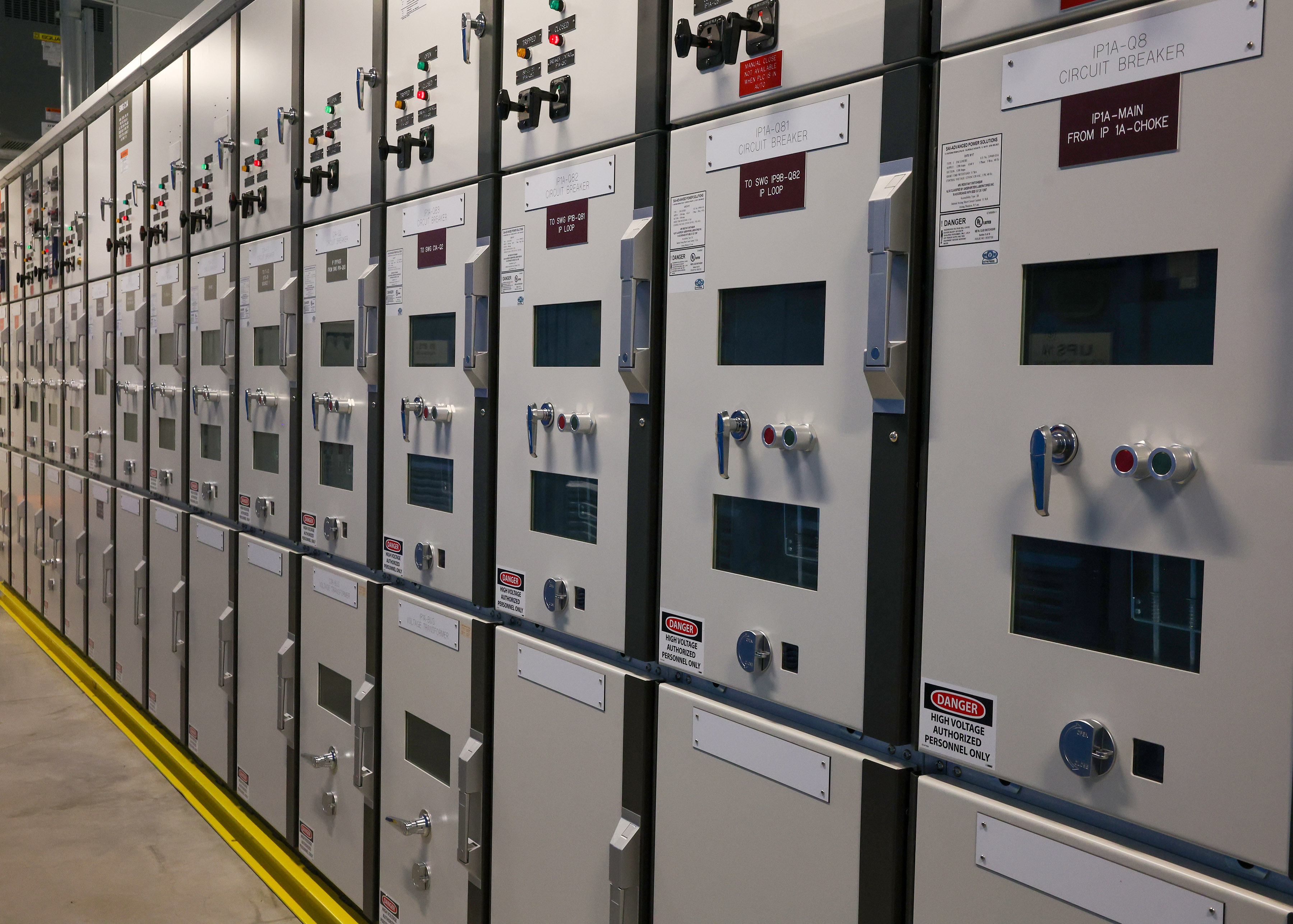
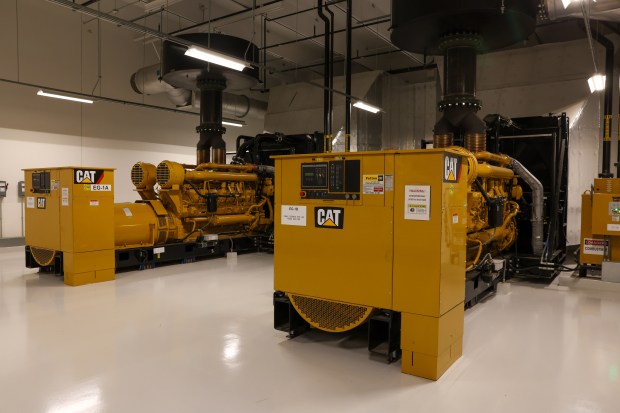
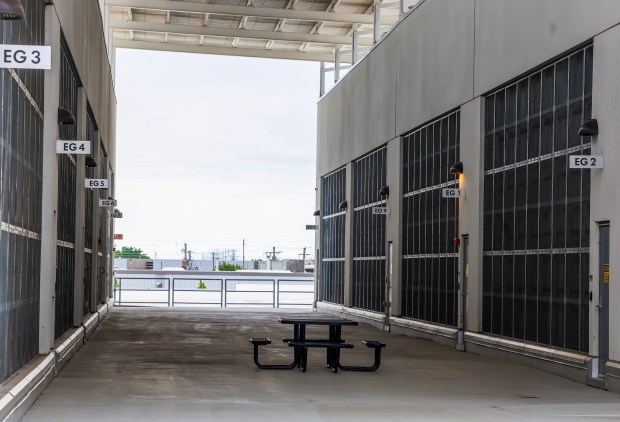
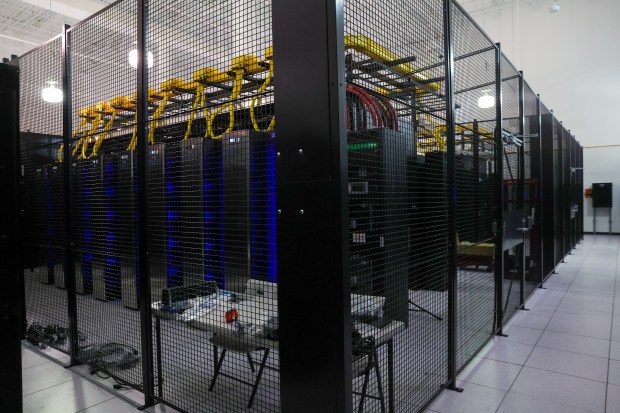
Existing data centers in Elk Grove Village include a three-building campus operated by Digital Realty Trust, developed in the business park between 2008 and 2018 at 2200 Busse Road and 1400 E. Devon Ave. Dallas-based Prime Data Centers is currently building a three-building campus in the park at 1600 E. Higgins Road and 1701 Midway Court.
In the past year, data centers paid the village $46 million in property taxes, keeping a lid on homeowners’ property taxes, and will sustain about 1,000 construction jobs every day for at least five years, Johnson said.
Several residents said they were concerned about a proposal by Nexstar Media Group to build a data center complex at 720 Rohlwing Road, a 102-acre site currently occupied by a WGN radio tower. The land is several miles west of the business park and next to a residential subdivision.
“I just don’t think we’ve completely thought through far enough down the road about what this is going to invite into Elk Grove Village,” said one resident. “It might be worthwhile to take a pause and see how these 20 or so (data centers) work before we just open the floodgates.”

Johnson said the Nexstar proposal, first put forward in 2022, is on hold due to concerns that ComEd can’t supply enough power to the site. Nearby residents were at first happy with the data center idea, he added, partly because it would be much quieter and cleaner than Nexstar’s original plan for a trucking and logistics operation.
“Four years ago, data centers were not an evil empire, they were on the good side, they were Luke Skywalker and all that, so people liked them,” Johnson said.
Some residents said they still wanted some protections in place for future data centers, and to ensure new operations didn’t harm the village’s reserve water supply or subject residents to noise pollution, among other issues.
“My request to you is, put it in a contract,” said one resident.
“All I can tell you is, we have final say,” Johnson said. “We will not let you down.”