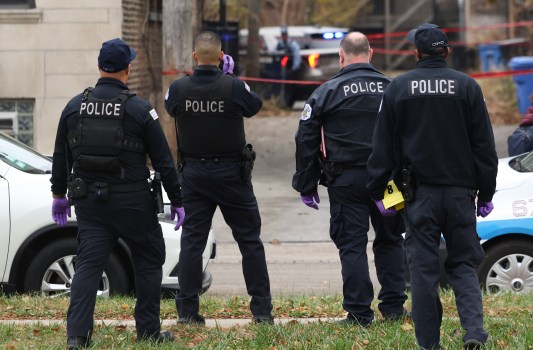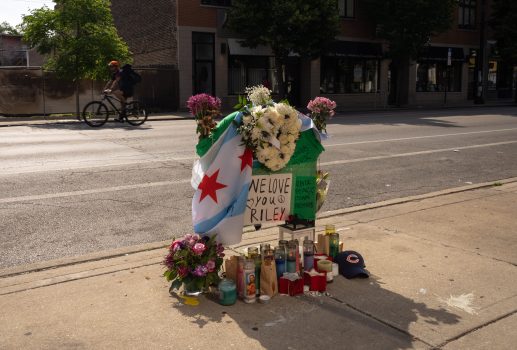

A federal grand jury has indicted a 21-year-old man for allegedly ramming a car driven by federal immigration agents the day of a high-profile confrontation that led to the shooting of a U.S. citizen in Chicago’s Brighton Park neighborhood.
Diego Emmanuel Reyes faces a charge of assaulting impeding, intimidating and interfering with a U.S. Immigration and Customs Enforcement officer using a deadly and dangerous weapon — namely, his SUV. The case echoes the now-dismissed charge against Marimar Martinez, who was accused of ramming a vehicle driven by Border Patrol agent Charles Exum and three other agents before Exum shot her five times. The case, dismissed in November 2025, was arguably the highest-profile case against a U.S. citizen to come out of Operation Midway Blitz, only to disintegrate under judicial scrutiny.
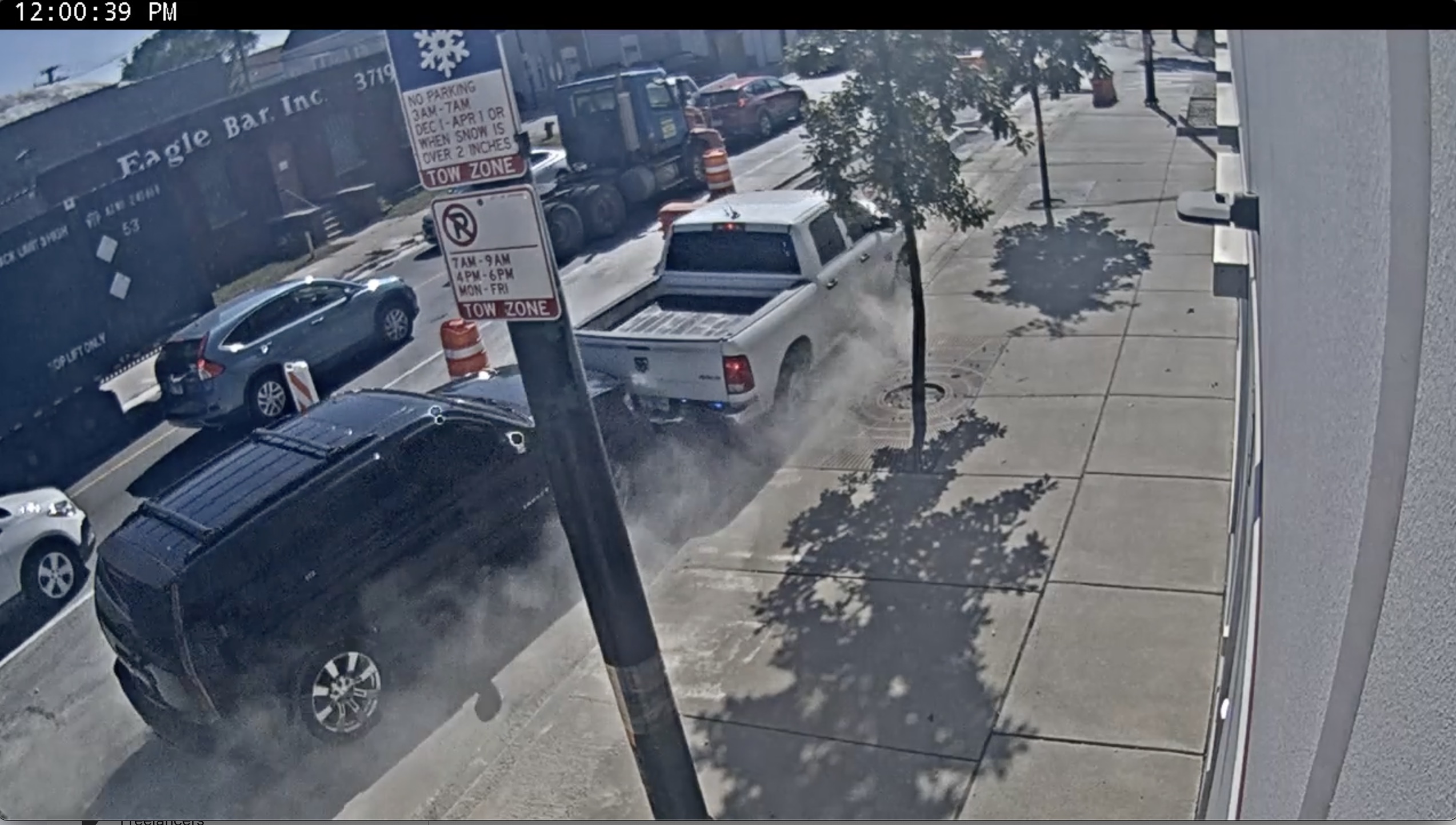
Video attached to a press release announcing the indictment shows a black SUV aggressively following before appearing to hit the back bumper of a white pickup truck, which then drives out of the frame. The black SUV then reverses as a masked man in a police vest runs toward the vehicle with a gun drawn and it drives away in the same direction as the white pickup truck. Moments later, the video shows a black Wagoneer — one of the most common vehicles federal agents were seen driving over the fall — speeding after the two vehicles as two agents run behind.
In a news release accompanying the indictment, U.S. Attorney Andrew Boutros called the alleged ramming a “dangerous and brazen act of violence against a federal agent as well as an attack on the rule of law.”
It wasn’t immediately clear who was representing Reyes and an arraignment date hadn’t yet been set. If he is convicted of the charge, Reyes could face up to 20 years in federal prison.
The video released that depicts the allegations against Reyes is time-stamped around 12 p.m., shortly after Martinez’s truck collided with Exum’s car and he shot her. Prosecutors charged her with using a dangerous weapon to interfere with federal officers, initially alleging that Martinez had sideswiped the agents.
The release of video alongside the indictment is itself a departure from the Martinez case, where body-camera footage and other evidence were initially kept out of public view under a protective order. That order was only lifted after protracted argument in front of U.S. District Judge Georgia Alexakis and then obtained by the Tribune and other news outlets through a Freedom of Information Act request.
In the weeks that followed, Martinez’s attorney, Christopher Parente, argued Exum’s Tahoe had hit Martinez, not the other way around, and that a Border Patrol mechanic had tried to “wipe off” some of the scuff marks from the crash back in Maine, where Exum is based.
Shortly after Exum’s bragging text messages about the shooting in a group chat with other agents surfaced as evidence, prosecutors dismissed the case against Martinez. Her lawyers have said they plan to file a civil lawsuit over her shooting.
Trump administration officials, in a playbook that has now become familiar in other cities, almost immediately labeled Martínez as a “domestic terrorist” after she was shot and have refused to retract that narrative even after the charges against her were dropped. Martinez, for her part, has said in multiple forums since then that she is looking for an apology from the government.
Martinez’s case was the highest-profile among dozens to come out of Operation Midway Blitz, almost all of which have fallen apart in court. A few have proceeded, including that of Hector Gomez, who pleaded guilty in April to firing “in the vicinity” of a different group of federal agents on a chaotic day of raids in Little Village.