
An elected official has proposed narrowing streets in Oak Park as officials eye ways to fund future road maintenance projects.
Cory Wesley, a member of the Oak Park Village Board, said narrowing roadways could help reduce future costs. He said too much road pavement isn’t being utilized and it goes to waste.
The suggestion came as officials discussed the state of the village’s transportation infrastructure during a Village Board meeting May 12.
Abbas Kachwalla, a consultant from construction engineering company AECOM who is helping put together the village’s pavement management plan, told village trustees that Oak Park’s roadways right now are in fair condition.
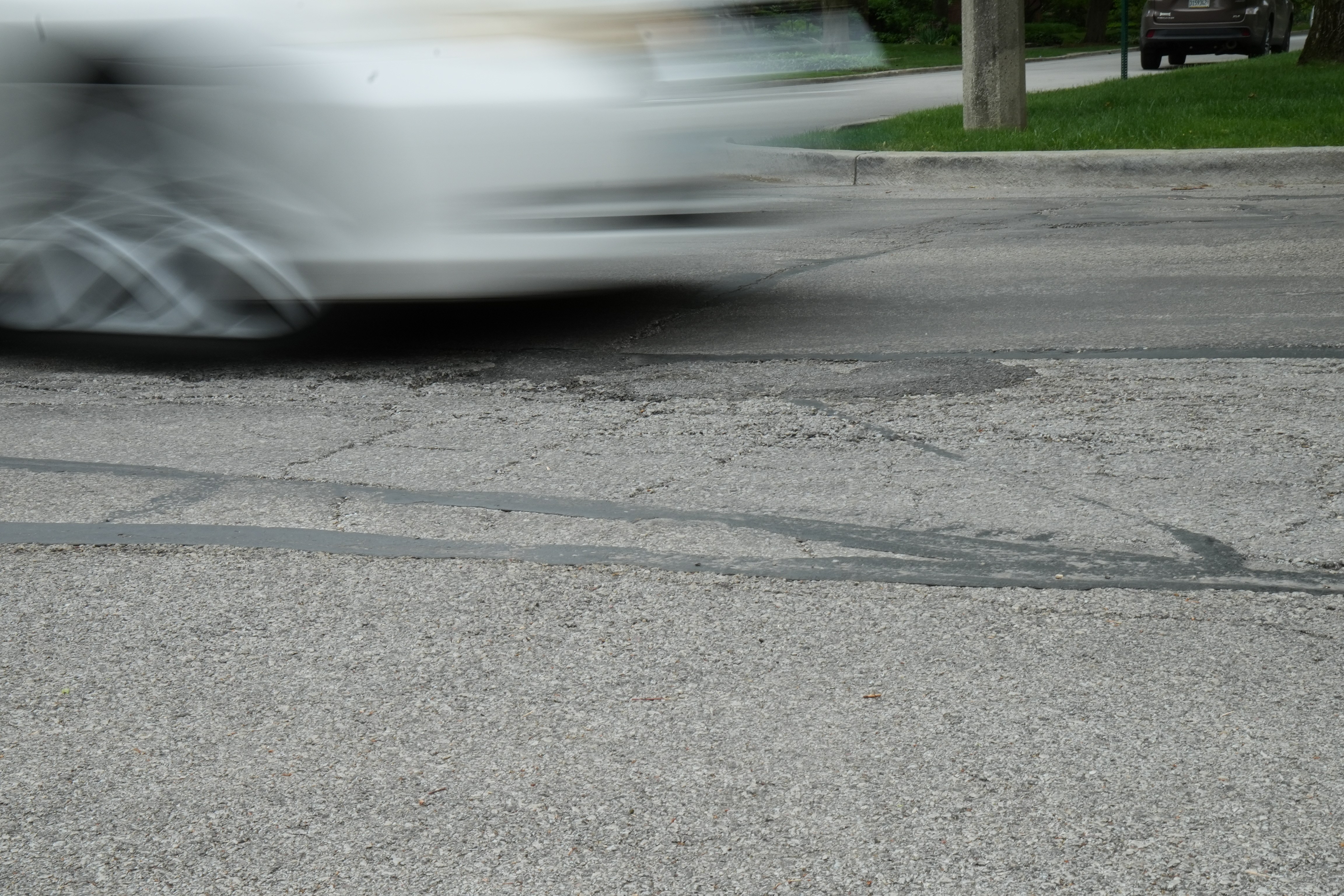
He said Oak Park’s roads were rated at 66 in on the 0-100 pavement condition index used to evaluate infrastructure repair needs, and that pavement rated at 86-100 was considered being in good condition, the scale’s highest rank.
Breaking down the analysis, Kachwalla said 63% of Oak Park’s streets are in fair condition or better and 37% are in poor condition or worse. Almost 20% of streets maintained by the village are in very poor condition, he said.
According to Kachwalla, the average rating for pavement in other villages is around 60-61, making Oak Park’s roadways above average.
But, he said, maintaining or improving that above average status requires regular maintenance, and that requires funding. Wesley said his proposal to narrow roadways in Oak Park would be a way to stretch the village’s transportation budget.
“The less pavement that we have to maintain, the less this costs in order to maintain a level of service that we want to have,” Wesley said.
He said the move could have additional benefits as well.
“Narrower streets are safer, they reduce speed and not only that, narrower streets also raise demand for housing on those streets,” Wesley said.
Bill McKenna, a village engineer, said the decision to narrow the roadways would be a policy level decision since it would impact parking.
Wesley said his idea to narrow some roads came from his observations of the streets around his home.
“I think there are places in our village where we don’t use parking whatsoever,” Wesley said. “I live across the street from a park, there’s probably a couple hours a day where our street is full, other than that, there might be three cars, one of them is mine because I took the kids to school. There’s a lot of streets like that that I come across in Oak Park and we could use that street for something better than just sitting there and degrading over time, a bike lane would be great, a parklet would be great. All of these things are use cases that add something to the neighborhood, while also significantly decreasing the wear and tear of the pavement that’s there already.”

The discussion was initiated after Oak Park received a Chicago Metropolitan Agency for Planning technical assistance grant to evaluate roadway pavement conditions and to develop a pavement management plan. That process involved use of a van equipped with sensors that traveled and scanned every road in the village last fall, officials said.
According to a 10-year budget analysis Kachwalla presented to the board, reaching target pavement conditions would cost somewhere between $5.6 million and $6.6 million per year for the next decade. Taking care of all backlogged maintenance would cost $11.07 million per year over the next 10 years.
That backlog was reflected in figures from 2021, when Oak Park received the same grant from CMAP and its average pavement condition index rating was 74.7 and approximately 81% of roadways were in fair condition or better.
According to Dan Yopchick, the chief communications officer for Oak Park, the village spends around $5 million on roadway maintenance with $3.5 million of that being dedicated for local resurfacing.
There are other projects that result in resurfaced roadways in Oak Park, including a yearly water-sewer construction program, Yopchick said, those projects supplement the roadway spending and do not interfere with each other.
Feedback from the discussion will be incorporated in the draft 2027 budget and the five year capital improvement plan process later this year, officials said.
chardy@chicagotribune.com