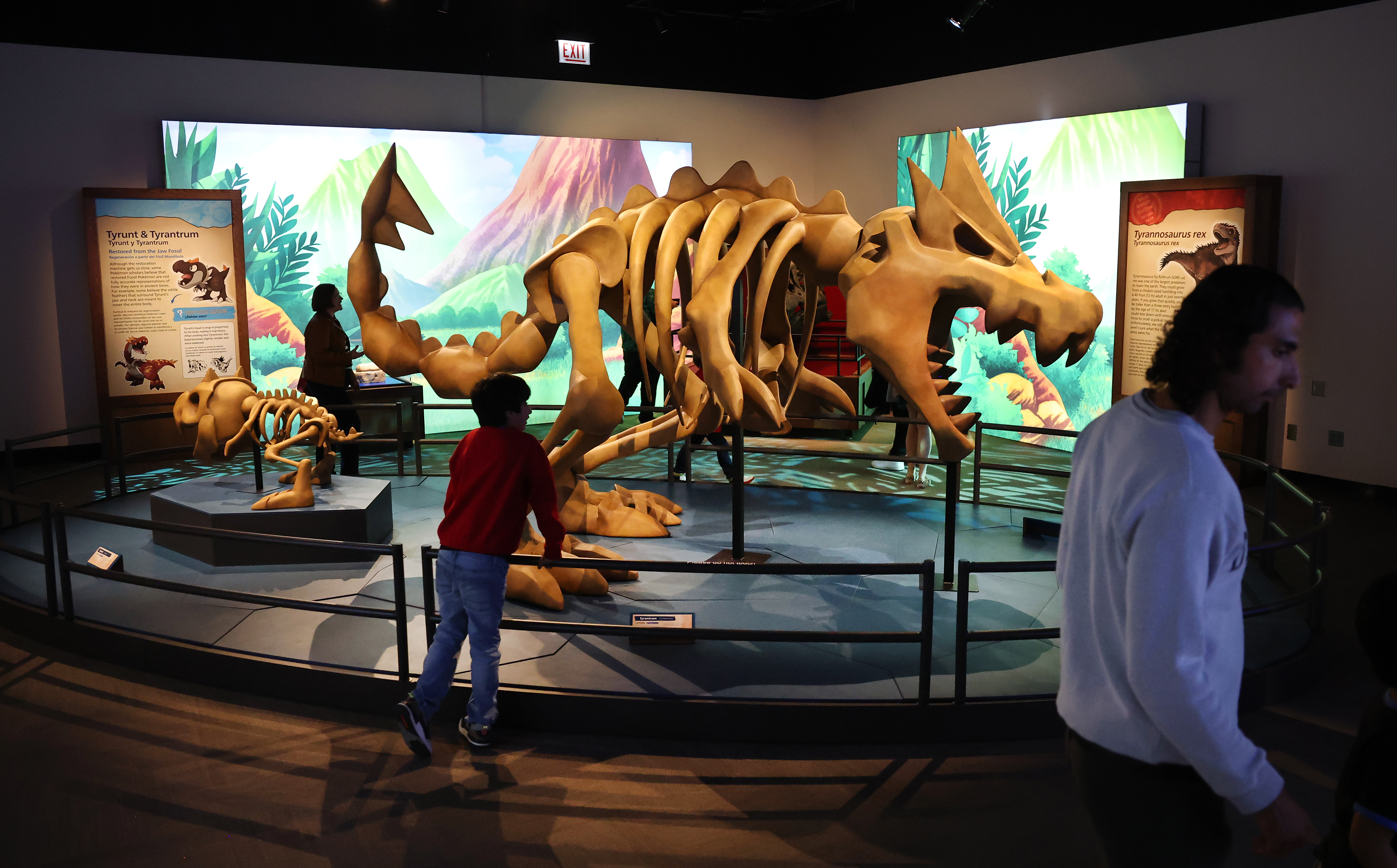
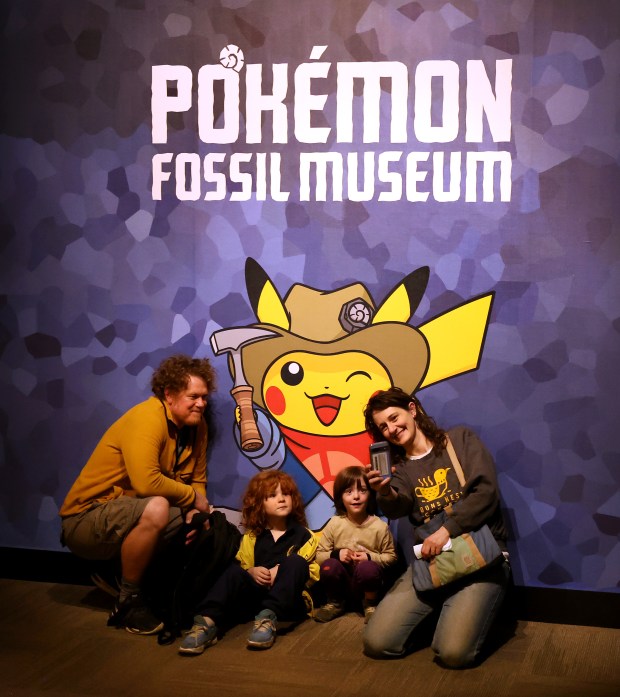





Five years ago, Tokyo’s National Museum of Nature and Science unveiled an exhibition called the Pokémon Fossil Museum. When staff members from the Field Museum traveled to Japan and got a look at it, they started brainstorming ways to bring a similar exhibition to Chicago, where it opened last week. It is the first of its kind in the U.S.
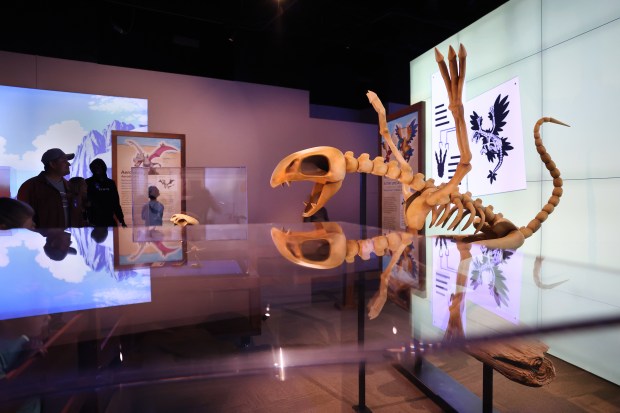
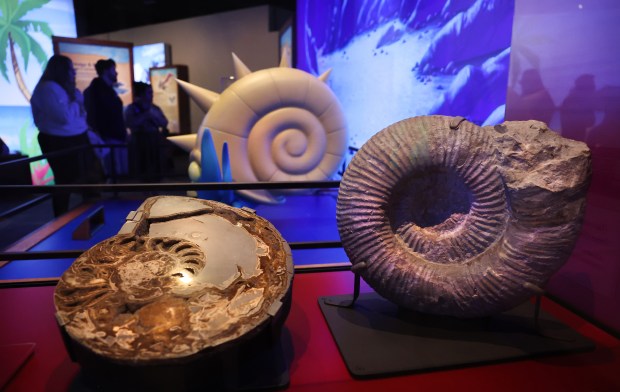
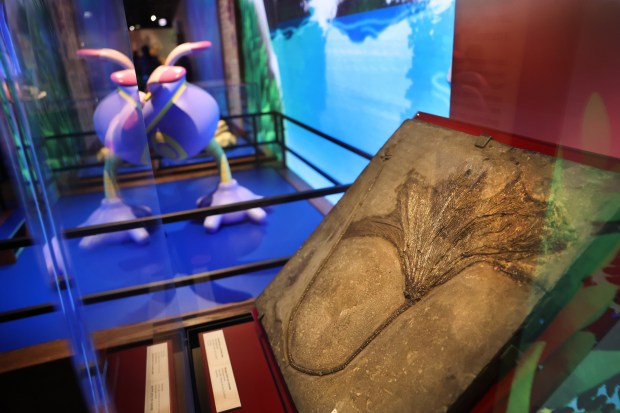
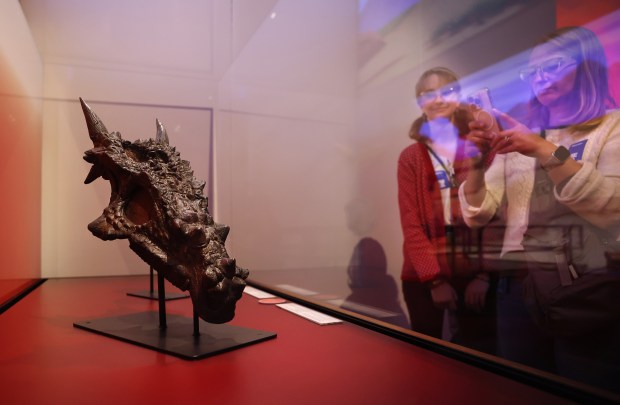
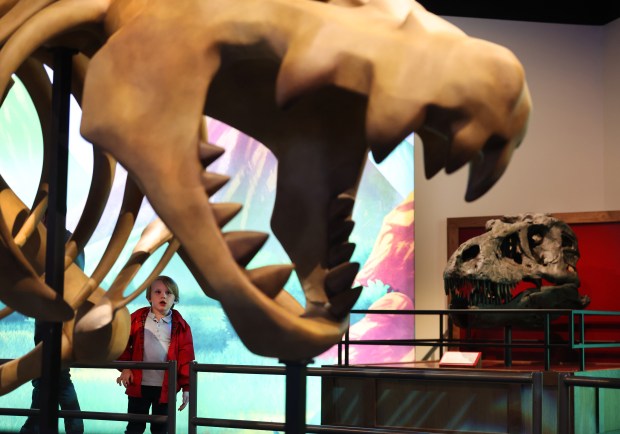
In the Pokémon universe — of games, trading cards and more — fossil Pokémon are prehistoric characters that can be revived. In the museum exhibition, they remain as fossils, in order to be compared to the fossils of the Field Museum’s real-world dinosaurs.
For example, a “life-size” skeleton replica of the Archeops Pokémon (a manufactured skeleton, obviously) is on display next to an archaeopteryx fossil, which is a dinosaur that resembles a bird. “It’s the oldest known bird, actually,” says Field exhibitions developer Anastasia DeMaio. There are a total of 13 fossil Pokémon featured in the exhibition.

Museums across the country are facing unprecedented funding challenges at the moment. And because the exhibition functions as marketing for Pokémon, one might wonder if this was a way to generate a sponsorship of sorts. But according to DeMaio, there is no financial influx from the company driving this exhibition. “They did not pay us, actually. We went to them.”
The museum’s interest is in making its work more accessible.
“In the Pokémon games, there’s a lot of collecting and a sense of discovery,” says DeMaio, “and that maps so nicely with paleontology or even something like bug-catching or bird-watching. You’re going out into the world, you’re looking at the animals around you and discovering things about them and you’re doing research. There are some really nice parallels and it’s an easy way to show that the fun things we do in a game can be applied to nature and a naturalist’s perspective.”
In other words, for younger visitors who are familiar with Pokémon characters but unfamiliar with various types of dinosaurs, the exhibition is a pathway into real science.
“It’s a way to show, even for teens and older adults, that something that may seem completely separate — a game with fictional characters — there are bits and pieces of it that can be applied to real scientific interest,” DeMaio says.
To be clear, there is no app. This is a straightforward museum experience with displays and placards. There is no gamified aspect to the exhibition, in other words.
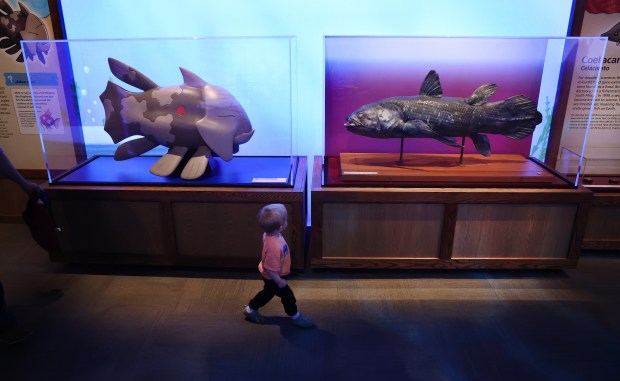
The wall text accompanying the Pokémon fossil Relicanth indicates that it could be found living in the deep sea:
“Relicanth was thought to be extinct, but Pokémon scientists found a specimen that looked exactly the same as fossils from 100 million years ago. The scales on its body are as hard as rocks, which allows it to endure the water pressure of the deep sea.” (The placards are in both English and Spanish.)
Nearby is information about the coelacanth, a type of ancient fish species (real) which was originally thought to have disappeared millions of years ago:
“For decades, scientists thought the coelacanth had gone extinct because it had only been found as a fossil. But in 1938, a specimen was discovered in a fisherman’s catch off the coast of South Africa. In 1999, a second species in Indonesia became known to science. Both types of coelacanth are threatened, meaning they are among the most endangered fish on Earth.”

How is the museum making it clear that some of the species are fictional creations, and others are very real and hundreds of thousands or millions of years old?
“It is 100% color-coded from the minute you walk in the door,” DeMaio says. “One color is Pokémon and another color indicates this is from the real world, and we repeat that throughout the whole exhibition. We even separated the text very specifically so that we’re not introducing confusion.”
The exhibition also focuses on how to be a paleontologist, she says. “The tools and technology that you use in real life to learn about life on earth and extinct organisms, we compare that to game functions in terms of how you find fossil Pokémon. So if you are familiar with how this works in the games, then we talk about: OK, how does this work in the real world?”
If you go
The “Pokémon Fossil Museum” special exhibit runs through April 11, 2027, at the Field Museum, 1400 S. DuSable Lake Shore Drive; timed entry tickets ($14-$30, free for Illinois residents on Wednesdays) are required along with general admission, 312-922-9410 and www.fieldmuseum.org