


Defense attorneys for Donol Clark, who is on trial for murder in the 2012 death of his girlfriend Gena Chiodo, said the prosecution did not provide sufficient evidence and called a forensic pathologist to testify some body injuries may have occurred after her death.
“This case is overcharged,” defense attorney Michael O’Meara said.
Chiodo disappeared in October of 2012, and it took until December for her body to be discovered in a wooded area in Lowell, Indiana. The fact that the body had substantially decomposed made it difficult to draw conclusions about how she had died, O’Meara argued.
Prosecutor Cheryl Galvin disagreed, saying that while the body had decomposed, the medical examiner was still able to conclude Chiodo died by homicide due to blunt force and sharp force injuries.
Forensic pathologist Shaku Teas, who reviewed the autopsy report on Chiodo, testified the body was in a state of advanced decomposition by the time it was found.
“She was partially skeletonized,” Teas said.
Teas said due to the state of the body, she couldn’t confidently identify whether most of the damage to the body had been inflicted prior to or at the moment of death. Instead, she said she would attribute most of the damage to animals and insects.
“It seems like there was a lot of animal activity around the face and head,” Teas said.
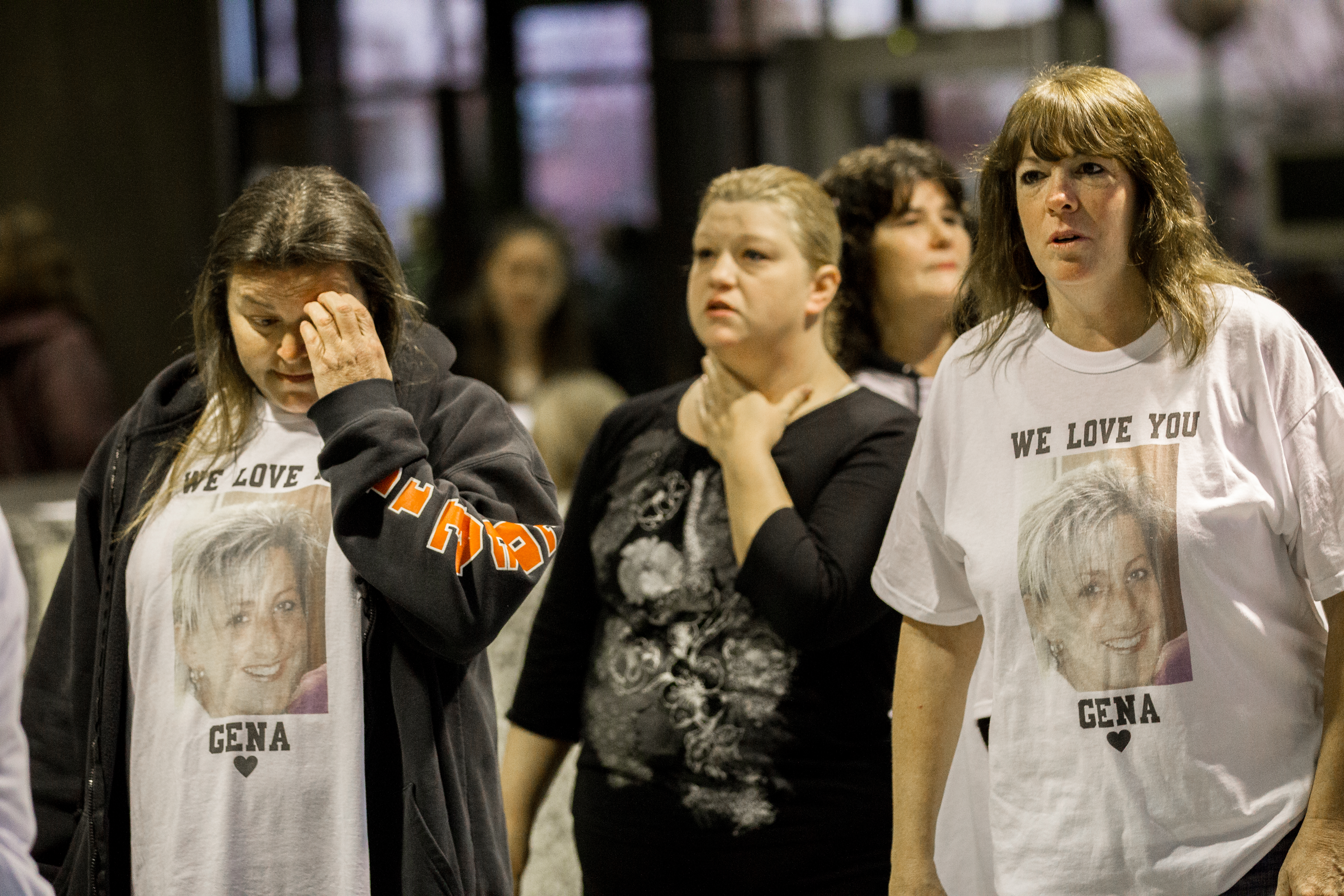
Some of Chiodo’s friends, who have attended every day of the trial, gasped and turned away during Teas’ testimony as photos of Chiodo’s head and neck, including her exposed skull, were shown.
Many injuries identified by the medical examiner in the autopsy report “represented either postmortem changes or animal and insect activity,” Teas said. She also said she did not observe any defensive injuries to Chiodo’s hands.
Teas’ conclusion was Chiodo died of sharp force injuries. She identified one particular injury on Chiodo’s left flank that she said was likely made by some sharp implement, such as a piece of broken glass.
“It could be a knife,” Teas said. “It could be anything that’s sharp.”
On cross-examination, Teas said she was not able to examine the body itself, and based her conclusions on the autopsy report and photos of the body.
Police officers who investigated the scene previously testified there was evidence blood had been cleaned up in areas of the home Chiodo and Clark shared, while bloodstains were observed in other areas throughout the house. DNA analysts testifying for the prosecution said the blood was matched to Chiodo.
“We know it was Gena’s blood,” Galvin said.
The trial began in March, and has been punctuated by long continuances. Particularly important to the prosecution’s case are a pair of recorded phone calls Clark made to his brother while under arrest following Chiodo’s disappearance.
“I woke up with her covered in blood,” Clark said in one of the calls.
With more than a decade elapsed since Chiodo’s death, the length of the proceedings and repeated delays has been a source of frustration and grief. In 2023, the case was highlighted in the Chicago Tribune’s Stalled Justice series on delayed Cook County court cases.
Cook County Judge Carl Boyd is hearing the case in the Markham courthouse, and will render the verdict in the bench trial, which is scheduled to continue Friday.
elewis@chicagotribune.com


