
Amid concern among some Waukegan residents there are too many liquor stores in the community, the City Council’s Public Safety Committee is working on ways to fine-tune legislation imposing a one-year moratorium on some new licenses.
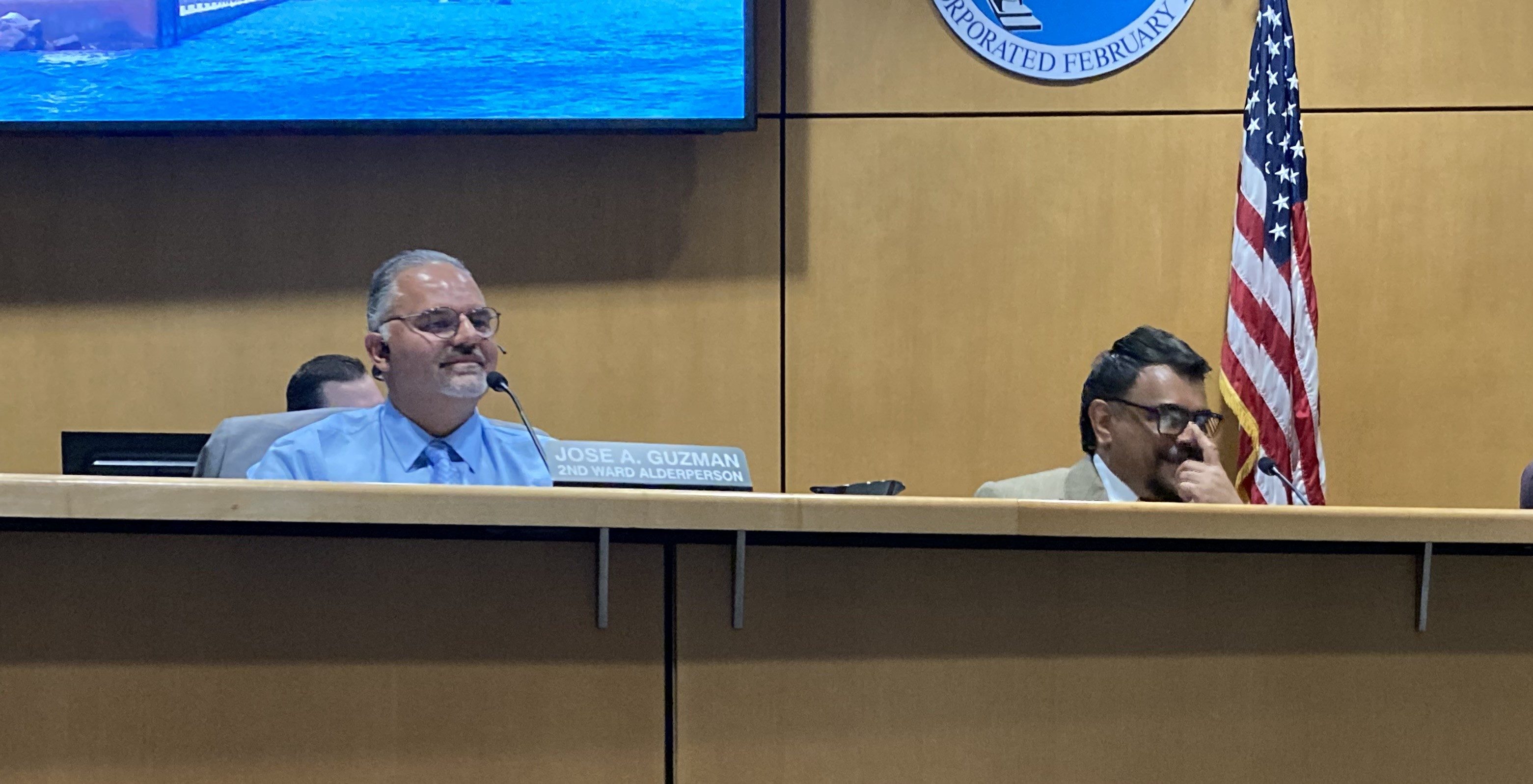
Council members like Ald. Juan Martinez, 3rd Ward, see the quantity of liquor stores as a public safety issue while to Ald. Jose A. Guzman, 2nd Ward, the idea of a moratorium is like prohibition which banned the sale of alcoholic beverages in the United States from 1920 to 1933.
“I have a huge homeless population in my ward and I have liquor stores everywhere,” Martinez said. “I’m looking out not only for the safety of my constituents but the community as a whole. I want to put a stop to this, only for one year.”
Guzman, who opposes a moratorium, said the city can already deny a liquor license to an applicant since every potential license issued comes before the council for a vote. If a majority votes no, the license will not be issued.
“I don’t understand why a moratorium is needed,” Guzman said. “If you don’t want a liquor license, it’s very easy. Gret the five votes and vote no. That’s it. I don’t get what’s the (big) issue.”
The City Council’s Public Safety Committee discussed the need for a moratorium based on a proposed ordinance creating one-year suspension of some liquor licenses during a regularly scheduled meeting Monday at City Hall trying to establish more clarity.
Not all liquor licenses would be subject to the moratorium, according to a draft of the proposed ordinance. It would apply only to classes of licenses governing liquor stores, video gaming parlors as well as packaged beer and wine sold at gasoline stations.
With 21 classes and subclasses of liquor licenses potentially issued by Waukegan, restaurants, bars, government and historic sites, hotels, catering facilities, special events and the American Place Casino are not impacted.
Martinez said it is time to take a closer look at the impact of what he calls an abundance of liquor stores in the community. Taking a look at the impact on the city during the yearlong timeframe, city officials can judge the impact and determine what to do next.
“Tbis is about public safety. It’s about what’s right for the community,” Martinez said. “It gives us the chance to regroup, to get it better, to make it more productive where it’s safe again,” he added referring to the one-year ban.
Ald. Keith Turner, 6th Ward, said he generally opposes the idea of a moratorium because the state already has regulations in place and “you can’t blame all the ills of society on a legal product.” He would like to see some changes to the city’s existing regulations.
“We should also add a reform of our liquor licensing in that we should not have multiple categories.” Turner said. “The state does not have multiple categories. You either get a liquor license or you don’t. You sell liquor or you don’t and what you sell is up to you
Ald. Lynn Florian, 8th Ward, said when a liquor store recently became a gaming parlor as well, it “set a bad precedent.” The pattern concerns her and she would like to see a moratorium in place before video gaming becomes common in retail liquor establishments.
“We have a lot of liquor stores in this community and they’re all going to want gaming now because we did that for one,” Florian said. “I support a moratorium, certainly for gaming cafes, I would support that forever.”
Currently liquor licenses are issued to a business owner and they cannot be transferred to a new operator. The new proprietor must apply for their own license and be approved by the council. Florian wants the regulation to stay in place. There is a loophole if the seller is a corporation.
Angie Morales, a member of the licensing department staff, said if the owner of a liquor store is a corporation rather than a business owned by an individual or a group of people, the license can be transferred.
“If they buy the corporation, they would fill out the information so we have the new ownership’s information but the license would flow,” Morales said. “If it’s a different (corporation), it would be a different application. If they’re buying the corporation, they’re buying the debts, everything.”