
When the twin earthquakes ripped through Venezuela’s Caribbean coast last month, José Antonio Corro already feared the worst.
The asylum seeker from La Guaira, the coastal state where the June 24 earthquakes struck with the greatest force, spent hours desperately trying to reach his family from his home in Chicago as reports of collapsed buildings and mounting deaths poured in. When he finally heard back, the news was devastating.
Nearly 20 relatives and friends had been killed.
His mother survived only because she ran from her home moments after the first powerful tremor.
Unable to return to Venezuela, Corro turned his grief into action. Less than a day after the disaster, he called the Illinois Venezuelan Alliance with one question: “How can I help?”
Thousands of Venezuelan asylum seekers like Corro living in the Chicago area, who cannot leave the United States without jeopardizing their immigration cases, have felt helpless as they have watched the devastation from thousands of miles away. In the past week, they’ve raced to collect donations to send back to help their homeland.
“His hands were tied, and his pain was intense,” said Gabriela Rubio, a leader with the Illinois Venezuelan Alliance, of Corro. “The only thing that gave him some sort of comfort was to begin gathering items and money to send to Venezuela. I’ve seen him carrying boxes of donations in tears.”
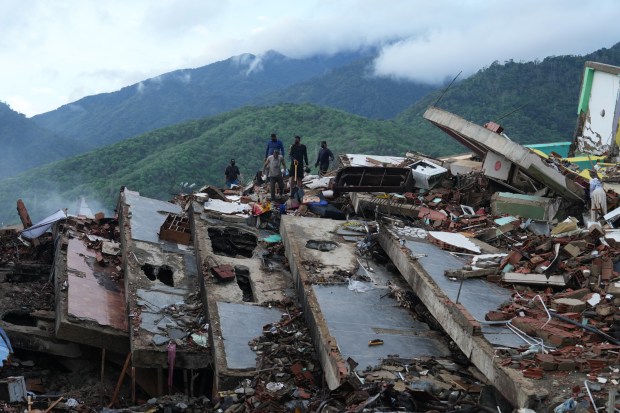
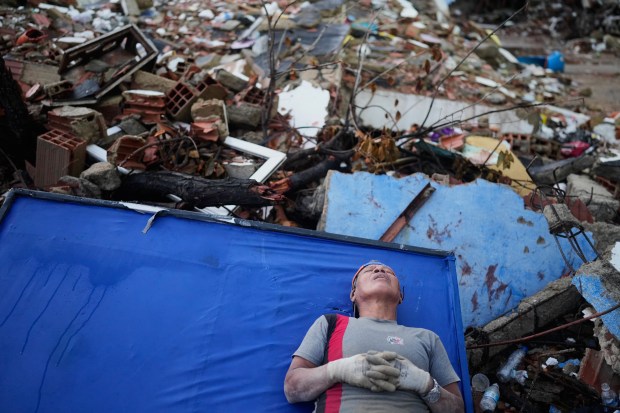
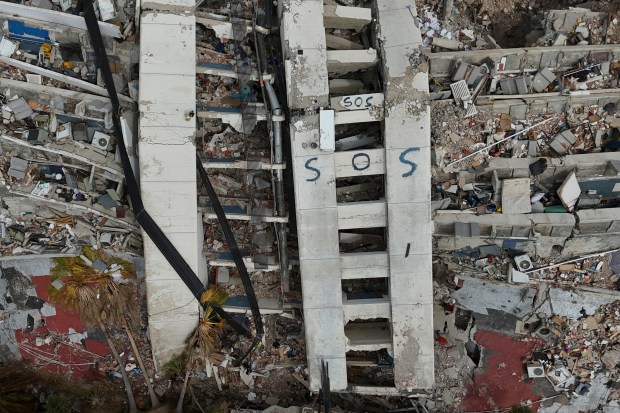
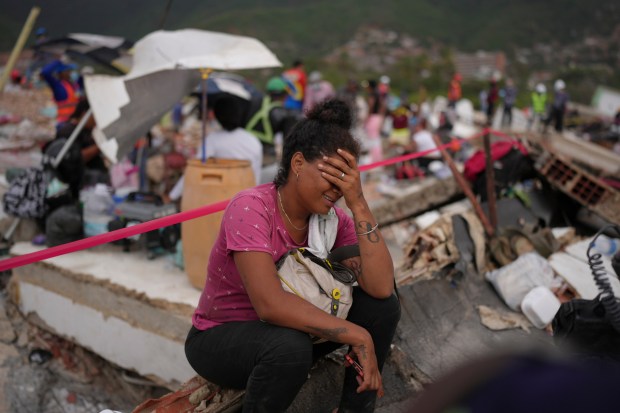
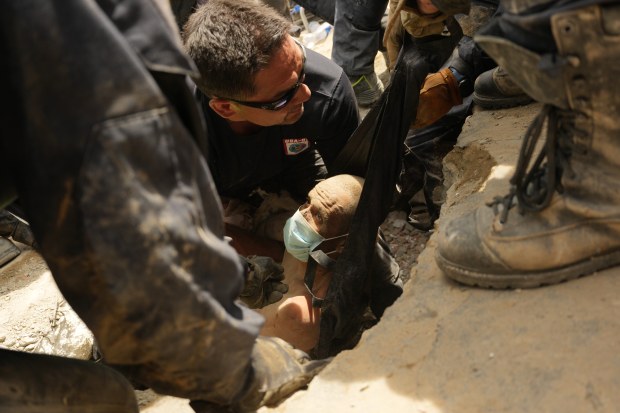
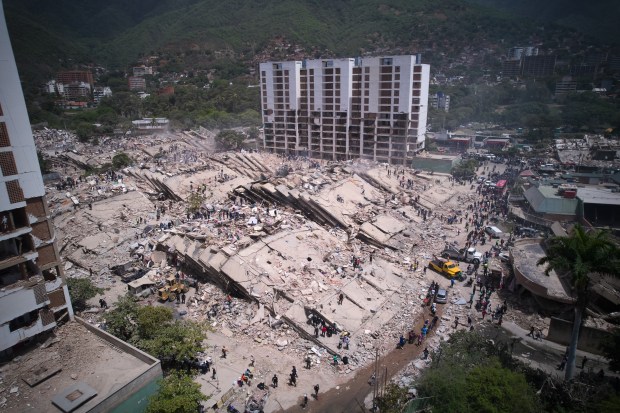
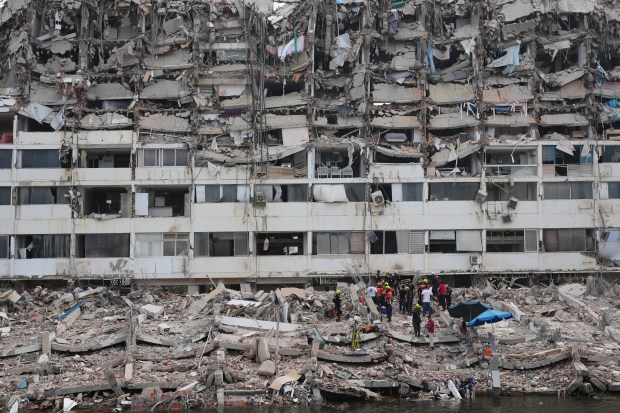
The earthquakes struck Venezuela’s northern coast, with the epicenter near La Guaira, triggering widespread destruction across coastal communities. Homes collapsed, hospitals and roads sustained significant damage, and rescue crews continue searching through debris as families desperately look for missing loved ones. Venezuelan authorities said Wednesday that at least 2,295 people were killed in the back-to-back magnitude 7.2 and 7.5 earthquakes. Tens of thousands more remain missing.
The disaster struck a country already struggling through years of economic collapse, political instability and widespread poverty, leaving many communities with few resources to recover, said Luciano Pedota, executive director of the Illinois Venezuelan Alliance. The organization helps the growing Venezuelan community in the Chicago area by providing resources and bringing residents together during crises such as the earthquake.
Across Chicago, people mobilized.
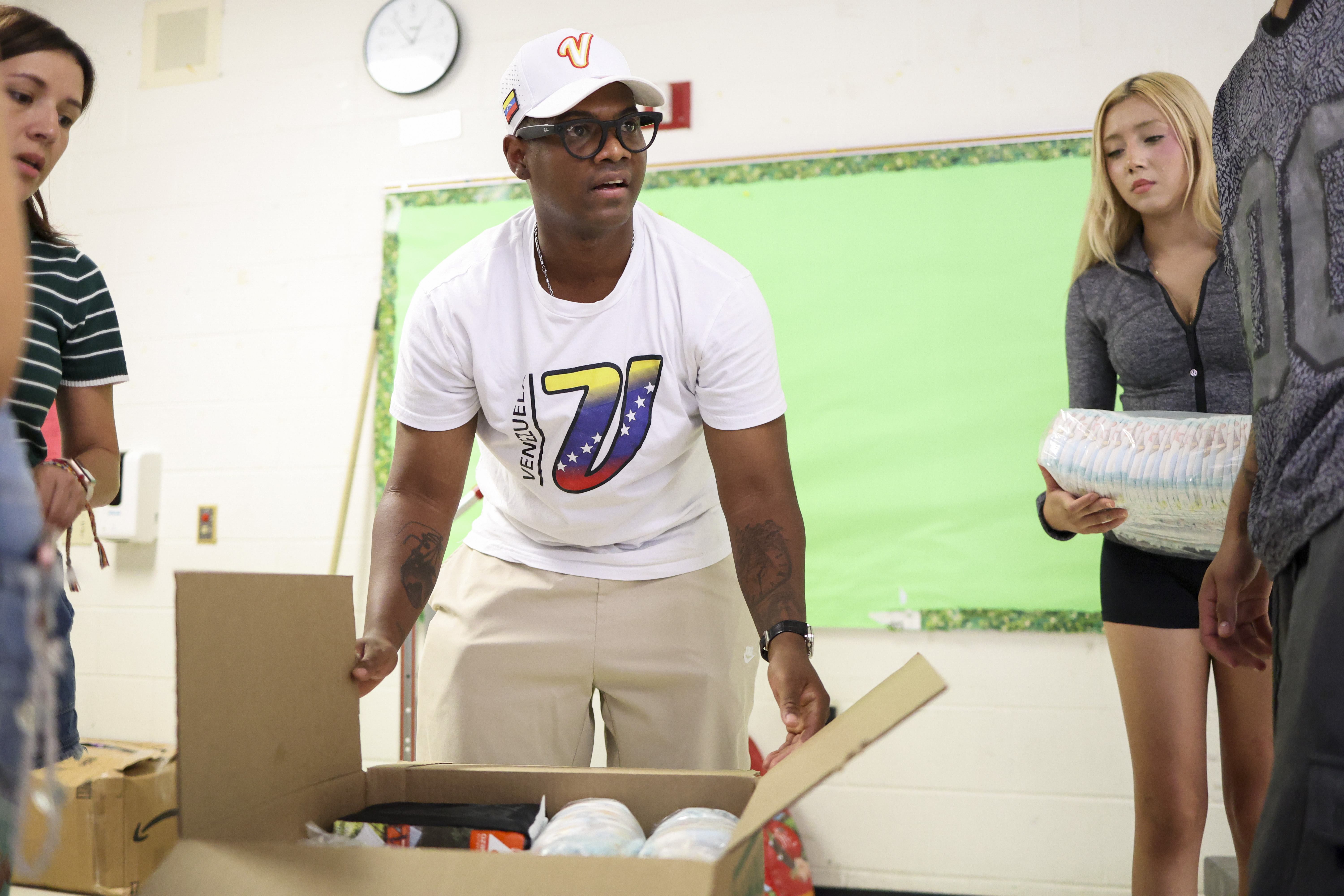
Dozens of Chicago community organizations, including the Illinois Venezuelan Alliance, established donation centers to collect food, hygiene products, medical supplies and financial contributions for survivors. Some donors gave $1. Others contributed as much as $2,000, Pedota said.
Together, volunteers have collected nearly 50,000 donated items and over $15,000 to help families rebuild. Much of the money will help transport donations to Venezuela, while the remainder will help families cover immediate expenses, including funeral and cremation costs, Rubio said.
“Some families simply need money to bury or cremate their loved ones,” she said.
Among the volunteers is Santiago Hernández, another native of La Guaira. He recently lost his mother in the earthquake.
Overwhelmed by grief and often unable to speak, Hernández has spent his days loading donated supplies into moving trucks bound for Miami, where the aid will be flown to Venezuela.
“He just keeps working,” Rubio said. “It’s his way of coping with the pain.”
Chicago’s Venezuelan population has grown dramatically in recent years following the arrival of tens of thousands of Venezuelan migrants seeking asylum during President Joe Biden’s administration. Many now face an uncertain future as President Donald Trump pursues an aggressive immigration enforcement campaign, leaving families fearful of detention or deportation.
Yet community leaders say the tragedy has reminded them that, despite the distance and uncertainty, their connection to Venezuela remains unbreakable.
“Their spirit remains strong,” Pedota said. “Even from far away, they care deeply about their country and their people.”
The response has extended well beyond the Venezuelan community.
Alliance leaders say support from Chicago residents has been overwhelming, particularly from the city’s Mexican community and other immigrant groups, who have donated supplies, volunteered their time and contributed financially.
“The support has been unprecedented,” Pedota said. “Many of the people helping are Venezuelan migrants who themselves are living paycheck to paycheck.”
For many recent arrivals, the hardest part is knowing there is little else they can do.
“Some wish they could go help dig out their people, clean up and hug their loved ones,” Pedota said. “But they can’t.”
So they do what they can from Chicago: fill another box, tape it shut and hope it reaches home.

Last Sunday, members of the Venezuelan community and their supporters gathered at St. Mary of the Lake Church for a special Spanish-language Mass dedicated to the victims and survivors of the earthquake.
The service, led by the Rev. Sergio Rivas, offered prayers for those who lost loved ones, those who were injured or displaced, and for the country’s recovery and reconstruction.
The Archdiocese of Chicago said in announcing the Mass that it sought sought “God’s comfort” for those affected and strength for Venezuela’s physical and spiritual rebuilding.
After a 19-hour journey to reach the affected area, a team of seven trained Salvation Army volunteers set up a base at a church in Caracas and began distributing relief supplies to survivors and rescue workers, according to Brian Duewel, senior director of communications for the Salvation Army.
The team also set up tarpaulins to provide temporary shelter for people whose homes had been destroyed or made unsafe.
“Many people are currently sleeping outdoors in streets, parks and other open spaces due to safety concerns and damage to their homes,” said Ricardo Gomez, community director for the Salvation Army’s Latin America North Territory.
Other challenges include heavy rain over the weekend, ongoing tremors, additional building collapses and understandable fear among affected communities.
“The situation is truly heartbreaking. We are in the middle of a real catastrophe, but we know our work will bring hope and relief to many people in need. That, together with God’s strength, gives us the energy to go the extra mile despite so much devastation,” said Edicson Sánchez, who is leading Salvation Army operations in Venezuela.
For Pedota, the outpouring of support has reflected the resilience of a community that has endured years of upheaval.
He recalled a Venezuelan woman who recently called with an offer to rent a Home Depot truck after the alliance struggled to find one to transport donations.
“When I told her we would reimburse her, she said, ‘No, that will be my donation,’” Pedota said.
He said that spirit has defined the response.
“The Venezuelan community in Chicago has reacted very generously,” he said. “People want to be there for Venezuela and for the Venezuelans who are suffering. They truly want to give everything they can.”
The alliance has received so many donations that volunteers are struggling to find enough space to store them. Supplies have filled hallways at a local school serving as a collection site, forcing organizers to constantly move boxes to keep the space usable.
“We’re people who have been hit from every direction,” Pedota said. “But Venezuelans have a fighting spirit. It’s in our DNA. We keep moving forward.”
For Corro, Hernandez and thousands of other Venezuelans in Chicago, that means continuing to do what distance will allow.