
Griffith residents who need help with storm-related damage will need to make sure they’ve contacted the state for documentation purposes, but it’s going to take at least 90 days before anyone sees any monetary relief.
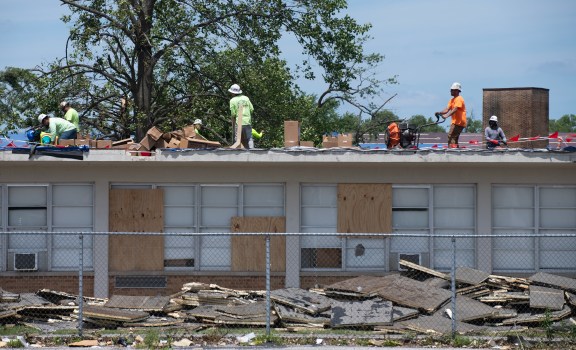
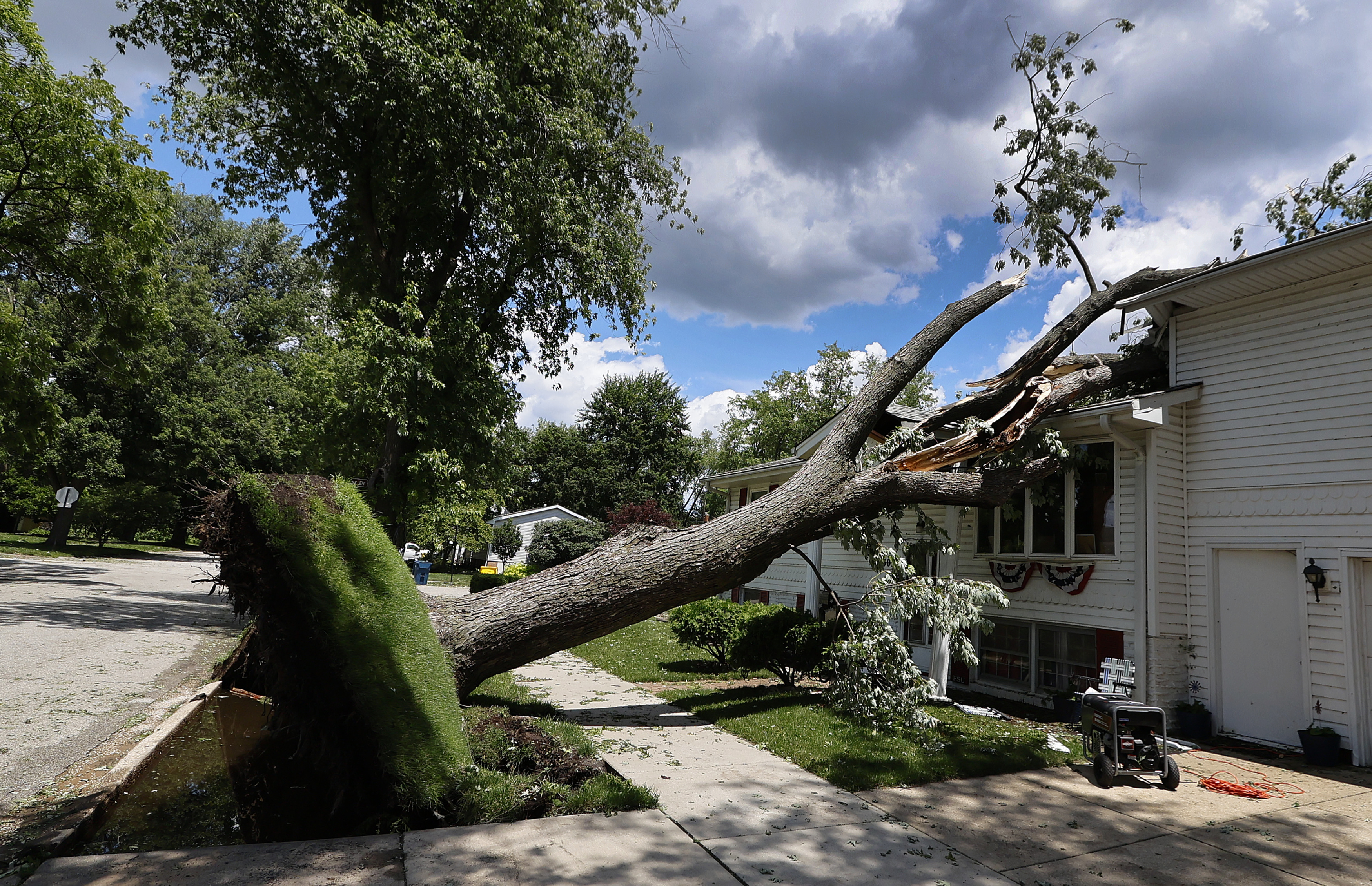
The town on Wednesday during a special meeting passed a local disaster declaration for the brief but devastating June 24 storm that took out more than 300 trees, 70 utility poles, myriad power lines and left at least 6,000 residents without power for days.

The declaration will remain in effect until July 8 and allows the town and its administrators “to take all lawful and necessary actions to respond to, recover from, document and seek reimbursement or assistance from the emergency and related damages,” according to the passed resolution.
But after talking to the Indiana Director of Homeland Security Wednesday morning, Council President Rick Ryfa, R-3, said residents with damage need to contact the state directly.
“Part of the process at the state level will be to assess how much damage is in Griffith and whether or not we would qualify for any assistance,” Ryfa said. “Obviously, the more damage we have, the better chances for us to get reimbursement for our citizens.”
Residents who suffered damage can either call 211, text INOD 898211 to start a text chat, or log on to www.in211.org to fill out a damage report, Ryfa said.
On the town’s end, Griffith Police Chief Al Tharp told the council that Lake County Homeland Security Deputy Director Paul Petrie began working with Griffith officials June 26 to start the initial damage assessment and was supposed to have filed it this week. The town will also need to track all cleanup efforts to get reimbursed.
“The biggest issue is, everything that you guys are doing needs to be tracked, so track every minute that people are out there, overtime hours, equipment that you used, (the woodchippers and staff St. John loaned to the town), have them track that because the closer we get to the threshold, the better off we’re going to be,” Petrie told the council. “But that’s just for public assistance; for individual assistance, it’s more the impact statement.”
Ryfa further explained that he doesn’t think there’ll be a limit on individual damage, but a threshold yet to be determined by the state that the entire town will have to meet.
“When I talked to the director of Homeland Security this morning, he just said get everything in there we can for the residents,” Ryfa said.
Elizabeth Woods, deputy Chief of Staff for the Indiana Department of Homeland Security, told the Post-Tribune in an email that Gov. Mike Braun signed the State Emergency Disaster Declaration on June 18 “for flooding, severe weather, tornadic activity and a derecho that occurred from June 9 through June 18 that impacted 63 counties, including Lake County,” and that authorizes residents in the affected counties to use the State Disaster Relief Fund for individual assistance.

Applicants in the impacted counties then have 90 days to apply for the State Disaster Relief Fund; Griffith will be included because the storm occurred within the 90 days.
“The Indiana Department of Homeland Security reviews applications on a rolling basis throughout the 90 days for eligibility. After the application period closes, the state will begin the process of delivering relief funds to qualified individuals,” Woods said.
“IDHS continues to evaluate and explore all opportunities for financial assistance for impacted homeowners, businesses and communities as recovery teams work with each county to determine preliminary damage assessments and costs associated with the severe weather events throughout June.”
Griffith Parks Director Rich Powell said the parks suffered a total of 38 downed trees, including 30 at the Girls’ Softball Field, three at Griffith Youth Baseball, two at Central Park, one on the trail, one in Woodland Park and one at the depot. Public Works Director Andy Raab added that high water combined with the town’s high water table has caused some streets to buckle.
“We’re making a lot of headway in the trees, but we’re probably realistically looking at probably two to three weeks before we’re finally going to be able to get everything cleaned up across town,” Raab said.
Michelle L. Quinn is a freelance reporter for the Post-Tribune.