
A City Hall fight set to redefine the tenant-landlord relationship is ramping up after a group of aldermen this week pitched a counterproposal to Mayor Brandon Johnson’s plan to vastly expand the rights of Chicago renters.
The Johnson-opposed group argued their new ordinance, introduced to the City Council Wednesday, will give renters needed protections without driving up rent costs. Johnson’s version is too harsh on landlords, but theirs is a compromise, they argued.
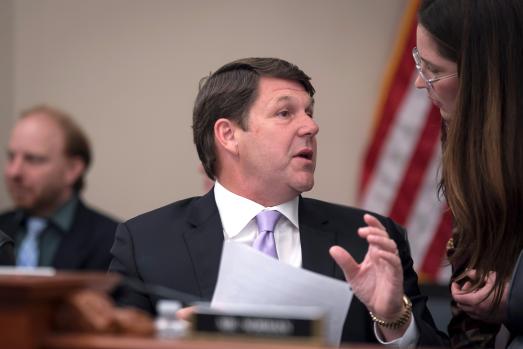
Ald. Gilbert Villegas blasted the Protecting Renters Ordinance reported by the Tribune in late May as “a rent increase” while speaking with reporters Wednesday about the alternate version he is steering.
“This is our opportunity to put forward something that’s going to force compromise, because we see that we need to grow the economy,” Villegas said, adding the goal is “to protect renters, truly protect renters, and not stick them with a rent increase.”
Villegas, 36th, likened the package to the city budget the same group of aldermen passed against Johnson’s wishes last fall. That budget was “98.4%” the same as the mayor’s, but included key changes, he said.
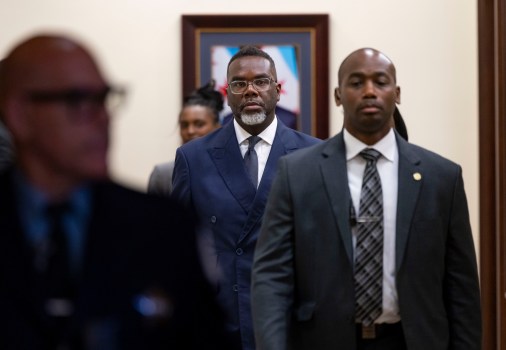
Moments later, Johnson himself used the same number as he told reporters at a City Hall news conference that the aldermen “took 98%” of his proposal.
“Even corporatists, in the interest of corporations, even they have capitulated to what I have been calling for for a very long time, and that’s affordability,” he said.
But even as he celebrated the aldermanic effort to expand renters’ rights sparked by his own legislation, he argued their idea “comes dramatically short of what’s needed at this moment.”
It was a clear sign that, while negotiations over rental policy reform may now begin in earnest, Johnson will oppose the aldermen’s policy.
“I am going to protect renters by any means necessary,” he said. “It’s not just about doing something. That’s been the regular practice in government, we just do something and get it out of the way. Don’t treat the people of Chicago like a side chick. Don’t do that.”
Johnson’s proposal includes a slew of new programs and regulations that would broadly restructure renting in Chicago. It would ban “junk fees” issued by landlords, create a new “Tenants Bill of Rights” and fund legal representation for tenants facing eviction.
It would also create a citywide rental registry that would require the disclosure of major building owners, many of whom remain hidden now through legal shell groups, and a new Bureau of Rental Housing Services tasked with enforcing tenants’ rights.
And it would create “just cause” protections requiring landlords to provide a valid reason if they seek to evict or even not renew a lease — and require them to pay as much as $5,000 or five months’ rent to help tenants move if they don’t.
The aldermanic counterproposal, dubbed the Fair and Accountable Illinois Rental Ordinance by backers, includes protections against ill-intentioned landlords amid illegal lockouts, retaliation for rule enforcement, unsafe living conditions and security deposit abuse.
It would rely on pre-existing state law requiring fee transparency, with added disclosure requirements, but not go as far in limiting and even outlawing various fees as Johnson’s proposal.
Aldermen highlighted the distinctions made between large and small landlords in the proposal and the fact that it would, like Johnson’s policy, create a rental registry in the city. Instead of Johnson’s plan for a new department to enforce renters’ rights, the aldermen want to keep the Department of Housing in charge.
They also pitched new incentives aimed at expanding the city’s housing supply by encouraging building owners to turn non-residential units into homes and bring unused homes back to service while blocking “deliberate warehousing.”
Ald. Brendan Reilly, 42nd, told reporters the measure strikes a balance between promoting growth and adding regulation without “costly mandates.”
“The big difference is our fair ordinance is not imposing mandates on developers and would-be affordable housing unit providers,” he said. “I think everyone, all 50 aldermen, agree affordability is nearing a crisis level here, and so we need to get something done. And I think somewhere in between, we might be able to actually have an ordinance here, hopefully in the fall.”
Landlord-aligned groups quickly praised the legislation. Michael Glasser, president of the Neighborhood Building Owners Alliance, said in a statement Thursday that he is reviewing it.
“We welcome the opportunity the FAIR Ordinance presents to build toward genuinely healthy neighborhood housing — with the kind of stability tenants can count on only when housing providers have it too,” Glasser said.
But at the same time, renter advocacy groups were already gearing up to fight the more landlord-friendly ordinance.
The aldermen are engaging in an “electoral calculation” to avoid backlash for opposing Johnson’s plan in a renter-majority city in which all 50 council seats will be on the ballot early next year, argued Chicago Housing Initiative Executive Director Don Washington.
Washington, who worked with a group of housing advocates to help craft Johnson’s ordinance, credited the aldermen for acknowledging that renters need more rights. But he said it “doesn’t get at the heart of the matter” and is instead “a bad smokescreen.”
“I just don’t see how it changes anything,” he said. “It’s sort of like, we acknowledge there’s something wrong, we’re going to give a head fake to what’s wrong, but really we’re just fighting with the mayor about running for re-election.”
Washington further criticized it for not enumerating renters’ rights as clearly as Johnson’s pitch and for not funding added enforcement to keep unscrupulous landlords in check. Johnson’s proposal would use registry fees to fund added enforcement. The aldermanic proposal is no better than the city’s current “Rude Goldberg” system of renters’ rights, he said.
Jung Yoon, Johnson’s policy chief, echoed the criticism Thursday morning that the counterproposal would not fund greater enforcement, calling it “an unfunded mandate” for an already-understaffed Housing Department.
She argued the aldermen’s plan to use state law to regulate fees would mean the ordinance ultimately did nothing to address affordability. And compared to Johnson’s ordinance, it would allow major corporations with sprawling housing collections to go undetected and leave small landlords without a bolstered city support office, she said.
Yoon also argued the notice periods required for landlords raising rent or not renewing tenancies in the aldermanic proposal lack an enforcement mechanism, making them ultimately ineffectual, and criticized the measure for removing requirements that landlords share a valid “just-cause” reason when not allowing tenants to continue renting.
But amid the many criticisms, she praised the incentives designed to spur housing creation and said she appreciated the acknowledgement “that we need to do more for renters.”
“We’re open to continue negotiation to find things we can both be excited about,” Yoon said.