





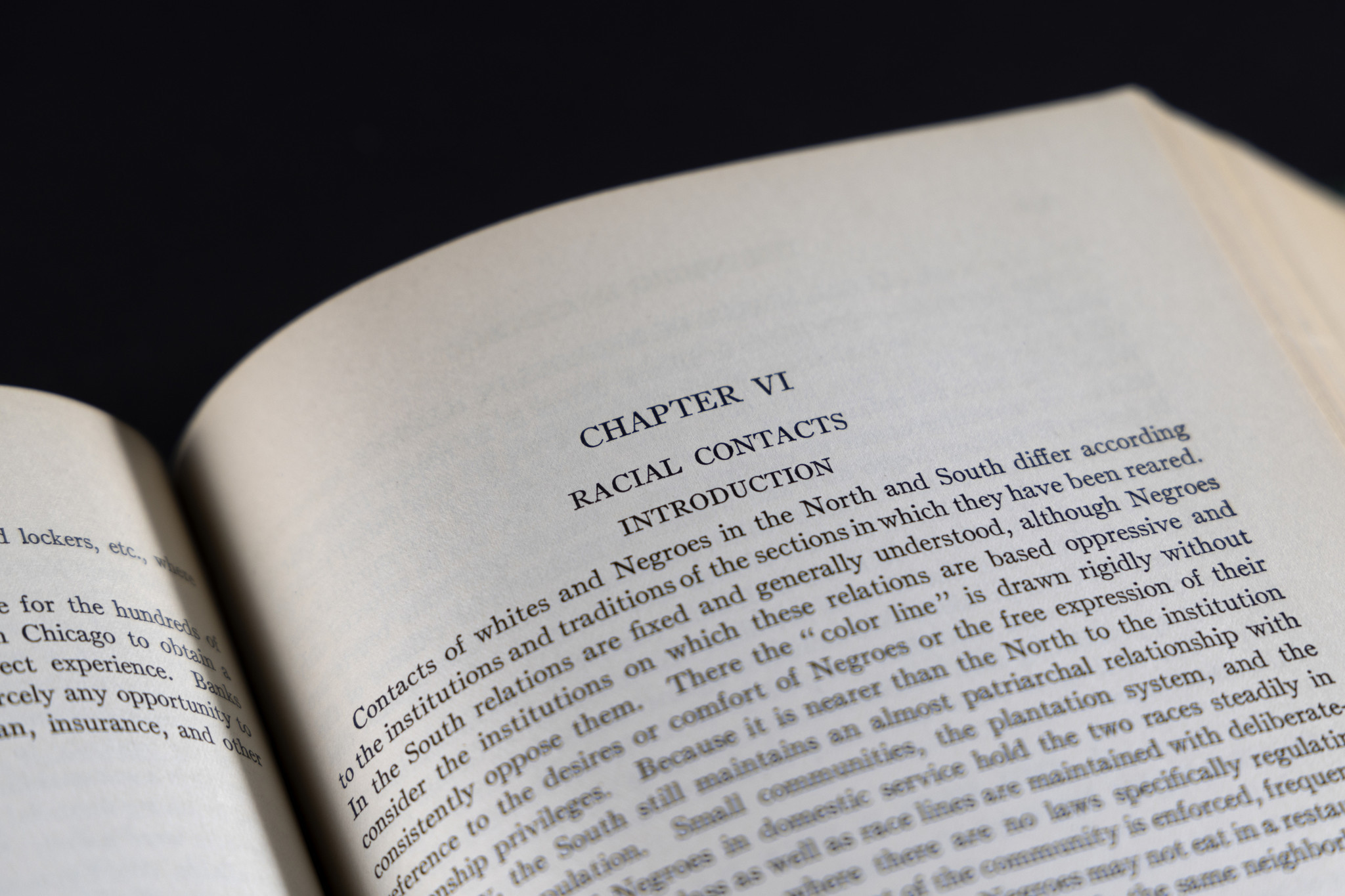
This month marks the centennial of “The Negro In Chicago,” a blue-ribbon commission’s report on a race riot that plunged the city into four days of deadly anarchy in 1919. A dozen civic leaders — half Black and half white — were tasked with finding the roots of the violence that took the lives of 38 people — 23 of them Black, 15 white.
Established by Illinois Gov. Frank Lowden, the Chicago Commission on Race Relations adopted a basic scientific principle: To get rid of an undesirable phenomenon, its causes must be identified and eliminated.
Sadly, some of the issues that led to the race riot are still being confronted today.
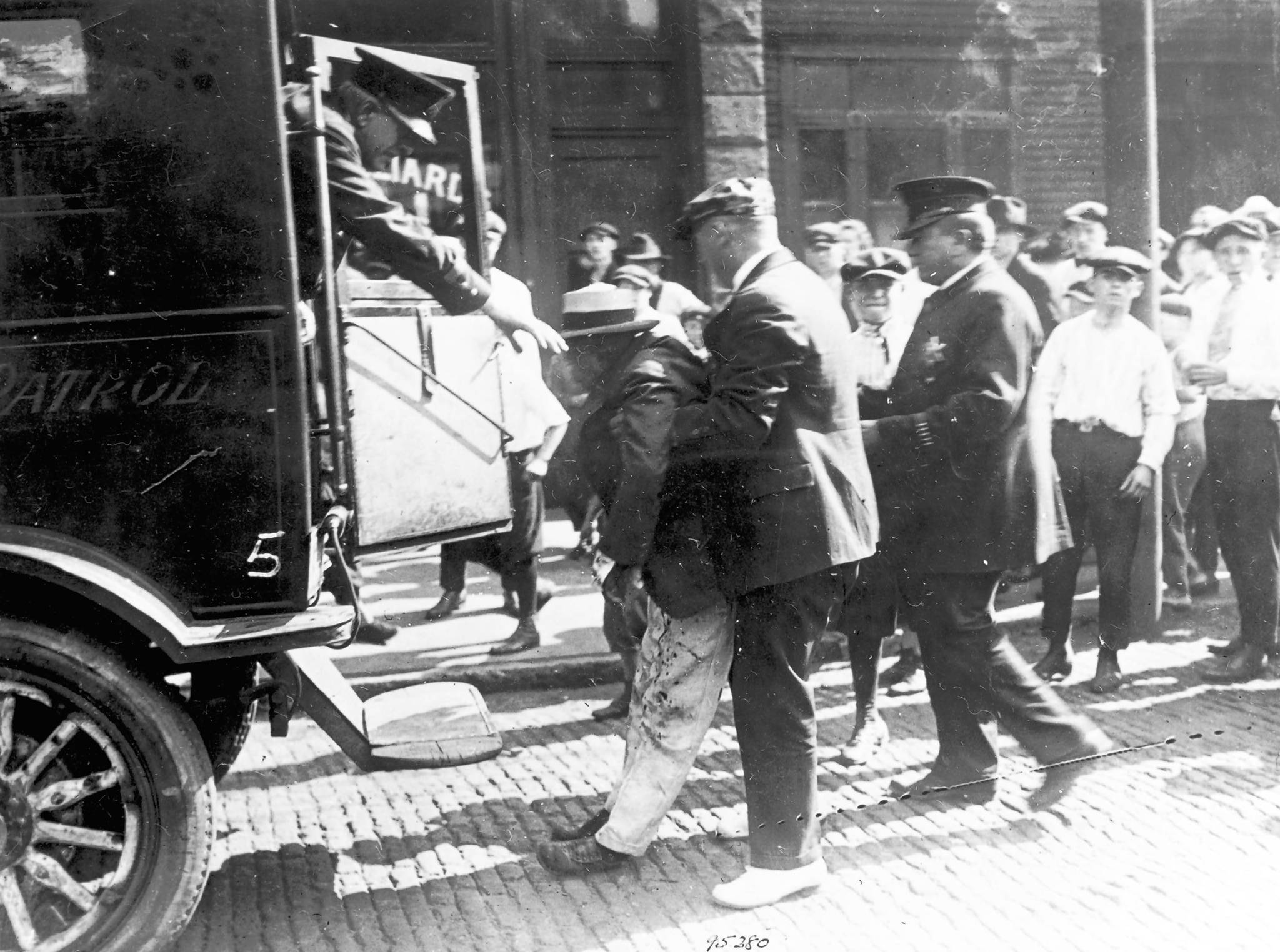
“Negro distrust of the police increased among the Negroes during the period of the riot,” the commission reported in 1922. “They shut their eyes to offenses committed by white men while they were very vigorous in getting all the colored men they could get.”
The Chicago Race Riot was triggered by the death of Eugene Williams, a 17-year-old African American, in the water off a South Side beach on Sunday, July 27, 1919. Williams drifted across a virtual line that racially divided the beach between whites and Blacks, and white bathers, including one identified only as Stauber, began throwing stones at him. Williams let go of a railroad tie he was hanging on to and went under.

“White and Negro men dived for the boy without result,” the commission reported. “Negroes demanded that the policeman present arrest Stauber. He refused and at this crucial moment arrested a Negro on a white man’s complaint. Negroes then attacked the officer. These two facts, the drowning and the refusal of the policeman to arrest Stabber, together marked the beginning of the riot.”
Rumors spread in concentric circles, first by word of mouth and then by sensationalized newspaper accounts. Even the highly regarded Chicago Daily News sacrificed facts for screaming headlines.
Its editor, Victor Lawson, would later become a member of the riot commission. But during the riot, his paper ran a white alderman’s description of a Black neighborhood under the headline: “Says Enough Ammunition Is Stored In Section To Last For Years Of Guerrilla Warfare.”
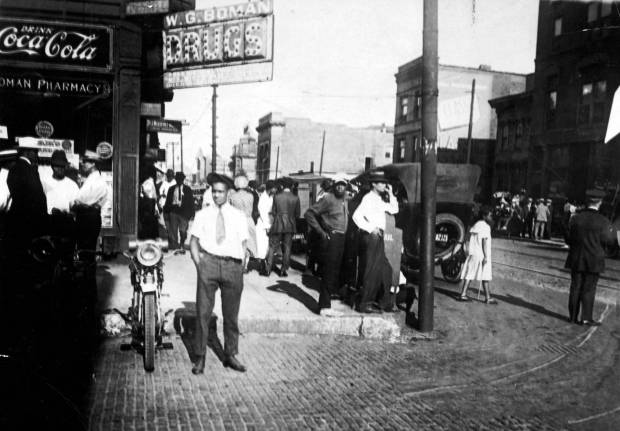
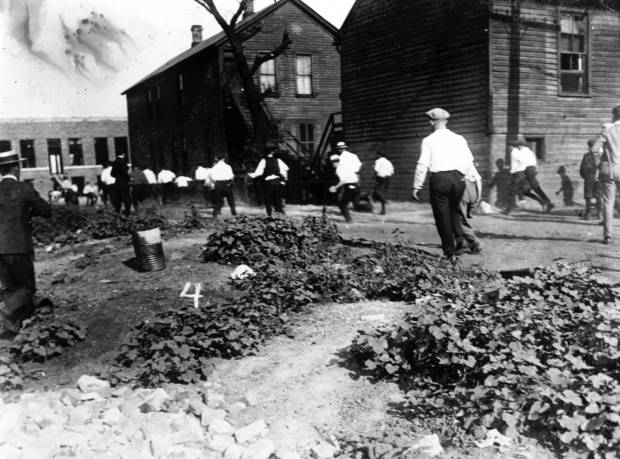
On Monday, more than 30 Blacks were attacked while traveling through white neighborhoods at the end of their workday. Among the deaths enumerated in the commission’s report were those of Henry Goodman, killed on a 39th Street streetcar halted by a truck blocking the tracks at Union Avenue, and John Mills, killed fleeing a 47th Street streetcar.

An aged Italian peddler and a white laundryman were stabbed to death by Blacks. By nightfall, white gangs were attacking Black families in white neighborhoods.
On Wednesday evening, Chicago’s Mayor William Thompson yielded to public pressure and called for help from militia units in local armories. With soldiers patrolling the streets the violence ended,
Lowden had already called for a commission to investigate the riot, one of a series of urban uprisings during the “Red Summer” of 1919, as it was dubbed because of the bloodshed. But Chicago was uniquely qualified as the city to study.
Sociology was long a speculative pursuit of armchair philosophers, but at the University of Chicago it had become a scientific discipline. Its professors gathered data and talked to people.
Charles Johnson, principal author of the Race Relations Commission’s report, was trained at the University of Chicago. He had conducted research on Black migrants from the South for the Carnegie Foundation and been the Chicago Urban League’s director of research.

After reviewing the 11 months of painstaking investigations conducted by Johnson and his associates, the commission concluded that America’s racial problem could be summed up in a simple statement:
“Many white Americans, while technically recognizing Negroes as citizens, cannot bring themselves to feel that they should participate in government as freely as other citizens.”
In support of that conclusion, the commission printed excerpts from interviews with white Chicagoans. Strikingly, even those who seemed most open-minded could turn on a dime to endorsing segregation.
“Theoretically, in this country all are entitled to justice,” said one man who acknowledged that “I know very few Negroes.”
However, he went on, “I do not find myself ready to place the Negro on an equal basis with the white in every respect, that is, socially and otherwise. I do not regard the failure to so place the Negroes as injustice to them.”
“My opinion is that we must cling to the ideal of Lincoln — the right of every human being to equality in the real sense of the term. I have found, however, that Negroes are dull and sensitive,” said a man who had met the prominent Black educator Booker T. Washington. “As a solution I would colonize them in Africa, and if they objected I would use all peaceable means to force them to go.”
Chicago’s Black population had more than doubled between 1910 and 1920 as word spread that better paying industrial jobs were to be found in the North. Blacks interviewed weren’t as willing to defer to the prejudices of whites as their forebears had been in the South, where segregation was enforced by law and lynching.
World War I had just ended, and Black veterans were disinclined to passively accept that Jim Crow had followed them. The French called them heroes, even if the U.S. Army hadn’t.
“I went to war, served eight months in France,” one Black veteran told a commission interviewer. “I done my part and I’m going to fight right here till Uncle Sam does his. I can shoot as good as the next one, and nobody better start anything.”
The racial perspectives of Blacks and whites collided in “adjusted neighborhoods” and “non adjusted neighborhoods,” as the commission labeled them.
Adjusted neighborhoods were overwhelmingly of a single race. Despite the starkly drawn racial lines of the city’s neighborhoods, there was some crossover, and one white resident spoke well of his neighbors in a Black community.

“Having lived on the South Side in what is now known as the “Black Belt” for 40 years, I can testify that I have never had more honest, quiet and law-abiding neighbors than those who are of the African race,” the man told the commission.
But it was dangerous for Blacks to pass through most white neighborhoods, as the principal of a school just west of Wentworth Avenue explained.
“Wentworth Avenue is the gang line,” he said “While colored pupils who come to the school for manual training are not troubled in the school, they have to be escorted over the line, not because of trouble from members of the school, but groups of boys outside the school.”
Homebuyers in many neighborhoods were prohibited from selling to Black buyers. Only in 1940 did the Supreme Court rule that Carl Hansberry couldn’t be bound by a neighborhood’s “restrictive covenant” he hadn’t signed. His daughter, Lorraine Hansberry, wrote the play “Raisin In The Sun,” about a Black family’s struggles in a segregated Chicago.
That legacy has yet to be entirely eradicated, but there has been progress.
In 2008, Barack Obama lived at 5046 S. Greenwood Ave. in Kenwood where, had it not been for the battles fought by Hansberry and others, he would have been barred under the Chicago Real Estate Board’s restrictive covenant which decreed “That no part of said premises shall in any manner be used or occupied directly or indirectly by any negro or negroes.”
There were exceptions — “negro janitors, chauffeurs or house servants.”
Obama would not have qualified under those terms. He’d just been elected president of the United States.
Sign up to receive the Vintage Chicago Tribune newsletter at chicagotribune.com/newsletters for more photos and stories from the Tribune’s archives.
Have an idea for Vintage Chicago Tribune? Share it with Ron Grossman and Marianne Mather at rgrossman@chicagotribune.com and mmather@chicagotribune.com.