

Our city is at a pivotal crossroad. We are losing people and businesses as problems with crime, schools and underinvestment in communities mount. We are losing institutional knowledge from the executive branch as well as the legislative branch. The city needs leadership — someone who can bring us together. Someone who can build a team and put our city on a path to global greatness.
The city cannot take four more years of fighting and dissension while moving backward, or a mayor learning the office while leading it. We need someone with proven leadership skills and the ability to bring us together.
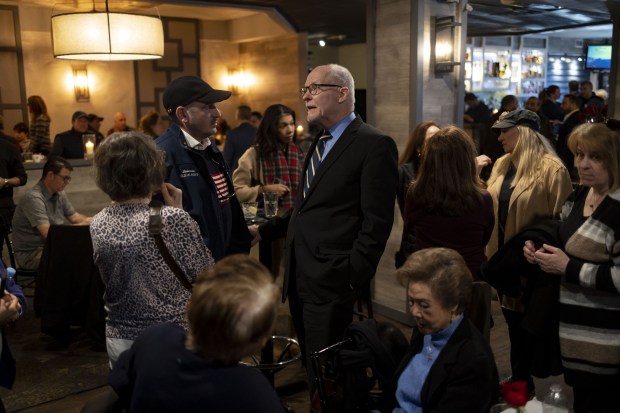
That is why I am supporting Paul Vallas for mayor of Chicago.
I did not come to this decision lightly. After much deliberation and several discussions with both candidates, I believe that Paul is the best candidate to significantly move our city forward. Paul has the strongest plans to make our neighborhoods safe, secure jobs and community investment, shore up minority participation and bring trades back to schools.
As a leader of one of the most diverse communities in our city, it is clear to me that we need a mayor who will focus on collaboration. Paul has demonstrated a willingness to soundboard ideas and shift his approach with the counsel of those who have the best interests of our city’s most vulnerable people at heart. .
It is important that the next mayor represent the entire city, build our neighborhoods and downtown, prepare our kids for college and the trades, and uplift our police and hold them accountable. And that he advocate for safety and justice. While I do not always agree with Paul, when I think about the strong tenets of our campaign, I think that Paul will more readily carry them out.
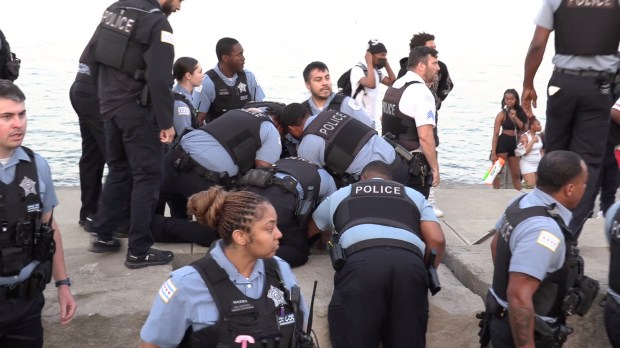
The No. 1 issue facing Chicago is public safety. Although crime has touched all of our communities, the harsh reality is that Black and brown communities are some of the least safe, and, I would argue counterintuitively, some of the most under-policed. Statistics and lawsuits show that police are not in the neighborhoods that need them the most, and that there is even more disparity in response times between these communities and their white counterparts. In addition, solving crime in these same communities is even less likely — emboldening criminals even further.
We have to take a comprehensive approach that includes not only our police but also a real commitment to violence intervention, alternative responses to 911 and significant youth engagement. That means using the police officers we have more effectively and equitably so that police can serve as a deterrent to crime. That also means filling the ranks with police who look more like the diversity that our city celebrates.
Paul is not only committed to more equitably distributing police, but he’s also willing to adopt our plan for a workweek of four days on and three days off so that we can have more police in all of our communities and give police the predictability and rest that they deserve. Paul also shares my commitment to uplifting our officers and holding them accountable. And thus, he is equally committed to funding, implementing and enforcing the consent decree.
I am also excited that Paul will adopt our violence intervention plan, which will put hundreds of millions of dollars per year into gun violence prevention and give individuals at highest risk for gun violence an incentive to come into the formal economy.
The gun violence prevention efforts would scale up existing programs and introduce a model that focuses on balancing the need for individual accountability with financial and other incentives for help. There would be a community approach, including clergy, police, clinicians and other stakeholders to provide wraparound services to the individual and family. This would come with a responsibility for trauma-informed care and job training that will lead to jobs and self-sustainability.
If we effectively allocate violence intervention resources now, along with investments in Black and brown communities, and increase student engagement, especially after school, we should not be back here in 20 years.
There is precedent for this type of investment. We did it in the early 20th century when white immigrants were struggling and killing each other. Our social response to crime in white working-class immigrant communities was massive investment, the New Deal, housing, workers rights, economic security, Social Security, home security and police reform.
That’s why I am elated that Paul wants investment on the South and West sides to be his legacy. I will hold him to that and his commitment to significantly increase minority participation in city contracts especially for African Americans, which is down under the current administration.
As a former teacher and educator, I commend Paul’s commitment to making sure that we have strong neighborhood schools, uplifting and incentivizing teachers, and strong Chicago Public Schools leadership, working with a future elected school board and student engagement. In addition, I appreciate him talking to the trades and tech businesses about bringing apprenticeship programs and jobs of the future back to the schools.
While I am committed to helping our city and the next mayor no matter who wins, I am wholeheartedly supporting Paul Vallas.
Ald. Sophia King represents Chicago’s 4th Ward and is chair of the City Council’s Progressive Caucus.
Submit a letter, of no more than 400 words, to the editor here or email letters@chicagotribune.com.