47 years later, the crash site near O’Hare International Airport is slated to become of part of a tollway. The families of the 273 people killed are pushing for a memorial marker there.
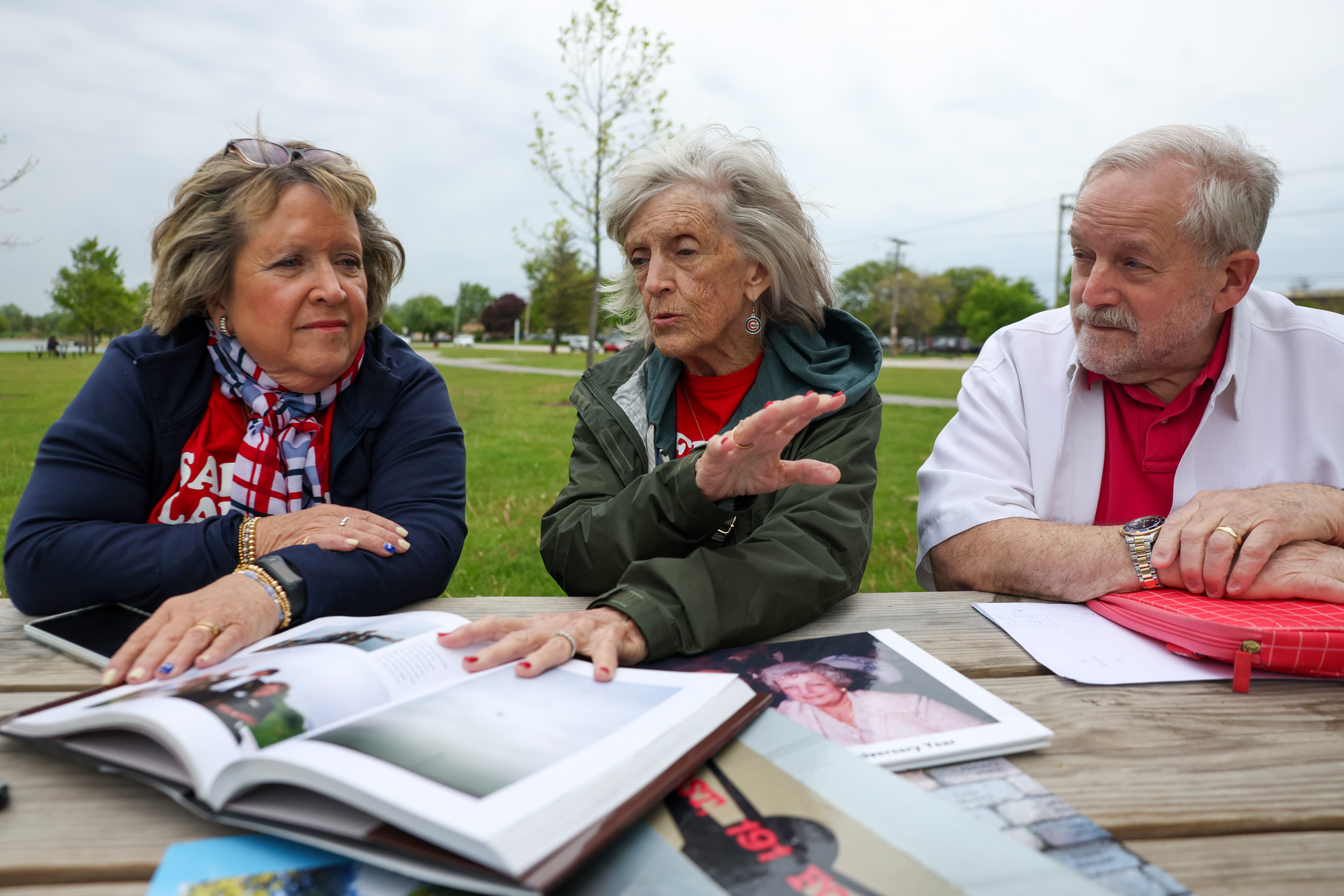
The children of Bill and Corrine Borchers, both of whom died in the crash of American Airlines Flight 191, from left, Kim Jockl, Melody Smith and Jim Borchers, speak on May 12, 2026, in Des Plaines about their journey following their parents’ death. A total of 273 people as a result of the plane crash. (Stacey Wescott/Chicago Tribune)
Twenty-five years after American Airlines Flight 191 crashed in an open field near O’Hare International Airport, a daughter of two of the dead brought rose petals to the land where the plane went down.
For more than two decades, Kim Borchers Jockl hadn’t known where, precisely, the plane had crashed. Her parents, Bill and Corrinne Borchers, were two of the 273 people who died in the disaster on May 25, 1979.
For years, Jockl remembered, she hadn’t really wanted to look, even though she often drove nearby. “It was like a bad story,” she said.
Today, the site is slated to become part of the new Interstate 490 tollway, a new chapter that brings its own emotional disquiet for some family members of crash victims. But in the early 2000s it was just a field.
Jockl and her older siblings, Melody Smith and Jim Borchers, went searching for it as the 25th anniversary of the crash approached.
Corrinne and Bill Borchers died on American Airlines Flight 191. (Family photo)
Jockl had decided that something needed to be done to mark the lives of the victims. The first step was finding the place where it — the deadliest aviation disaster on U.S. soil, excluding the Sept. 11 terrorist attacks — happened.
With the help of the manager of a nearby mobile home park, Jockl and her siblings found the crash site just north of the airport.
For the anniversary of the crash in 2004, they visited the site with family members of some other crash victims whom they had tracked down. Together the group made a pilgrimage to the crash site.
Jockl had copied the obituaries of the dead from local newspapers and cut their names from the copies, which she’d run in brightcolors. The visitors sprinkled the slips of names in a rainbow on the field. They scooped up spoonfuls of dirt from the ground and placed the soil in baggies.
Years later, no one told the siblings about the plan to construct a tollway around the crash site, they told the Tribune. The land had been owned for decades by the Chicago Department of Aviation before it was sold to the Illinois State Toll Highway Authority as part of the I-490 project, according to the city agency. The massive construction endeavor is intended in part to facilitate better access to O’Hare, one of the busiest airports in the world.
“The Illinois Tollway has completed construction of a new, full-access I-90 Interchange and a portion of roadway for the new I-490 Tollway to the north of the crash impact site,” spokesperson Joelle McGinnis said in a statement.
As part of the new tollway, ramps connecting to Touhy Avenue will be built in the area of the crash site, with construction currently slated to start in 2028, she said.
Jockl’s sister, Melody Smith, said she heard about the plan on the radio while she was driving to the 40th anniversary memorial ceremony of the crash.
“We just always assumed — which you should never — that it would just be fenced forever. And there would be just kind of an overgrown field,” Jockl said, “of grave.”
“And you know what? And life goes on. And all of a sudden, they need more roads, and you need more highways.”
Jockl feels the ground is sacred. “People were identified by a fingerprint. People were identified by a finger. People were identified by maybe a tooth,” Jockl said. “They were incinerated.”
In its examination of the 1979 crash, the National Transportation Safety Board found American had taken a maintenance shortcut that deviated from the plane manufacturer’s recommendations. And the NTSB found the Federal Aviation Administration had failed to prevent those improper maintenance procedures. Ultimately, the crash helped spur aviation industry reforms that experts have said make it safer for the rest of us to board planes.
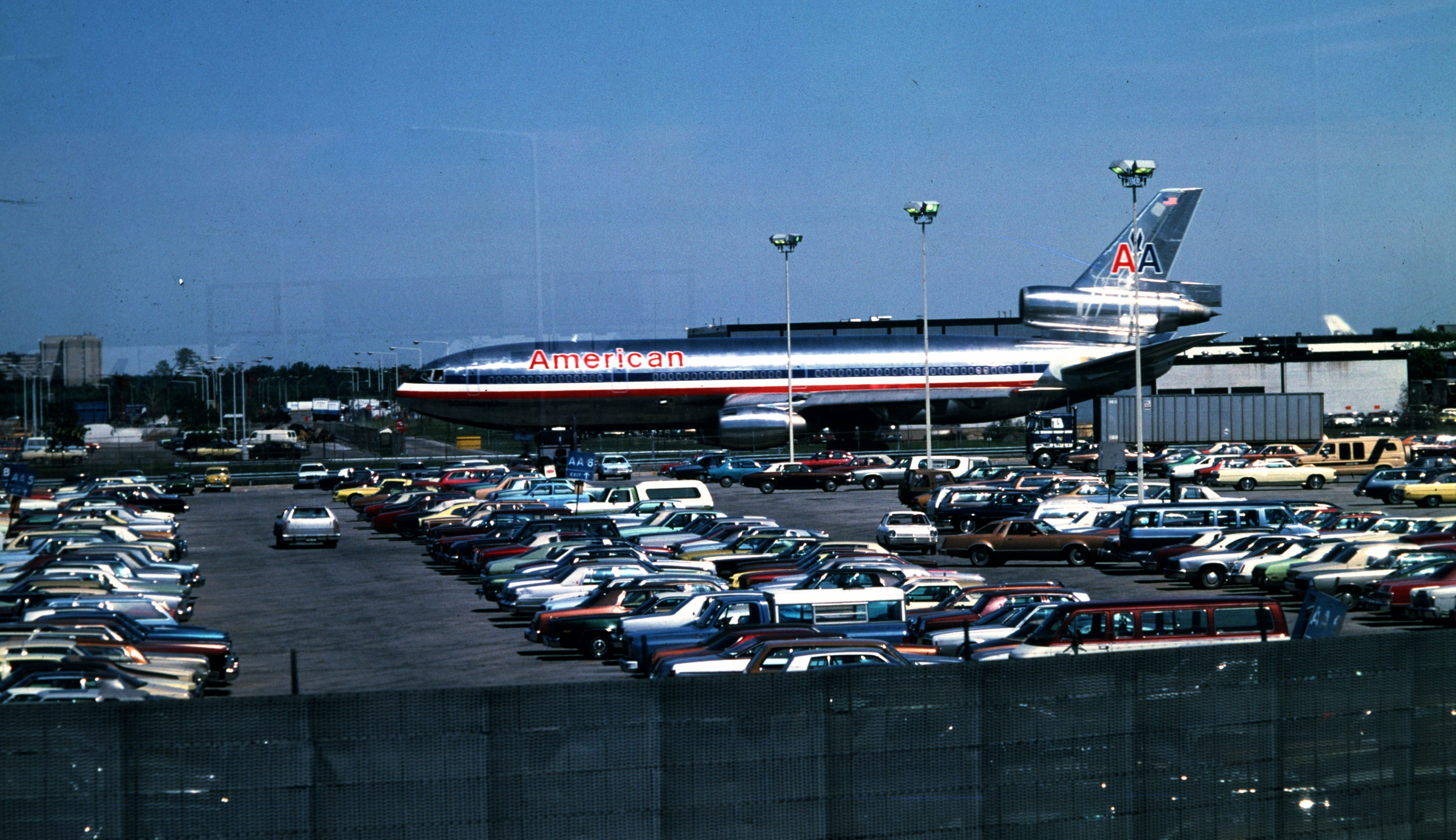
With 271 people aboard, American Airlines Flight 191 leaves O'Hare's terminal and rolls out to a runway – for its last flight on May 25, 1979. Minutes later, it crashed. All aboard perished. (Michael Laughlin/for the Chicago Tribune)
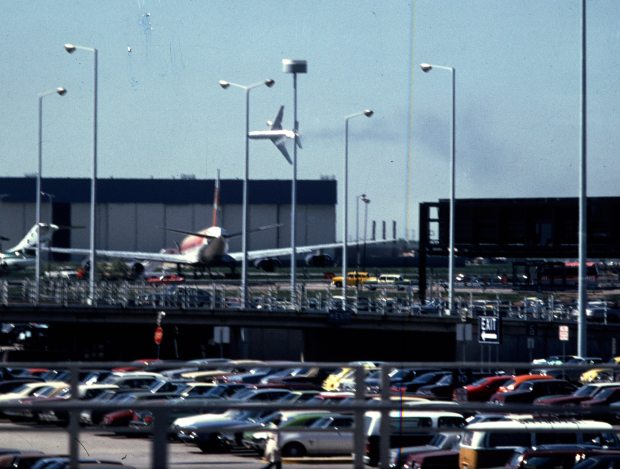
With its left engine missing, American Airlines Flight 191 goes into a severe roll, then crashes in a burst of flames less than a mile away from the runway in 1979. (Michael Laughlin/for the Chicago Tribune)
With its left engine missing, American Airlines Flight 191 goes into a steep roll, then crashes in a burst of flames less than a mile away from the runway in 1979. (Michael Laughlin/for the Chicago Tribune)
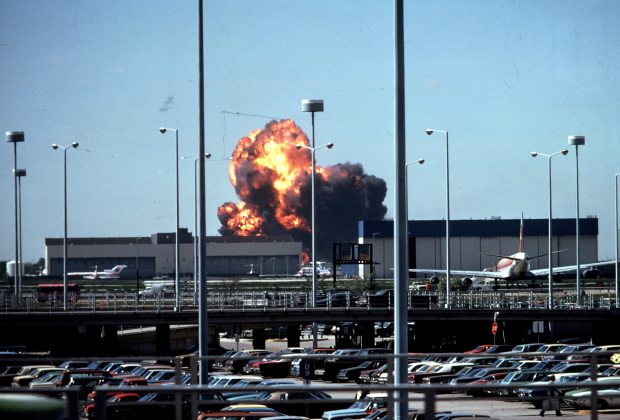
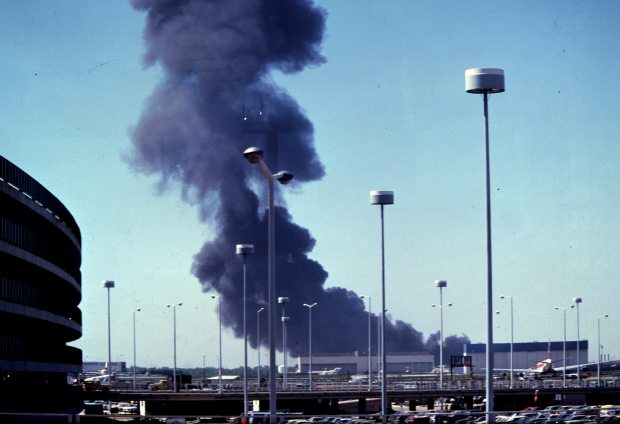
Smoke billows from the wreckage of Flight 191 after it crashed in a burst of flames less than a mile away from the runway at O'Hare in 1979. Elk Grove Village firefighters were at the scene of the crash in four minutes, but "it was total devastation," one firefighter recalled. (Michael Laughlin/for the Chicago Tribune)
Beneath the smoke lie fragments of American Airlines Flight 191 after it crashed and exploded on May 25, 1979, shortly after taking off from O'Hare International Airport. All aboard the jetliner and two on the ground were killed. (Quentin Dodt/Chicago Tribune)
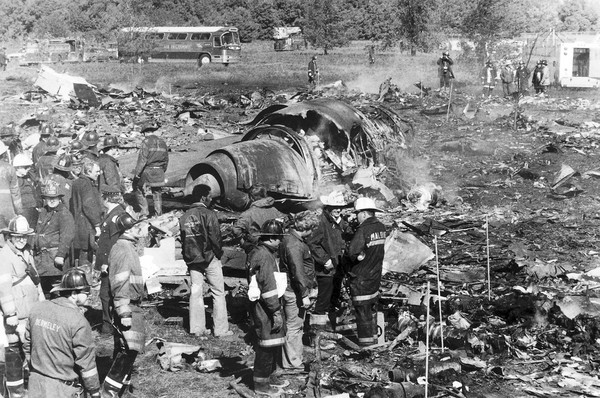
After the flames were doused, firefighters and rescue teams set out May 25, 1979, on the grim task to find the remains of victims amid still-smoldering debris from the wreckage of Flight 191. (Val Mazzenga/Chicago Tribune)
Firefighters examine wreckage near a mobile home park after the crash of Flight 191 near O'Hare International Airport on May 25, 1979. An old aircraft hangar was destroyed, along with a mobile home and several cars. (Bob Fila/Chicago Tribune)
Emergency workers walk through wreckage of American Airlines Flight 191 in a field near a mobile home park on Touhy Avenue west of Mount Prospect Road in Des Plaines on May 26, 1979. (Bob Fila/Chicago Tribune)
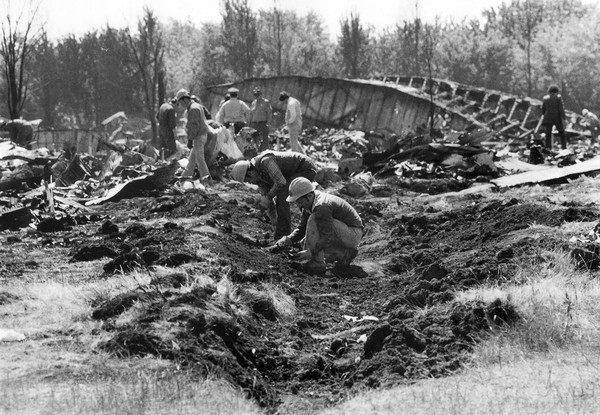
Workers clear debris at the site of the American Airlines Flight 191 crash at O'Hare International Airport on May 28, 1979. (Sally Good/Chicago Tribune)
After the flames were doused, firefighters and rescue teams set out to find victims' remains amid the smoldering debris from American Airlines Flight 191 on May 25, 1979. (Walter Kale/Chicago Tribune)
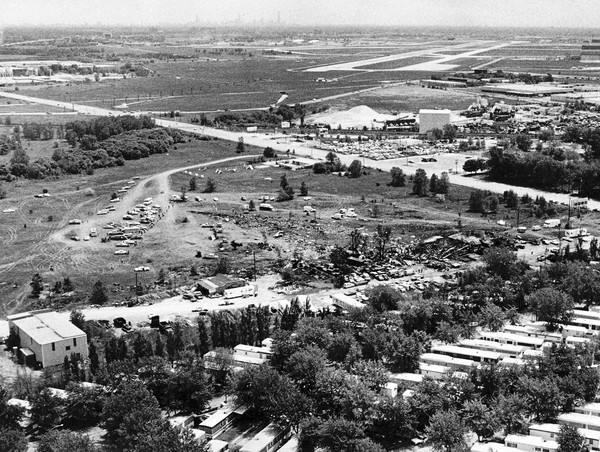
An aerial view shows the crash site of American Airlines Flight 191 after it took off from O'Hare International Airport, seen at top of photo, in May 1979. (Karen Engstrom/Chicago Tribune)
Emergency workers sift through debris from American Airlines Flight 191 on May 26, 1979. (John Bartley/Chicago Tribune)
A firefighter walks through the destruction at the crash site of Flight 191 on May 25, 1979, near O'Hare. A team of forensic dentists was called in to identify crash victims. (Jay Needleman/Chicago Tribune)
Flags mark the location of victims of the DC-10 crash near O'Hare International Airport as firefighters search for more bodies amid the jetliner's wreckage on May 25, 1979. (Jay Needleman/Chicago Tribune)
Pieces of the DC-10 are removed by workmen from the site of the American Airlines Flight 191 crash near O'Hare International Airport in May 1979. (Karen Engstrom/Chicago Tribune)
Human remains are marked with numbered flags for identification as emergency workers sift through debris from Flight 191, which crashed after takeoff from O'Hare on May 25, 1979. The intensity of the blaze made it hard to identify victims. (Bob Fila/Chicago Tribune)
Firefighters work to extinguish flames at the crash site of American Airlines Flight 191 near Touhy Avenue west of Mount Prospect Road on May 25, 1979. (Arthur Walker/Chicago Tribune)
An aerial view shows the crash site of American Airlines Flight 191 near O'Hare International Airport on May 25, 1979. (Luigi Mendicino/Chicago Tribune)
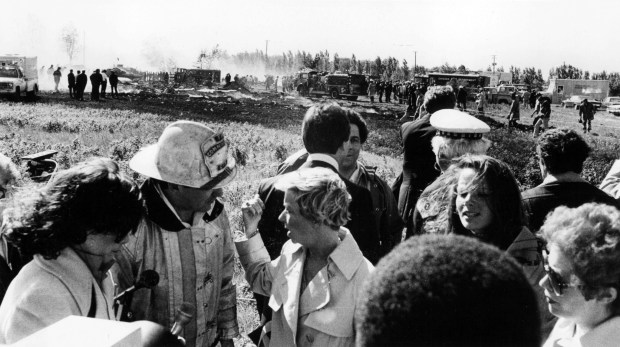
Chicago's Mayor Jane Byrne, center, visits the crash site of American Airlines Flight 191 on May 25, 1979. (Arthur Walker/Chicago Tribune)
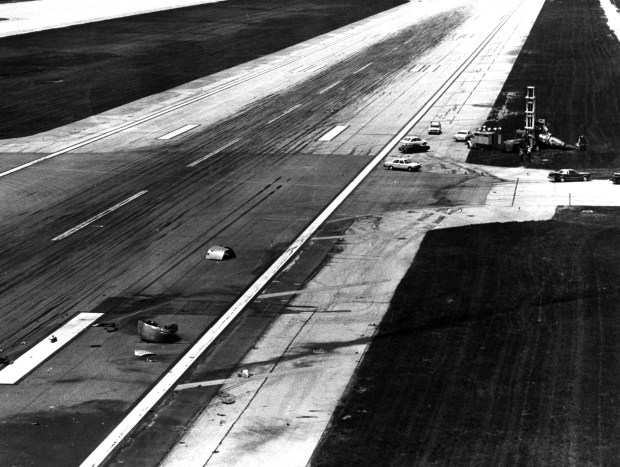
A DC-10 engine is seen just east of runway 32R where it came to rest after falling from American Airlines Flight 191 during takeoff. Investigators examine the engine on May 26, 1979. (Karen Engstrom/Chicago Tribune)
American Airlines Flight 191, a McDonnell Douglas DC-10, was carrying 60 tons of fuel when it crashed and exploded, sending pieces of the aircraft in all directions. A landing gear assembly was one of the few things left intact on May 25, 1979. (Art Walker/Chicago Tribune)
A police officer keeps vigil beside a vehicle holding body bags at the American Airlines Flight 191 crash site on May 25, 1979. (Arthur Walker/Chicago Tribune)
Workers walk in the debris field of American Airlines Flight 191 after it crashed near O'Hare International Airport in May 1979. (Arthur Walker/Chicago Tribune)
William Shaefer, senior director of quality assurance for American Airlines, talks on May 27, 1979, about the spot where a bolt is missing on the engine that fell off Flight 191 before the DC-10 crashed near O'Hare International Airport two days earlier. (John Bartley/Chicago Tribune)
William Shaefer, senior director of quality assurance for American Airlines, talks on May 27, 1979, with a group of people next to the engine that fell off American Airlines Flight 191 two days before. (John Bartley/Chicago Tribune)
The Chicago Tribune's front page on May 26, 1979.
A DC-10 engine lies on the grass just east of runway 32R where it came to rest after falling from Flight 191. Investigators are examining the engine on May 26, 1979, while lift equipment, top right, stands by to remove the engine. (Karen Engstrom/Chicago Tribune)
Plane wreckage is strewn near mobile homes after the crash of American Airlines Flight 191. (Arthur Walker/Chicago Tribune)
As a choir sang the Lord's Prayer, a grieving relative of a Flight 191 victim hugs her daughter at Mary Seat of Wisdom Church in Park Ridge on May 28, 1979. About 1,300 people attended the ecumenical service at the church to mourn the victims of the DC-10 crash. (Karen Engstrom/Chicago Tribune)
Mourners cry over the casket of one of the 30 unidentified victims of American Airlines Flight 191 at burial services in Rancho Palos Verdes, Calif., on July 6, 1979. Catholic, Jewish and Protestant clergy officiated the services. The DC-10 had been bound for Los Angeles. (Nick Ut/AP)
The remains of victims of America's worst air disaster are gathered in a temporary morgue at the north end of O'Hare International Airpot on May 27, 1979. Dozens of medical and dental experts were at work in the American Airlines hanger. Refrigerated trucks were stationed outside. (Sally Good/Chicago Tribune)
Mourners gather at a memorial service for the victims of the nation's worst aviation disaster at Mary Seat of Wisdom Church in Park Ridge in 1979. (Larry Stoddard/AP)
Elwood Driver of the National Transportation Safety Board shows a nut and bolt from the wreckage of American Airlines Flight 191. Inspections after the crash showed a maintenance shortcut caused damage to where the pylon attaches to the wing. (Don Casper/Chicago Tribune)
American Airlines executives attend a July 30, 1979, hearing of the National Transportation Safety Board regarding Flight 191, which had crashed two months earlier. The public hearing into the tragedy was held at the Sheraton O'Hare hotel. (Carl Hugare/Chicago Tribune)
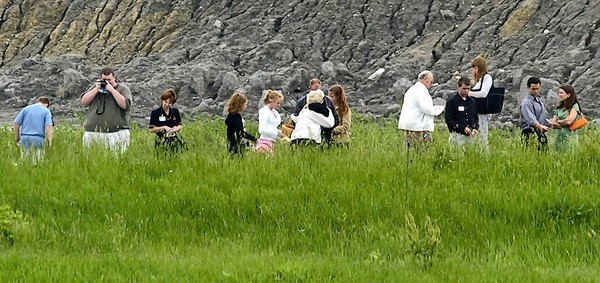
Relatives of people killed in the American Airlines Flight 191 crash visit the crash site just north of the airport on May 25, 2004. (Charles Cherney/Chicago Tribune)
Michael Lux, center, listens to Melody Smith, left, as she talks to the media on May 25, 2004, about the death of her parents, Corrinne and Bill Borchers, in the American Airlines Flight 191 crash 25 years prior. Lux's father, Walter, was the pilot of the aircraft. Kim Borchers Jockl, Smiths' sister, stands between them. (Charles Cherney/Chicago Tribune)
To mark the 25th anniversary for the American Airlines Flight 191 crash, relatives met at O'Hare International Airport and then took buses to the crash site, shown here on May 25, 2004. (Charles Cherney/Chicago Tribune)
Relatives of the people who were killed on American Airlines Flight 191 visit the crash site on May 25, 2004. It was the 25th anniversary since Flight 191 to Los Angeles crashed in a field shortly after taking off from O'Hare. (Charles Cherney/Chicago Tribune)
The Rev. Michael Zaniolo bows after emptying soil collected from the Flight 191 crash site and placing it into the Flight 191 Memorial Wall & Garden at Lake Park in Des Plaines on May 25, 2019, the 40th anniversary of the disaster. The soil was originally collected during a memorial at the crash site 15 years ago. (Chris Sweda/Chicago Tribune)
Family and friends of loved ones who died on Flight 191 gather for a memorial service May 25, 2019, at Lake Park in Des Plaines on the 40th anniversary of the American Airlines crash out of O'Hare. (Chris Sweda/Chicago Tribune)
Charles Davis, of Chicago's Hyde Park neighborhood, looks on May 25, 2019, as family and friends of loved ones who died on Flight 191 40 years ago gather for a memorial service at Lake Park in Des Plaines. Davis lost his wife, Marilyn, on the flight. (Chris Sweda/Chicago Tribune)
A bell is rung every time a set of names is read among the 273 total names of people who died on American Airlines Flight 191 on May 25, 1979. (Chris Sweda/Chicago Tribune)
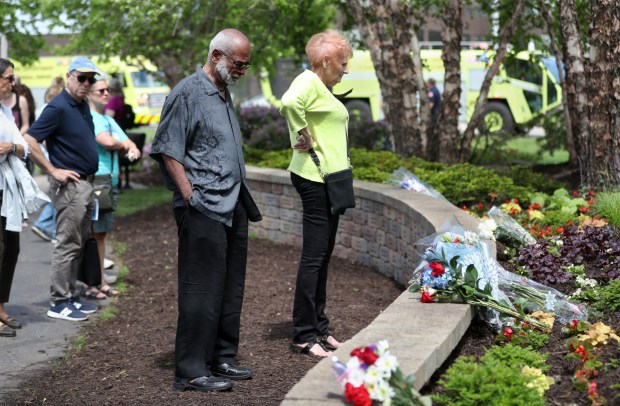
Flowers and a note lie on the ground in front of the Flight 191 Memorial Wall & Garden at Lake Park in Des Plaines during a memorial service May 25, 2019, the 40th anniversary of the American Airlines Flight 191 crash out of O'Hare. (Chris Sweda/Chicago Tribune)
Jim Borchers, from left, Melody Borchers Smith, and Kim Borchers Jockl, seen here at the Flight 191 Memorial Wall in Des Plaines, lost their parents in the crash. The wall was completed in 2011 and lists the name of all 273 people who died as a result the crash on May 25, 1979. (Stacey Wescott/Chicago Tribune)
A photograph of a loved one who died on the American Airlines Flight 191 crash out of O'Hare on May 25, 1979, rests at the base of the Flight 191 Memorial Wall & Garden on May 25, 2019. (Chris Sweda/Chicago Tribune)
A woman wipes away tears as family and friends of loved ones who died on Flight 191 gather May 25, 2019, for a memorial service at Lake Park in Des Plaines on the 40th anniversary of the American Airlines crash out of O'Hare International Airport. (Chris Sweda/Chicago Tribune)
Family and friends of loved ones who died on Flight 191 stand and face the now-decommissioned runway 32R at Chicago's O'Hare International Airport during a moment of silence at 3:04 p.m. May 25, 2019, exactly 40 years after an American Airlines plane crashed, killing all aboard. (Chris Sweda/Chicago Tribune)
Andrew Lux, of Lake Geneva, Wis., takes a rubbing of the brick bearing the name of his grandfather, Flight 191 pilot Capt. Walter H. Lux, at the crash memorial in Des Plaines on Oct. 15, 2011. (Andrew A. Nelles/for the Chicago Tribune)
A man views the the Flight 191 Memorial Wall & Garden on May 25, 2019, as family and friends of loved ones who died on Flight 191 gather for a memorial service at Lake Park in Des Plaines. (Chris Sweda/Chicago Tribune)
Jim Borchers, 69, shows off a pin and ribbon honoring the lives lost, including his parents, Bill and Corrinne Borchers, after Flight 191 crashed to the ground just after takeoff from O'Hare on May 25, 1979. A 40th anniversary memorial was held at the Flight 191 Memorial Wall & Garden at Lake Park in Des Plaines on May 25, 2019. (Chris Sweda/Chicago Tribune)
Justin Brown, 40, holds a photograph of his aunt, Martha Vickery, who was 38 when she died after Flight 191 crashed just after takeoff at O'Hare International Airport 40 years ago. A memorial service on the 40th anniversary was held at the Flight 191 Memorial Wall & Garden at Lake Park in Des Plaines on May 25, 2019. (Chris Sweda/Chicago Tribune)
1 of 51
With 271 people aboard, American Airlines Flight 191 leaves O'Hare's terminal and rolls out to a runway – for its last flight on May 25, 1979. Minutes later, it crashed. All aboard perished. (Michael Laughlin/for the Chicago Tribune)
Even though the construction plans bother her, Jockl doesn’t believe in stopping what she describes as progress. But she’d like the toll authority to recognize the history of the land with a placard commemorating the victims of the plane crash. Some other family members and their supporters do, too, and have written to the tollway asking for one.
“I urge you and whoever else makes this type of decision to make sure that Flight 191 is not forgotten,” Jockl said during the public comment portion of the tollway’s monthly board meeting on Thursday.
In a statement, McGinnis said the toll authority “will review the request for a memorial marker to honor those impacted with care and sensitivity.”
“We recognize the significance of preserving the memory of those who lost their lives in this tragedy for the public as well as friends and families who continue to be impacted by this event,” she said.
“There’s a huge scar”
Nearly half a century later, people remember where they were when they heard the plane went down.
That Friday in May, American Airlines flight attendant Ann Clark-Durkin was looking for a lunch spot on State Street with another member of her crew. They came across a third flight attendant who was wandering around, looking dazed. When Clark-Durkin went up to her, the flight attendant said, “We lost one.”
“That was all she could say, was ‘We lost one,’” said Clark-Durkin. She meant the DC-10 airplane, which had crashed after only 31 seconds of flight. Back at the hotel, Clark-Durkin learned that most of the 191 flight crew members were based in San Diego, like her. Two of them were her close friends, James DeHart and Nancy Sullivan.
In Southern California, Kelly Hayward was 13 and came home from school to a note on the door, telling her to go to the home of her mom’s best friend across the street. “She grabbed me and hugged me and pulled me into the bedroom, and said, ‘You know honey, you know, I have some really horrible news to tell you,’” Hayward said. Her cousin’s plane had crashed. Hayward had looked up to 24-year-old Michael Silva like a brother.
Gary Schwartz lost both parents in the Flight 191 plane crash in 1979. (E. Jason Wambsgans/Chicago Tribune)
Gary Schwartz was sitting on his sister’s front lawn in Los Angeles, where he was visiting for their grandmother’s 75th birthday. His sister came out the front, holding her pregnant belly, and said the plane had crashed. Their parents, Bernard and Beatrice Schwartz, had died on their way to meet the family in California.
For the people who loved the 273 people who died in the Flight 191 crash, that horrible day in May 1979 feels fresh.
“For people it’s 50 years ago,” said Schwartz. “For me it’s yesterday.”
“There’s a huge scar, and it doesn’t go away. I sort of have made it my friend,” said Schwartz, who was 28 when his parents died. He’s 75 now.
But family members have had to fight to keep the lives and deaths of their loved ones — so present in their own memories — alive within the memory of the public.
In interviews with the Tribune, some described feeling, in the years after the crash, as though their grief had been subsumed by the demands of lawyers and insurance agents.
Brian Keeney was 16 when his father Howard Franklin Keeney, on his way home from a business trip, died in the crash.
After a dispute with a lawyer representing his family in a lawsuit related to the crash, he said, his family never saw some family photographs used in the case again, Keeney said.
“We’re at the bottom here,” Schwartz remembers thinking. “Nobody cares about us. It’s all about their business dealings, the insurance companies, the lawyers, and we’re sitting here — our lives have been completely shattered.”
It wasn’t until 2011 that a permanent memorial to the victims was erected not far from the crash site, the work of a group of plucky Chicago Public Schools sixth graders who were surprised and bothered, upon learning about the disaster, that no such memorial existed in the area. The students attended Decatur Classical School in West Ridge, where Jockl was assistant principal.
A landscaper works in a garden behind the Flight 191 Memorial Wall in Des Plaines on May 12, 2026. A total of 273 people were killed as a result of the plane crash. (Stacey Wescott/Chicago Tribune)
Family members describe that memorial — a garden wall in Lake Park in Des Plaines made of bricks, each bearing the name of a person who died — as beautiful.
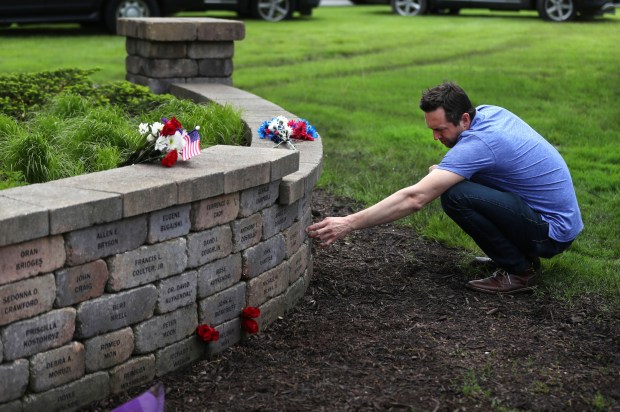
On a chilly May morning this year, Park District workers tended the garden near the memorial. A small plaque planted there reads, “Let us not forget the victims of May 25, 1979, who helped assure the safety of all who have boarded an airliner since that tragic event.”
Like Jockl, other family members of crash victims said they had no desire to stop the construction of the tollway a couple miles down the road.
“I’m big on progress,” said Keeney, who as an adult went on to work in airplane maintenance, disassembling and repairing the landing gears of a variety of planes, including DC-10s. He lives in California, like many family members of 191 victims, and has never visited the memorial in Lake Park.
“There’s no sense in preserving this thing,” said Schwartz, who lives on Chicago’s North Side. “I don’t believe in that at all. You know, I’m not narcissistic in that sense that this revolves around me. No — but have a little respect, have a little compassion.”
In interviews with the Tribune, experts described the process of memorial building as an uneven one, bound by logistical and political concerns as much as by sentimental ones.
“It’s those economic values,” said Paul Durica of the Chicago History Museum, “that often take precedence over what I would call our cultural and ethical values, which is what we reflect when we create a memorial.”
“Sites do not always get to be recognized,” said James E. Young, a professor emeritus at the University of Massachusetts at Amherst and an expert on memorials. “It’s a bridge, or it’s a highway, or it’s whatever it’s going to be.”
He echoed the feelings of family members who said they didn’t have an interest in stopping the tollway construction.
Construction work continues near the crash site of American Airlines Flight 191 on May 12, 2026, in Des Plaines. (Stacey Wescott/Chicago Tribune)
“To let a commemorative site get in the way of repair and rebuilding is in a way counterlogical, or counterintuitive,” said Young, who suggested the Tollway could consider naming a portion of the new roadway after the victims of Flight 191. “Because you want memory to help repair your loss. And part of that repair might be literal.”
Memorials serve different purposes for different people at different times. The garden wall in the park in Des Plaines serves a practical purpose for the families of Flight 191: It’s a place they can gather together with others who understand their particular grief.
Jockl sees the purpose of a memorial placard on the tollway differently.
“I don’t think it’s for us. It’s not like I’m going to go there and look at this marker,” she said, sitting on a bench in Lake Park. “It’s for future generations.”
Family and friends of Flight 191 victims can connect here.