
On May 16, the United States found and killed Abu-Bilal al-Minuki, a top Islamic State commander, in Nigeria. The precision operation in the northeast of Africa’s most populous country came about a week after President Donald Trump’s administration released its new counterterrorism strategy.
As one might expect, combating the Islamic State and al-Qaida, the usual suspects for Washington’s vast counterterrorism apparatus, is treated as a top priority in the 16-page document. What’s more notable is the strategy’s focus on the drug cartels and smaller criminal groups that have proliferated in the Western Hemisphere. In both words and deeds, Washington is elevating Mexico’s drug trafficking organizations and Ecuador’s gangs to the same plane as the Islamic State gunmen who roam the Syrian desert. In doing so, Trump has expanded the war on terrorism to encompass the war on drugs.
“We will not let cartels, Jihadists, or the governments who support them plot against our citizens with impunity,” Trump wrote in the report’s introduction. “Terrorists of any kind will not be allowed to find safe harbor here at home or attack us from abroad.”
The Trump administration has made good on this threat by increasing the U.S. military’s role in the counter-drug fight. In September, the Pentagon announced Operation Southern Spear, a series of U.S. strikes against boats in the Caribbean and Eastern Pacific that allegedly were carrying drugs to the United States. According to the latest tally by The New York Times, the U.S. has conducted a total of 57 strikes, killing approximately 200 people in the process. Trump alleges, falsely, that the strikes have reduced seabound drug trafficking into the U.S. by an astounding 97%.
Washington has sought to regionalize this military-centric framing as well. In March, officials from 17 Latin American states traveled to Miami for the Americas Counter Cartel Conference and signed a joint declaration establishing a multinational coalition against the region’s trafficking groups. The effort was a logical outgrowth of the Trump administration’s designation last year of nearly two dozen Latin American cartels and gangs as foreign terrorist organizations.
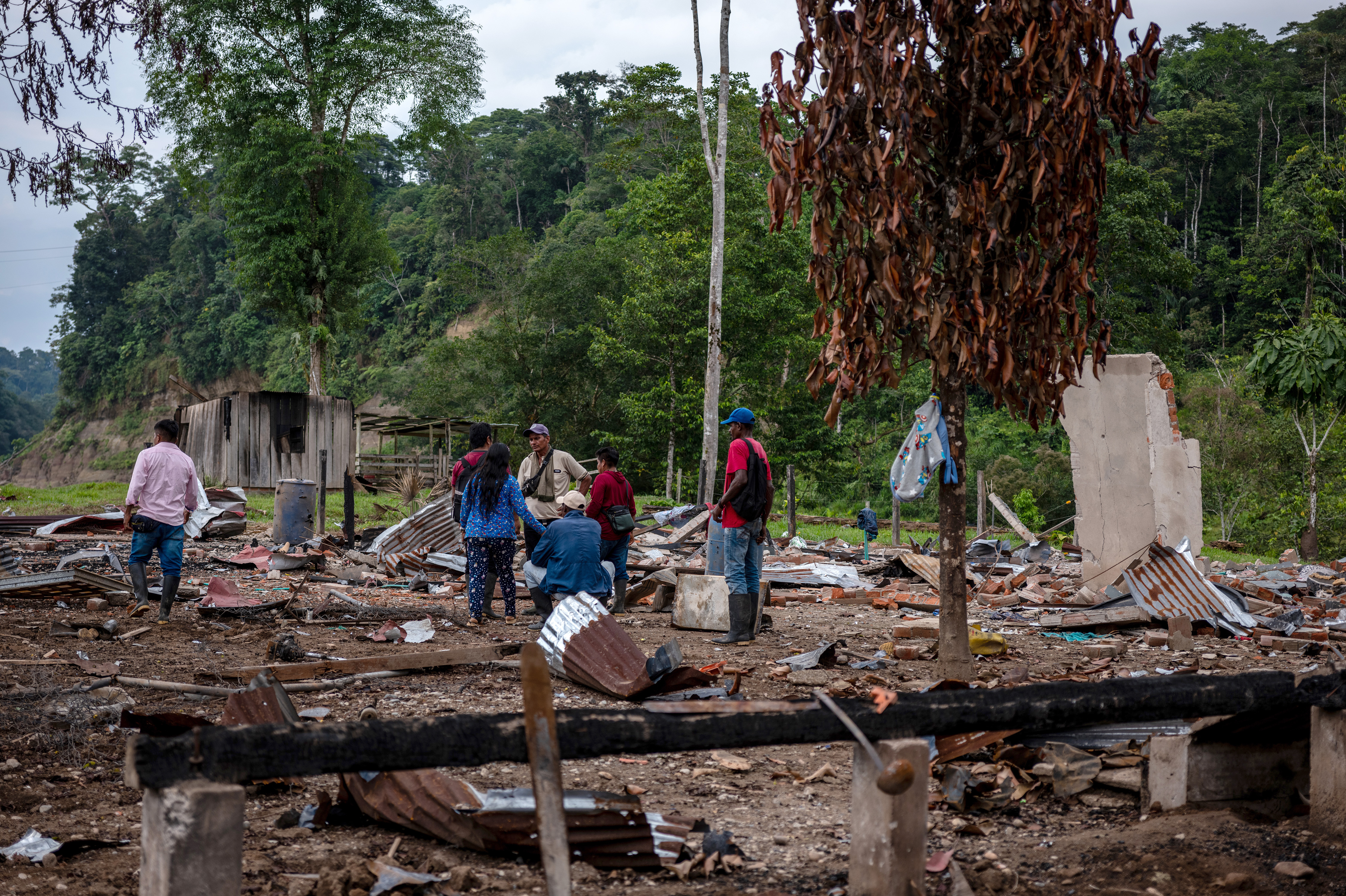
Ecuador, which has become one of the most dangerous countries in the Western Hemisphere thanks to drug gangs, is now a testing ground for the Trump administration’s militarized approach. Since March, U.S. special operations forces have been advising and enabling the Ecuadorian military as it seeks to disrupt trafficking routes along the Pacific coastline and capture high-profile gang leaders.
As much as the White House would like to claim vindication, Washington’s blending of the war on drugs with the war on terrorism is not actually having a positive impact. By fusing the two, the United States is embarking on another long-term military engagement whose overall goal — eliminating the drug trade — is fanciful at best.
Signs of success are few and far between. While the Pentagon makes a show on its social media feeds of purported drug boats exploding on the high seas, it’s hard to believe that playing Whac-A-Mole in the Caribbean and Pacific will substantially reduce the amount of drugs reaching the United States.
In the seven months before the U.S. boat strikes commenced, nearly 38,000 pounds of cocaine were seized by U.S. Customs and Border Protection. In the seven months since the boat strikes, Border Patrol agents seized slightly more than 44,000 pounds. In brief, the strikes are failing to stem drug trafficking into the U.S, and military pressure is not altering the traffickers’ strategic calculus as the White House anticipated.
Instead, the traffickers’ employers are merely changing their routes and pricing in hope of a financial windfall. Even Gen. Francis Donovan, the top U.S. military commander in the region, told Congress that hitting low-level drug dealers on boats isn’t the answer to the nation’s drug problem.
Is U.S. military involvement in Ecuador producing better results? It depends on how you define success. For Ecuadorian President Daniel Noboa, the Trump administration’s anti-cartel strategy is a net benefit because it supports his own domestic efforts against the country’s gang network. In Noboa’s estimation, homicides in Ecuador declined by 28% from February to March. This suggests Washington’s train-and-assist mission is helping the Ecuadorian army’s plan-and-execute operations in parts of the country that were previously off-limits.
Yet for the United States, stopping the flow of drugs, not reducing Ecuador’s murder rate, is the principal objective. Trump is hoping to degrade and disrupt the criminal outfits to the point in which Ecuador is no longer among the main transit routes through which cocaine reaches the U.S. market.
However, such a goal will require a sustained military effort on Washington’s part over a long period of time. And even if this feat were accomplished eventually, the long-term effect on the drug trade would likely be marginal. Traffickers undoubtedly would adapt as they have in the past by switching to another route. There is no shortage of routes in Latin America, in part due to the systemic corruption and insufficient state capacity that plague much of the region.
Fortunately, it’s not too late to change course. A better U.S. strategy should start with a fundamental premise: Cartels are not terrorist groups, and treating them as such will create more problems than it solves. Those problems could come in the form of more civilian casualties with a loosening of the rules of engagement and investment in a militarized approach; more draconian security policies overall, including states of emergency and due process limitations; a securitization of the public sphere; and greater alienation between the state and the people they’re supposed to protect. This alienation will, in turn, be exploited by the very cartels the Trump administration aims to fight.
Without a basic shift in outlook, Washington’s anti-drug approach abroad will remain flashy — but ultimately ineffective.
Daniel DePetris is a fellow at Defense Priorities and a foreign affairs columnist for the Chicago Tribune.
Submit a letter, of no more than 400 words, to the editor here or email letters@chicagotribune.com.