
It has been said that Pope Benedict XVI saw the Catholic Church as an embattled fortress for true believers facing a threatening world while Pope Francis conceived of the church as a field hospital with its doors flung open to the poor and vulnerable.
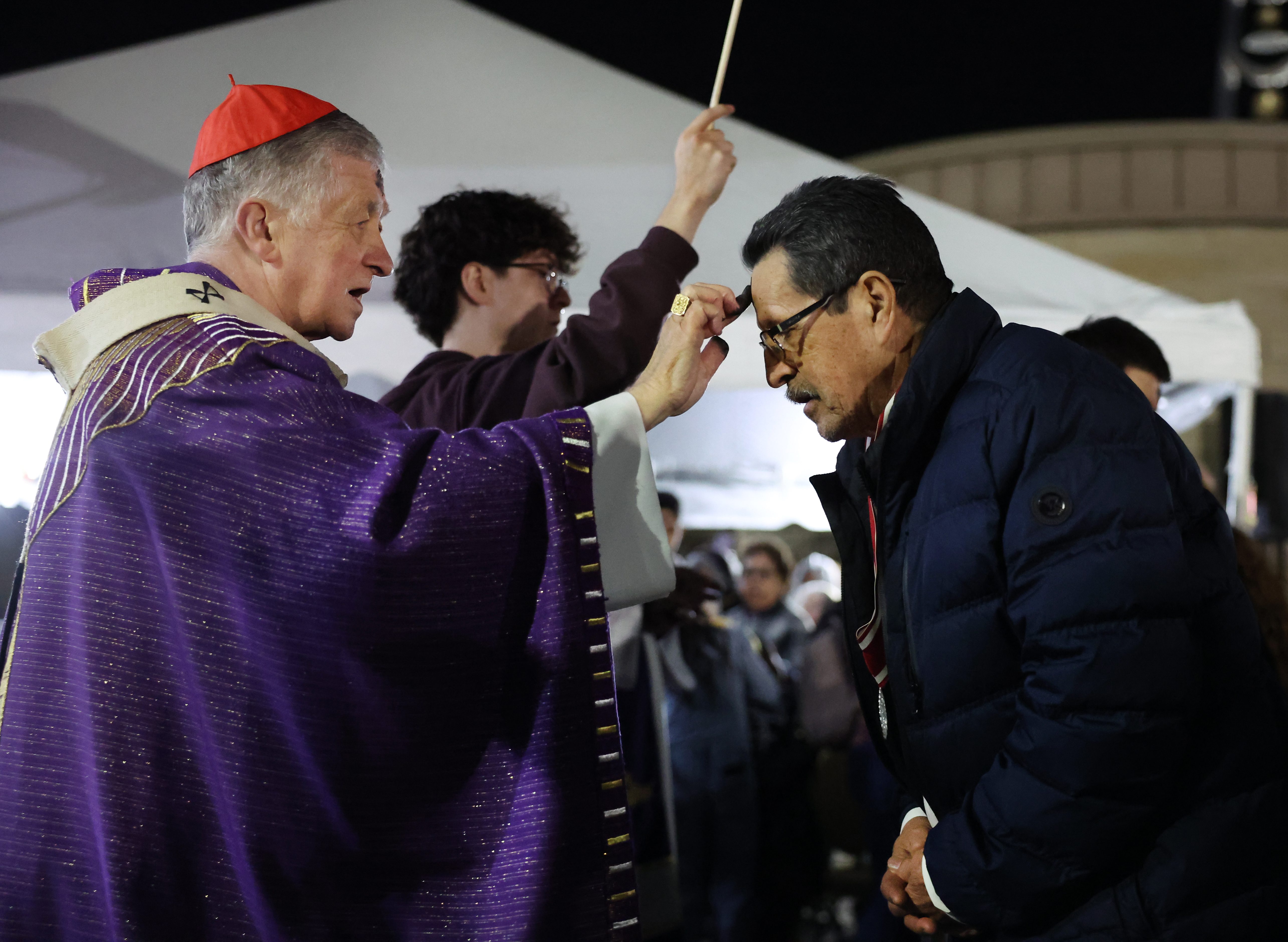
Cardinal Blase Cupich of Chicago is of the field hospital persuasion and has emerged as one of America’s most consequential moral leaders. His compassionate voice and strong public positions are grounded in deep faith, nuanced understanding of Scripture and passionate commitment to social justice. He exemplifies — and demonstrates — moral statesmanship.
A native of Omaha, Nebraska, Cupich grew up in a family of nine children and has been a Catholic priest for more than a half century. He began as a parish priest in Nebraska and has risen steadily through the ranks.
He is frequently lauded for his kindness, intellect, diplomacy, administrative acumen and dry sense of humor. Unfailingly civil and sensitive to the needs of others, he urges people to see the presence of God in everyone they encounter. “Becoming authentically human and becoming holy are one in the same,” he wrote in March.
Three popes gauged his professional skills and personal qualities and gave him senior assignments in the church. Pope John Paul II selected Cupich as bishop of Rapid City, South Dakota, a position he held from 1998 to 2010. Benedict named him bishop of Spokane, Washington, where he served from 2010 to 2014. Pope Francis appointed him archbishop of Chicago in 2014 and then elevated him to cardinal in 2016.
Cupich has a good relationship with Pope Leo XIV, with whom he has worked closely for more than a decade.
His main responsibility is overseeing the massive and sprawling Archdiocese of Chicago, the third-largest in the country. It serves almost 2 million Catholics in Cook and Lake counties, encompasses more than 1,400 square miles, oversees more than 200 parishes, and runs about 150 elementary and secondary schools.
The cardinal speaks passionately about the importance of prayer and the Gospels. He also believes there are critical moral considerations to many political issues.
He has said that before he weighs in on an issue, he asks himself three questions: Is what he is about to say true, does it need to be said and does he need to say it?
“I’m not trying to draw attention to myself or to rile people up,” he said on a recent podcast. “Some things have to be said, and if it’s not being said, and I have the words to do it, then I believe it’s important.”
Cupich has been outspoken about immigration, insisting that the essence of the issue is honoring the dignity of every person. He believes that immigrants are a “great gift to our country,” providing energy, idealism and a powerful work ethic.
During the harsh federal enforcement raids in Chicago last fall, Cupich was a forceful champion of migrants and firmly protested arbitrary arrests and inhumane treatment. “Families are being torn apart. Children are left in fear, and communities are shaken by immigration raids and detentions. These actions wound the soul of our city. Let me be clear. The church stands with migrants,” he said in an October statement.
Cupich has been a compelling commentator on international issues, calling on the United States to live up to its professed values and best traditions.
In January, Cupich joined two other American cardinals, Robert McElroy of Washington, D.C., and Joseph Tobin of Newark, New Jersey, in a statement calling for a “genuinely moral” American foreign policy. They issued the statement after the capture and arrest of President Nicolas Maduro in Venezuela and the Trump administration’s threats to Greenland, Cuba and Iran.
“We renounce war as an instrument for narrow national interests and proclaim that military action must be seen only as a last resort in extreme situations, not a normal instrument of national policy,” the cardinals said. “We seek a foreign policy that respects and advances the right to human life, religious liberty, and the enhancement of human dignity throughout the world, especially through economic assistance.”
Cupich opposes the American war in Iran, challenging its wisdom, humanity and legality. He has been sharply critical of the White House’s use of videos in which scenes from popular action movies have been edited together with actual strike footage to insinuate American dominance.
“A real war with real death and real suffering being treated like it’s a video game — it’s sickening,” he said in March. “Our government is treating the suffering of the Iranian people as a backdrop for our own entertainment, as if it’s just another piece of content to be swiped through while we’re waiting in line at the grocery store. But, in the end, we lose our humanity when we are thrilled by the destructive power of our military.”
Cupich said the “gamifying” of the war in Iran by President Donald Trump’s administration is “marring the dignity of what it means to be an American.”
The Catholic Theological Union awarded the cardinal the Blessed are the Peacemakers Award this spring. His acceptance speech offered a compelling meditation on peacemaking — and on statesmanship.
“Peacemaking must be learned, practiced and refined,” he said. “It requires habits: the discipline to restrain one’s speech, the courage to tell the truth without hatred, the patience to build trust, the willingness to sacrifice one’s own advantage for the sake of justice. It also requires the concrete skill of dialogue and negotiation: the ability to listen without defensiveness, to name grievances without inflaming them, to seek common ground without betraying the truth, and to persevere in conversation even when agreement seems distant.”
Cupich offers Americans, and others around the world, a master class on moral and spiritual statesmanship.
John T. Shaw is director of the Paul Simon Public Policy Institute. Shaw’s columns, exclusive to the Tribune, appear the last Monday of each month. His most recent book is “The Education of a Statesman: How Global Leaders Can Repair a Fractured World.”
Submit a letter, of no more than 400 words, to the editor here or email letters@chicagotribune.com.