



Americans, fresh, salty and otherwise, love to watch fish.
What other explanation could there be for the more than 2 million people who showed up in 2025 to Chicago’s 95-year-old Shedd Aquarium?
That’s more than the combined seasonal attendance at the Chicago White Sox, four times the numbers that attended Chicago Bears games at nearby Soldier Field and a total that handily tops the other museums in Chicago, including the world-class Art Institute of Chicago.
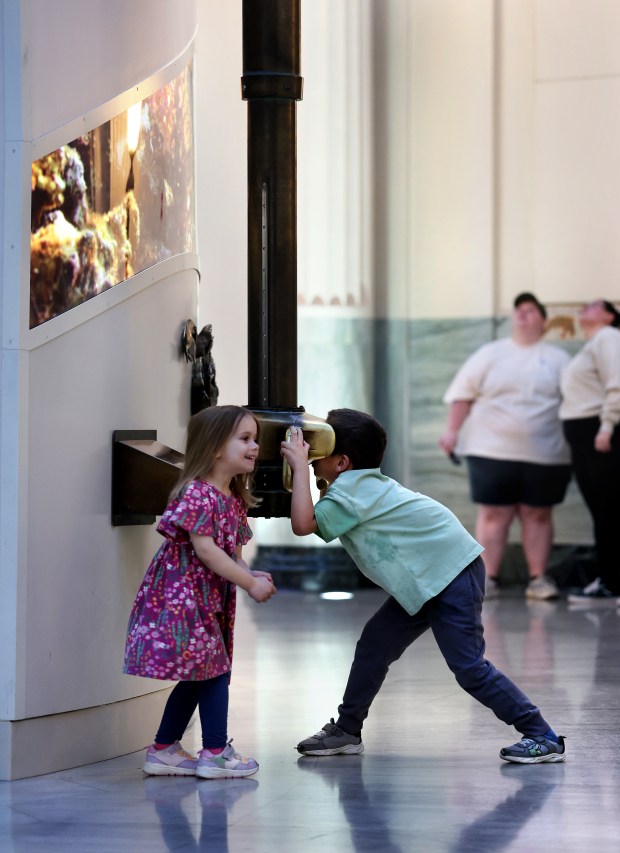
Many Chicagoans first visit the Shedd as part of a school group, many of which were in evidence when we recently toured the aquarium, much of which is under construction. But, impressively, more than half of that 2 million is is made up of out-of-state visitors, and it’s hardly some elitist crowd; all walks of life could be seen on our visit, clearly in the tank for the fishes, penguins and sea otters.
The Shedd benefits from what people in the entertainment businesses call “clearance,” meaning the lack of any credible rivals within an easy drive. Unlike the ubiquitousness of sports franchises, the only aquariums generally seen as comparable to the Shedd are no closer than Atlanta, Baltimore and Monterey, California. The Shedd has oceans of Midwestern landmass to itself and, of course, it combines its stellar reputation with an enviable lakefront location.
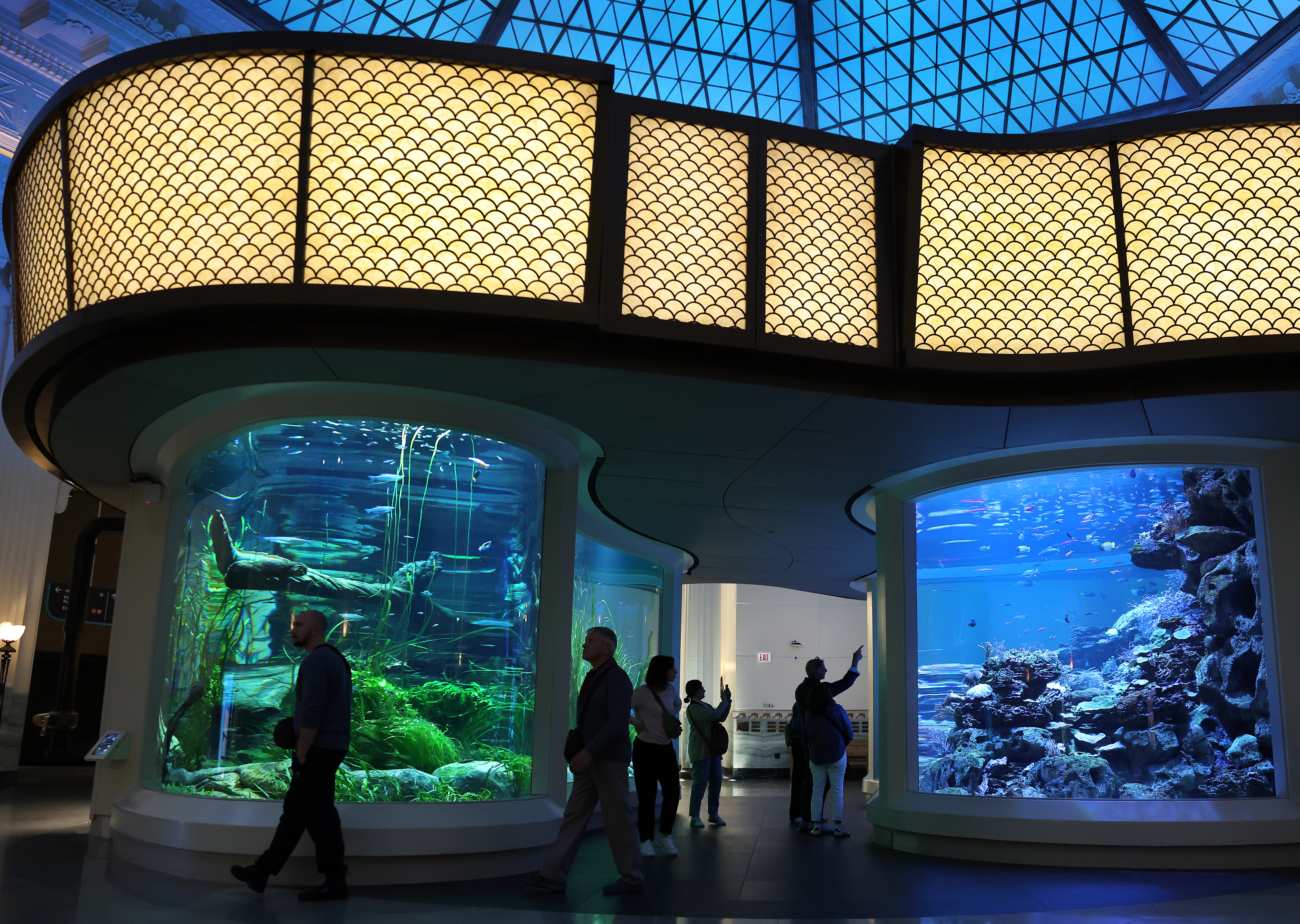
Slowly but surely, the Shedd has taken better advantage of its positioning; we noted that the renovation in progress will open up windows offering Lake Michigan views that have not been seen in decades. And, over the years, the sexier saltwater tanks have been paired with living representations of the Great Lakes, which contain far more life than many assume. President Bridget C. Coughlin described this to us as indicative of the Shedd’s desire to “honor our geography,” and every Chicagoan should be down with that.
The Shedd dates back to 1930. That’s just before the feds finally fingered Al Capone and a year synonymous with a Chicago era when “sleeping with the fishes” did not reference a sleepover at the Shedd.
But the Shedd outlasted the mobsters and Lord knows what else in its home city’s colorful history and now is trying to raise $500 million over eight years in honor of its pending 100th anniversary in 2030. Already, it’s blowing up its own footprint to explore, in Coughlin’s words, “how we can serve more people in the same square footage.” At the same time, the Shedd is one of Chicago’s most overlooked historic buildings and a good chunk of the $300 million being apportioned for the facility is aimed squarely at preservation, including restoring the terracotta detailing from 1930 and opening up new vistas and rooms within its neoclassical beaux arts structure.
As the rest of the construction barriers come down by the end of 2027, Chicagoans will get to enjoy anew the Shedd’s marine-themed architecture, replete with representations of fish, dolphins and Neptune’s trident. Much already is newly visible.

Museum staffers told us that they believe sea creatures are empathy-building organisms with a unique capacity to make people care more about the quality of the water that covers about 71% of our planet. After all, we’re all likely descended from the now-extinct, lobe-finned sarcopterygians that summoned up the courage to climb out of the water and onto land, even breathing oxygen through their small, internal air sacs, the precursors of our lungs.
Lots of people known the phrase farm-to-table. Fin-to-limb is less discussed, yet more central to our collective existence.
At the Shedd, they like to point out that most of us have a “very land-based view of the world” (guilty, right here), a bias for which there is little excuse for those of us who live and work so close to the shores of a truly great lake that endlessly fascinates us with its changing whims and moods, sometimes benign, sometimes riled up, sometimes downright predatory. Every Chicagoan, surely, has had an out-of-town guest who remarked that Lake Michigan was really more like a sea. They’re right; we locals just forget.
The Shedd is, of course, part of the larger Museum Campus, which still has issues of accessibility and far too limited public transportation options. We’re glad Chicago Park District CEO Carlos Ramirez-Rosa is working on redeveloping neighboring Grant Park to better relate to the museums at the lakefront, and we’d like to see that much-discussed footbridge over the daunting DuSable Lake Shore Drive at Buckingham Fountain get quickly built. Much else could be done to expand the water transportation options to the Shedd and its neighbors.

Simply put, access to the Museum Campus needs rethinking for an era of Waymo (coming, like it or not) and rideshare, not to mention more people cycling or on scooters. Along with affordable parking, it needs better public transportation, whether that is dedicated bus service or some kind of tram or light rail. All of this, of course, would also serve the redevelopment of Soldier Field, post-Chicago Bears. Navy Pier, where access has been greatly improved, could serve as a helpful model here for the attractions to its south.
As the warm weather arrives, the Museum Campus will suffer mightily from congestion, especially the case when big events like Lollapalooza are happening nearby. And for someone in a Loop or North Michigan Avenue hotel, the journey over there to see the fishes can look daunting.
That did not stop 2 million people, though. The Shedd funds more than 75% of its budget at its own ticket counters, a healthy ratio that few nonprofit cultural organizations can match.
Coughlin told us that she wants the Shedd, which has often kept too quiet for its own good, to be “part of the strategic vision of the city.” With an economic impact worth north of $300 million to Chicago, that is something it has earned.
Submit a letter, of no more than 400 words, to the editor here or email letters@chicagotribune.com.